Hello, everybody! Do you know that song “Am I That Easy to Forget” by Jim Reeves? It’s a song about a man who’s love has found another man. The whole song just keeps on going on a melancholic tangent and is a favorite of many heartbroken gentlemen. Everyone could relate to it because we have all been there when our beloved has switch their attention to someone new. It’s not only applicable for people, I can imagine that cameras have feelings, too. I will show you something that people have forgotten in a heartbeat once the next big thing showed up, and like Jim Reeves, it may be also singing the blues if it could just express its feelings. Do you think cameras are feelings, too?
Introduction:
The Nikon Z fc is a divisive camera, it’s either you like it or you don’t. I’ve made my feelings clear with my old report of the Nikon Z fc so you know where I stand. This article will serve as a mini review of some kind because I shot with it for some time now and I have used it with the Nikkor Z DX 16-50mm f/3.5-6.3 VR all this time (mostly). I won’t be talking about sharpness, image quality, nor any technical specifications at all. I just want to give you a condensed article of what I think of it.
The Nikkor Z DX 16-50mm f/3.5-6.3 VR is the kit lens for every APS-C camera in the Z series. It’s short, it’s probably the shortest APS-C kit lens that Nikon ever made. Never buy these lenses alone, it’s cheaper to buy this together with the camera. This is the black version because my camera is black, the silver version is paired with the silver Nikon Z fc. The black one looks much better, the silver one shouldn’t have existed in the first place because it’s ugly.
Hello, everybody! The recent Olympics has been controversial, we are even discussing some of the topics to this day and for many days to come. Some find it amusing well some people were offended. Some say it was done in poor taste, while some people claim that it points to the next step in human psychology. I do not dare to make such bold claims because I am merely a camera repair enthusiast. But this is what I can say, we can all agree that some parts of the event left us scratching our heads. To me, it was the huge disrespect by the Australian “dancer” to her sport. In this website, we do not disrespect anything related to Nikon. In order to wash away the trauma, I will present to you another “Olympic“, one that is hailed by many as a masterpiece and the best there is, even to this day. Let’s all celebrate and enjoy the “Olympic“.
Introduction:
The Nikkor-S 50mm f/1.4 (Olympic) was made in 1964 under a limited batch of less than 1700 units. It’s even rarer than Nikkor-S 50mm f/1.4 (Millennium) that is a reproduction of this lens. That year is special because of the Summer Olympics hosted by Japan. Many companies saw that as a chance to showcase their prowess by manufacturing exceptional products to be used for covering the games. Nikon made a couple of such projects, the lens you see here is one of them. It’s also the last lens ever mean by Nikon for the Nikon S rangefinder system that isn’t a reproduction. Many people consider this to be the best 50mmNikkor of its kind because of how well it performs technically, it’s surprisingly good even at f/1.4. That’s a big departure from what many people were used to with the older Nikkor-S•C 5cm f/1.4, which renders a lot differently because it’s considered to be “soft” when shot at larger apertures; that’s just the case when shooting with Sonnar-type lenses. Speaking of which, this is the only 50/1.4 rangefinder Nikkor that isn’t a copy or derivative of the famed Sonnar design.
This is by far the largest rangefinder 50/1.4 Nikkor ever made. It is longer and considerably wider than the older Nikkor-S.C 5cm f/1.4, and it’s heavier, too. The barrel is all-metal so it feels great when you hold it. A lighter type of alloy is used on some parts in order to make it weigh less so it feels a bit different when it’s held. This is in contrast to the older lenses which uses brass.
Hello, everybody! I just bought a DNA testing kit, you know, the one that’s hip with the kids these days. I bought it because I wanted to know what are my health risks because I’m not young anymore. I did not get one because I want to avoid accidentally banging my relatives like what some people actually think and do for themselves. I’m also curious to know if I have relatives around the world, maybe I will find an uncle living nearby that I have never ever heard of, isn’t that exciting? Speaking of finding secret relatives and genealogy, I would like to share with you a “secret relative” of the Nikkor 135/3.5 family. It is not well known so it might as well be an urban legend for some people but we will know everything about it here in this article.
Introduction:
This adapter for Nikkor-Q•C 13.5cm f/3.5 will enable you to use the front barrel of the lens and mount it to any camera that uses the Nikon F-mount. It was made for a short time to coincide with the release of the legendary Nikon F. Not a lot of people knew about it and it’s only ever mentioned in the catalogs. It isn’t really a proper “lens” so to speak because it was ever only sold as a separate item as far as I know.
It is much shorter compared to its rangefinder cousins. It’s because the F-mount requires a longer flange distance in order to stay clear of the flapping mirror. While the construction is all-metal, the adapter feels somewhat “cheap” because the bayonet mount is part of the lower barrel. While it keeps things simple, it gives the impression of cheapness like what I have just mentioned.
Hello, everybody! Because of the generous support that I got from all of you, I am motivated to finish this series earlier than scheduled. I’m not saying that I am like a jukebox that will only play whenever a coin is inserted, but a little bit of donation makes me feel that my contribution to the community is welcomed. It has been many years since I have started this website and this is one of the few instances where everyone seems to so eager to see the final part of a series. Your prayers have been answered, this article will be the best resource for this camera around in the internet unless someone else will be able to write something better. If you’re content creator, please don’t rip my content off. If you must, at least help advertise for me and leave me a little tip, that will be very much appreciated. It’s fair for me to ask.
Introduction:
The Voigtländer Bessa R is a quirky camera, but it’s very popular. There’s many people who have had the bad luck of owning lemons just because of how it was constructed. In this case, popularity does not mean reliability. You will know why I made the statement in this article. Despite having a bad reputation for its reliability, some people have been lucky with their cameras so it’s not entirely the camera’s fault. It’s still a great camera, all you need to do is inspect the camera very well before buying one and ask for a warranty. That should give you enough time to run a few rolls through it.
I am somewhat disappointed at the amount of plastics used within the camera. I could accept it having a plastic exterior but seeing plastic used in some of the important parts inside the camera turned me off. It is ironic because it’s not the plastic parts that will give in first, what some of the metal parts.
Hello, everybody! Do you believe in curses? Some folks believe that items can be cursed, it can come from the previous owner or just a stroke bad luck. You’ll sometimes wonder why things are always in a messed up state or why they’re always broken. The good thing is, curses can be lifted by good karma, faith or the patience of a good healer. Today, I will show you a cursed camera. It has been featured on the internet for a couple of years now, with the owner desperate to find a way of lifting the curse. It’s destiny that brought me and the camera together. Do you think I have enough good karma to lift the curse of the evil jammed shutter? I have been saving cameras and lenses for years, along with presenting you the best articles you can find on the internet. Let’s see if all that goodness will change the fate of this poor thing.
Introduction:
The Voigtländer Bessa R was sold from 2000 up to 2004, it was preceded by a minimalistic model called the Voigtländer Bessa L which doesn’t come with a viewfinder nor a rangefinder. It’s a brave gamble by a small company relative to the giants of the time called Nikon and Canon. The company is named Cosina, a company with a long history and experience. They dared to sell a concept that went against what the market was used to, the effort resulted in an instant classic that spawned a whole line of cameras. Many people are attracted to these because they offer something unique and that not a lot of brands give. It’s still very popular these days and the price has shot up due to the hype from influencers. I will show you if this hype is deserved or not in this series, you will be the judge of it.
This is the most modern LTM camera you can ever buy. It has a lot of modern conveniences which helps in simplifying the process of taking great photos. It is a great “Sunday camera” for leisurely taking photos at a park or the streets. It offers the best in terms of comfort of all the LTM cameras I have ever used.
Hello, everybody! I was watching some old Soviet-era movies from the 1930s up until Khrushchev’s time. Some of them were colored, using a simpler process than the common 3-step process used at that time. This makes the resulting movies look a little bit brownish, this may be partly due to how it is stored, too. I enjoyed watching them because it’s a rare glimpse of life “across the curtain“, for some of us who are old enough to remember. Today, I will show you something that will give you the same look, if not similar to the movies that I have watched.
Introduction:
The Cinestill 50D has always intrigued me, I’ve been seeing it for some time now but I still do not know its selling point and what makes it special and appealing to some people. One thing is for sure, It is another repackaged cinema film without the remjet. I don’t know which film it was originally so I’ll just leave it to the experts in the comment section. This is supposed to be a “daylight” film, which means it’s best to use it on a sunny day. Some people claim that it’s similar to the Reflx Lab 100, but I find that film to have less brownish tint overall. It’s also a little bit more pleasant to look at (the results) compared to this one.
It comes in the typical Cinestill packaging, but it’s blue this time. There’s nothing special about it, it’s what I would expect from this company.
Hello, everybody! Do you know what’s a “chastity belt“? They are metal or leather underwear for women in the Middle Ages up until recently In some cultures. They ensure that the wearer is celibate while these special panties are on. Not so common is the male counterpart, it forces a religious person to be celibate. Why are we talking about such unusual topics? Our star today has some kind of a “chastity belt”, too! It’s quite a surprise because I have modified it to protect something precious. know more about it hear in this article and read until the end.
Introduction:
We ended part 1 with the removal of the outer casing, in this part we’ll see how the internal mechanisms can be dismantled. If you have worked on similar cameras before then they should come as no surprise to you because they’re very similar. Some things may be a little bit different but they should not matter at all in the grand scheme of things.
I got to this point by the end of this article, waiting for the replacement leatherette from the amazing and reliable Asahi Aki, who gave me what I exactly needed. His kits are exquisite and reasonably priced, he is the best guy in the business, I highly recommend his services and products.
Hello, everybody! Do you all remember “Boney M“? Boney M was Germany’s super group during the Disco days, responsible for some of the unforgettable hits such as Rasputin, Daddy Cool and several more that topped the charts from the mid 1970s up until the mid 1980s. It is one of my favorite groups and I would listen to their songs while driving just to keep me awake. What a lot of people didn’t know is that the four members of the group didn’t really sing the songs, at least Bob Farrell – who was the front-man never did. That’s why many considered it a fake group. Today, I’ll show you what some people would call a “fake”, a copycat. But just like Boney M, despite not being the real deal it did really well for itself because it tried to outdo the original, other people would even go as far as say that it’s even better. Read the whole story to find out why I said this and you decide if it is indeed worthy of its reputation.
Introduction:
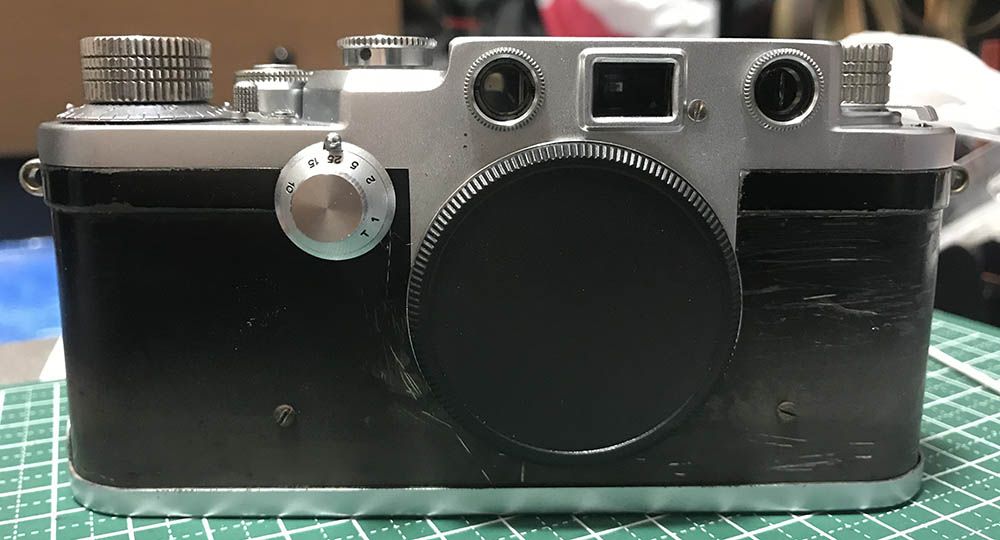
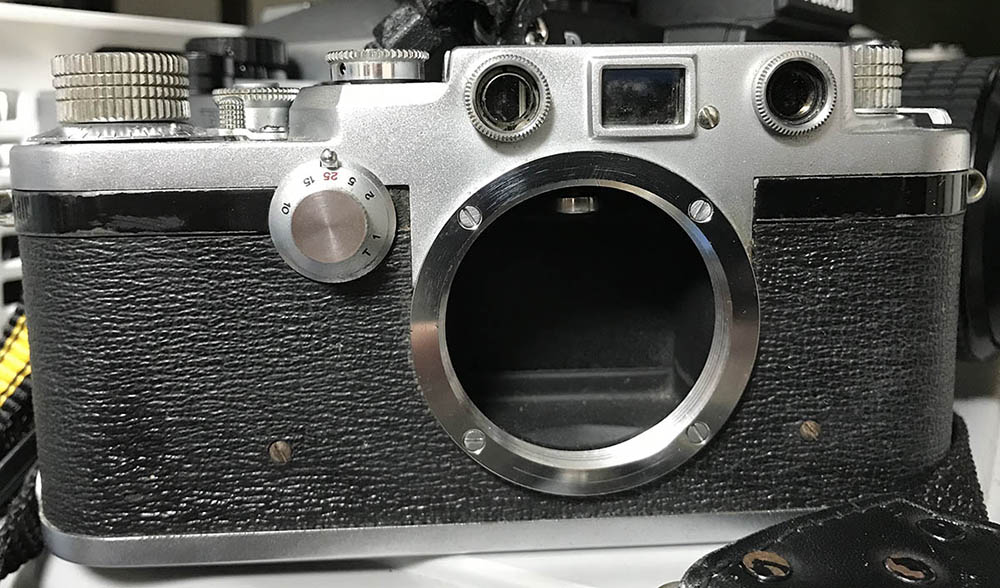
The Nicca Type-5 was sold from 1955, it succeeded the older Nicca IIIS. What sets it apart from the older camera is this one copied the Leica IIIc instead of the earlier Leica IIIa. It has a maximum shutter speed of 1/1000s instead of the pedestrian 1/500s that many older Leica copies have. But its most defining feature is the rear door that you can open for more convenient loading of film. It also allows you to remove stuck or ripped pieces of film easily, you will need to send your camera for repairs prior to this feature because the lower shell had to be removed in order to get any debris off. This also allows me to conveniently test the focus of any lenses that I have serviced since all I need to do is just look through the film aperture. It’s also much more trivial to adjust the tension of the curtains because I don’t need to remove the lower shell in order to attach a sensor to the camera.
Nicca makes some of the better JapaneseBarnack clones, the build is much better compared to the ones from other companies, rivaling even Canon’s. They are inexpensive, you can get one for well under $100, I got mine for $50 or so, it’s not in good shape at all but that’s how they usually look like.
Hello, everybody! Have you heard of the legendary “Barrel Man“? It is a wooden statuette carved by the talented Igorot people. He is basically a little wooden man with a big barrel covering his body. When you pull the barrel off from the statuette you will be surprised by his huge wooden spring-loaded penis. It’s a novelty gift and it has become somewhat of a folk culture icon after it was introduced to the rest of the world by travelers. I had one a long time ago at my office which I used as a paperweight and to entertain my guests with. I am reminded of that little naughty figurine by today’s subject. It has a spring-loaded gimmick, but it is not as vulgar as what the Barrel Man has nor is it as big. Anyway, it’s just as entertaining if you ask me.
Introduction:
The Seiki Kogaku S has a pop-up viewfinder instead of the Leica’s simpler window. It is one of its defining gimmicks to circumvent the original German parents. I find it pathetic and useless as you will soon know why later in this article when I talk about how it handles when shooting. Despite that, I find it charming as it gives this camera a special character and silhouette. The funny thing is, it costs a lot more to produce a tiny enclosed viewfinder compared to a simpler flip-type one and the latter would be much more useful. It’s just a waste of space and an unnecessary complexity to solve a simple problem. I guess the Japanese really did idolize the Germans too much, to the extent of learning the bad habit of over-engineering. It’s probably one of the first, if not the first Leica copycat and a primitive one, too.
It is now much cleaner compared to how you first saw it in part 1. Some parts of the plating are corroded and beyond conventional cleaning, there’s nothing much we can do about it. I have replaced some screws and a few small parts from a donor Canon S2 which fits perfectly. I’m lucky to have a few screws that I can repurpose for my spares box, some of them are cross-type screws and are placed in parts that you won’t see externally. Some of the small set screws were replaced with new stainless ones just in case.
Hello, everybody! It’s spring now and it’s time to do some cleaning. While I do not clean my workshop as much as I should, I do a very thorough job of cleaning the cameras that I repair. I will show you the result of what I did to the camera that I am featuring in this series. I hope that you will appreciate the effort.
Introduction:
It is amazing how a joint effort between two Japanese companies can result in a good machine, at a time when the Germans were the ones who dominated the whole camera industry. I say “good” because this is still nothing compared to what the Germans were making at that time in terms of engineering or quality. I have had the opportunity to service Zeiss and Leica cameras that were made even earlier than this, they’re just superior in every way. It doesn’t mean that this camera is bad, it’s just not there yet.
This is where we left last time. I’ve took the time to clean everything very well and this is the result. This is definitely a huge Improvement compared to how you guys last saw it. It’s now time to reinstall the shutter and the rangefinder mechanism, but before we do that I would like to show you some other things.
Help support this site by donating to richardHaw888@gmail.com over at Paypal! If you want to buy me a beer or a roll of film then that would be great,too!




 Richard Haw's Classic Nikon Repair and Review