Hello, everybody! It is beginning to get cold here and it’s now time to shoot pictures of migratory birds. Birding has never been my thing because of its high-cost in terms of equipment, it’s very demanding to your body and also to your pocket. A professional-grade camera is required along with a heavy, long and fast lens with the best autofocus performance. These are above my paygrade. However, you could still enjoy shooting photos of birds even with a budget if you can live without autofocus and a fast maximum aperture for your lens. There are many options out there today and I’m going to show an interesting alternative to you, read this article to know what this is.
Introduction:
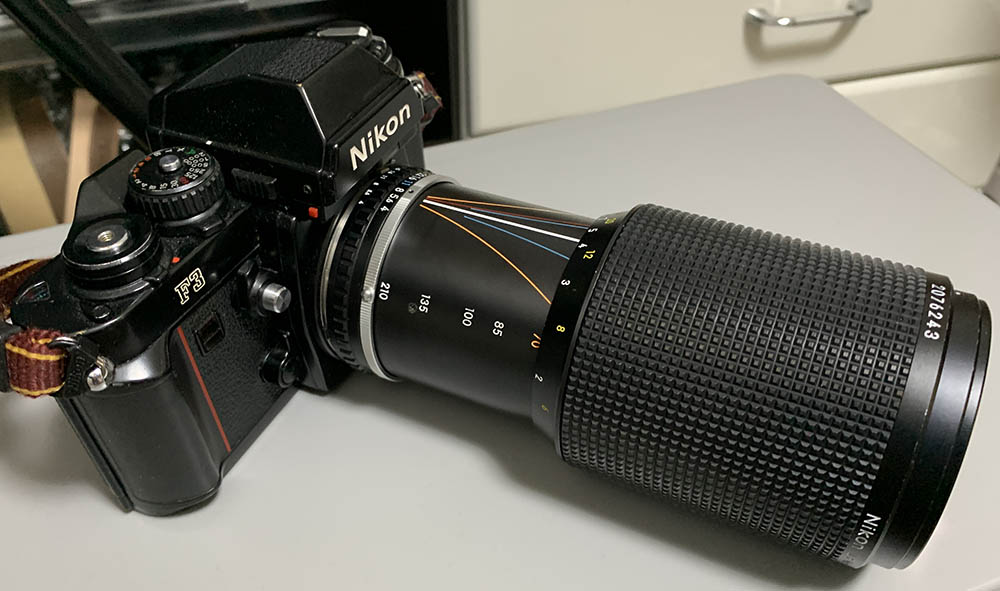
The Zoom-Nikkor 100-300mm f/5.6 Ai-S was sold from 1984 t0 1998, it has an unusually-long production span for a Zoom-Nikkor of the period since a lot of its contemporaries were soon replaced with autofocus versions. This did not get any upgrades or successors, it remains to be the only lens of its class as far as Nikkors are concerned. It was highly-regarded by a lot of people in its day and I’ve even heard of people using this during the digital age when lenses with advanced features are the norm and I’m referring to the period between the late 1990s to the mid-2000s.
Handling is kind of awkward, it’s long, heavy and the focus-throw is rather long. It’s difficult to turn the aperture ring and manipulate the focusing and zoom barrel at the same time with one hand since the distance between the barrel and the aperture ring is quite a far. It doesn’t balance well with most Nikons, even ones with a hug body, the setup always feels front-heavy. Your mileage may vary.
Hello, everybody! I went to buy some burgers at McDonald’s, it was early so they sold me McMuffins instead. I liked their burgers because they’re cheap, I didn’t have the urge to try anything else since the regular $2.00 burger is a satisfying enough meal for me. Reluctantly, I tried the McMuffin and to my surprise, it tasted quite nice. I’ll admit that it’s better than a regular burger, I have been living without tasting this for decades! How could something so delicious be taken to another level? Today, I’m going to show you a lens that underwent an upgrade. Many thought that it’s an already excellent lens but Nikon took it to the next level. Read this article to find out what this it.
Introduction:
The Zoom-Nikkor 80-200mm f/4.5 Ai N (for New) appeared in 1977 and was made until 1981. It is called “New” since there’s another lens with the same name so it helps differentiate it. It’s hard to identify all of the versions, this lens has undergone so many revisions that it is difficult to memorize these small variations from the outside. It’s easy to identify this version, though. I just look at the rear and if it has a rectangular baffle then it’s the last model and the best version in terms of optical quality.
It feels great in your hands, really well-built and dense. It is a professional’s lens in its day, something that journalists and sports photographers have in their bags always. It’s also great for portraiture and other things. This was a premium lens and with a premium price to go along with it. These are very cheap these days, I could easily get one from $10.00 to $20.00 depending on the condition. Nobody wants these today except for you and me.
Hello, everybody! There has been a lot of excitement lately regarding Nikon and its announcement of the Nikkor Z 14-24mm f/2.8 S and the phenomenal NIKKOR Z 50mm f/1.2 S, the fastest autofocus Nikkor ever. I went to Nikon’s Shinjuku location to get some first impressions of the NIKKOR Z 50mm f/1.2 S but I couldn’t since the only one available was on-display and it’s tied to a security device, I was told to visit again next week. However, I could get my hands on the Nikkor Z 14-24mm f/2.8 S instead since there’s 2 of them in the building, one for display and preproduction model in case somebody wants to test it out for fun, I was more than happy to oblige.
Introduction:
The Nikkor Z 14-24mm f/2.8 S is a worthy (Z-mount) equivalent to the much-beloved AF-S NIKKOR 14-24mm F2.8G ED. The latter is a gold-standard lens, it’s considered to be one of the best ultrawide lenses ever made but the new Z-mount has yet to have its own version so Nikon answered our prayers and now we have this. Expectations were quite high, the new Z-mount promised a lot. Landscape photographers are some of the most-demanding people on the hobby, I should know because I used to be one. I was lucky to play with it despite not being able to take it out of Nikon’s Shinjuku office, it has a tag around it that would trigger an alarm if I took it out.
It’s surprisingly light, the AF-S NIKKOR 14-24mm F2.8G ED feels more dense. This is because it has smaller elements, the front one is noticeably smaller. I was amazed at how they managed to make an ultrawide lens with all these features without making the front element bulbous. The smaller front glass alone is enough to make it a lot lighter. I was hoping that it would have the tripod foot somewhere but it does not look like it will need one. It would be nice to have it just-in-case, adding accessories to the front makes the setup even more front-heavy.
Hello, everybody! In recent years, youngsters have discovered “City-Pop”, It is an obscure genre of music from 1980s Japan and its revival owes much to Takeuchi Mariya and her song “Plastic Love” which has been everywhere in the internet. It’s nice that young people are finding value in what we had in our younger days. They could learn a lot from the experience and take a lot of inspiration from what the songs of yesteryears. Speaking of “Plastic Love” and the 1980s, I will show you something made of plastic that you will love. It was made in the 1980s and proving quite popular with many new young photographers these days the last time I checked several years ago. What is this lens? Stay with me and find out more about it.
Introduction:
The Nikon 70-210mm f/4 Series-E was sold from 1981-1985 to compliment its other siblings in the Series-E line which were made to be sold with the little Nikon EM. This line of lenses were made with budget and weight in mind so they could be sold to those who were just starting in the craft, students and women. The latter statement is controversial today but 4 decades ago it was not considered to be something that was done in bad taste. Nikons and their lenses had the reputation of being durable, heavy, precise, expensive and a bit unfriendly for beginners since they were made for professionals. People who wanted a fun, simple system had to look elsewhere so Nikon made this big decision to “dumb-down” their products for the masses. These lenses do not even carry the tradename “Nikkor” for that exact reason. This lens is an oddity since all Series-E lenses were made to be compact but this one is just as big as its Nikkor counterparts, I guess there’s not much you could do if it’s physics that’s involved.
Despite its cheap origins it’s a good fit with Nikon’s flagship cameras. This is a long lens but it balances quite well with most cameras, even ones that are bigger. Smaller cameras like the Nikon EM that it was made to partner with may feel awkward with it unless you use it with its special motor-drive just to prevent the setup from being too front-heavy.
Hello, everybody! I have been sleeping a lot better these days since I gave my resignation letter. I have been dreaming of things that could have been such as my high-school sweethearts. I felt like a teenager again but when it is time to wake up I am reminded that the women I just dreamt of were all married like me and they now look like Mama Fratella in Facebook! Today, I am going to show you a dream of mine that did come true, unlike the girls I dreamt of, it’s still just as pretty as the day I set my eyes on it in 2007.
Introduction:
The Nikon D3 was introduced in 2007, it is Nikon’s first full-frame DSLR and it created a big wave with its then-amazing image quality. It was considered to be the best that Japan could offer in terms of high-ISO performance and it challenged the status-quo of the time which was to go for higher-MP count. I remembered how much of an impact it created, suddenly, Canon is not the only company that has a professional-grade full-frame DSLR. Not only that, I also remembered how many professionals were talking about going back to Nikon just because of how well it performed. It was an exciting time. It was all thanks to the hard work of the engineers at Nikon. That was in 2007 and it’s almost 2021 now so how does it compare to today’s cameras?
This is a masterpiece, it’s certainly one of the most important cameras to be ever sold. I said that because the trend back then was to go for high-tech at the cost of other things that actually matter such as good dynamic range. It challenged that trend, mostly set by Canon by being both high-tech and also being able to give files that still hold pretty well to today’s standard. It has a great image processor, something that I always go back to even today.
Hello, everybody! I had to quit my job since it does not bring me happiness or satisfaction anymore. The situations and difficult people I had to endure wore me down as it’s unprofessional and toxic. This means that me and my family will have less food to eat for the moment but I also see this as a good chance to start anew since other opportunities open-up and new challenges will enable me to grow more. This and the prospect of making new friends are what’s keeping me optimistic about the future. While we’re on the topic of new beginnings, let’s talk about a lens that signaled a new beginning for Nikon, at least for the F-mount.
Introduction:
The Nikkor-H 85mm f/1.8 Auto is Nikon’s first 85mm lens for the F-mount. It debuted in 1964 and it took Nikon roughly 15 years to come up with another lens of this class, why it took that long is anybody’s guess. It’s probably due to a couple things, one of those was the unfamiliarity of designing lenses for SLR cameras wherein adequate clearance has to be obtained in order for its rear not to obstruct the flapping mirror’s movement. Whatever the reasons are, this lens is surely significant since the last Nikkor of its class is the older Nikkor-P•C 8.5cm f/2 which was made for rangefinder-coupled cameras. It’s release meant that Nikon F users could finally enjoy shooting with an 85mm lens again for portraiture and other things.
This is the earlier version wherein the information is engraved on the bezel and the walls of the front barrel is plain. Later ones have the engravings at the walls instead of the bezel. Light could reflect from the white paint and it could cause some unwanted artifacts in the photos at extreme cases. I don’t know how much of an impact that could cause but it does make sense. This is a bit rare and it took me a few years to get one that’s cheap. Many of them are in terrible state so I am lucky to get one that’s worth restoring.
Hello, everybody! Do you remember the B-52s? They sang some of the most unusual songs ever written such as “Rock Lobster“, which is basically just a collection of nonsense. Nothing made sense but I liked the song a lot. That’s just an odd song but people seemed to enjoy it. Odd things make for plenty of fun since they’re a break from the usual pattern. I think that modern pop could learn a lot from this so it could break-off from the monotony of what’s making it sound boring. Today, I am going to show you an odd lens, this is a lens that’s a one-off for Nikon and they never made anything like it again.
Introduction:
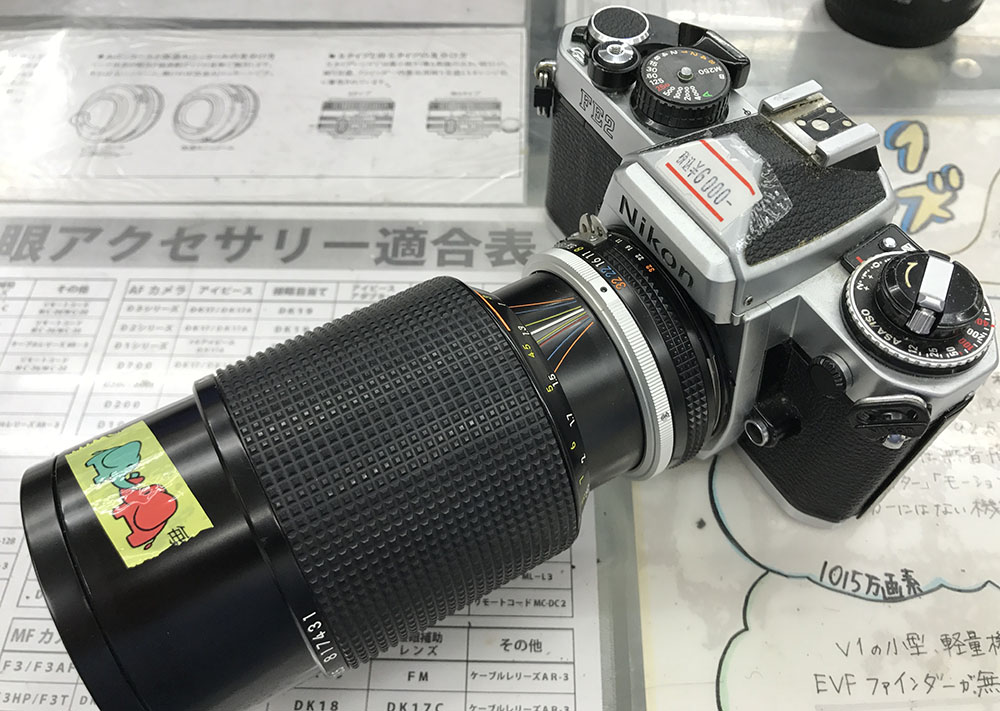
The Zoom-Nikkor 50-135mm f/3.5 Ai-S was sold from 1982 up to 1984, a short production run by any standard for a mass-produced lens. This was due to a lot of factors and one of them was the big shift towards autofocus back in its day. Despite this, it proved to be quite a nice lens for its time. It’s what I call a “compromise zoom”, a lens that doesn’t quite excel in anything but it has a lot of what’s important in a zoom and does everything pretty-acceptable. It’s quite a good lens for its class, too. It has a constant maximum aperture and that alone made it worth mentioning as one of the better zooms of its time. I have used many zooms from the era and most of them were so-so at best or unusable at worst.
I got the lens for a cheap price since it was sold as junk. Nobody wanted this because of the fungus, the Nikon FE2 was equally dirty so the whole setup is cheap. It’s quite heavy, certainly not your usual plastic lens but it balances quite well with most Nikons except for the smaller, plastic ones.
Hello, everybody! Do you remember Bruce Lee’s “Game of Death“? It’s one of the best martial arts movies ever made. It also inspired a lot of video games since each floor of the tower Bruce Lee was at is guarded by a villain, giving you this anticipation as to what or who to expect on the next floor. This is a great concept, something that has never been done before and copied ever since. Today, I will show you something similar, this time with cameras, not Bruce Lee.
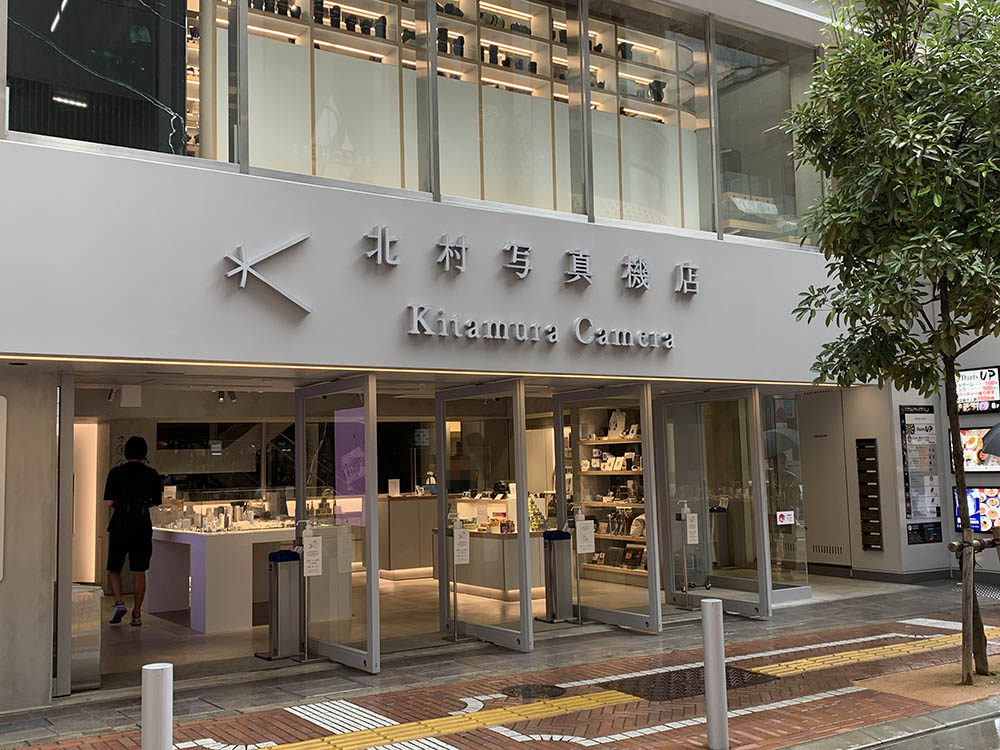
Kitamura Camera (カメラのキタムラ) is a well-known name, it certainly is a giant in the camera retail business. Unlike its rivals, Kitamura’s shops are all small and scattered. You will find several shops in an area, even. They’re also selling used gear which many of the bigger names don’t do. They offer great customer service, if you saw something from their website that you’d like to see, simply request for the product to be sent to the branch nearest to you and you could check the camera there and buy it if you wanted to. This is a unique service that nobody else offers. I don’t buy much from them but I used to have my rolls processed by them regularly until recently because they have jacked–up their fee. I was curious as to why they would do that, I now know the reason, that is probably to pay for the rent of their new shop.
This is their flagship, it’s their biggest and best shop ever. It’s open until late at night, 11PM. This is something that nobody offers! This shop is helping a lot in terms of promoting the use of film by offering this service! While I do not know about the cut-off time for processing I do know that you could get your roll from the reception any-time they’re open. This is great for tourists who value every minute of their time during their trip.
Hello, everybody! I was watching a documentary on the different types of passata, the tomato paste used in Italian cooking. They are fundamentally the same but there are numerous variations that makes each one special. I am not an expert in Italian cuisine but I do cook, which I am pretty good at and I can tell you that small differences go a long way. Small things such as the hardness of the water and where your salt came from matter at the end when it reaches your mouth. People who enjoy food will notice these subtle differences but those who just wanted to have a full stomach won’t. That is not a bad thing, it’s just differences in the way we perceive things. Today, I’ll show you a lens series which has small variations within its production but you can treat them all as the same lens.
Introduction:
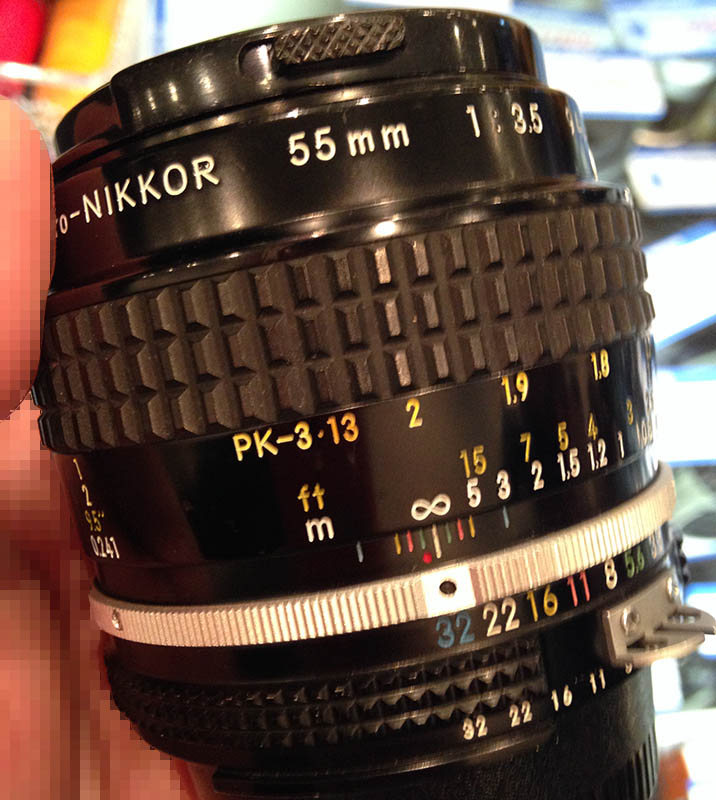
The Micro-Nikkor 55mm f/3.5K/Ai is merely a cosmetic upgrade of the Micro-Nikkor-P.C 55mm f/3.5 Auto. An excellent lens by all standards, many people claim that this performs slightly better compared to its predecessor when it comes to resolving objects that are further into the frame. I cannot confirm this myself but all I can say is that better manufacturing capabilities can be the biggest factor to this claim. Going back to the exterior, the new-look was needed to make this lens look in-line with the rest of the catalog. This set the final look of this lens for years to come until the last one was assembled. It’s the last model of the venerable 55/3.5 class of Micro-Nikkors.
It feels solid in your hands, a real tool for professionals. If you took care of this lens it will outlive us all and it will still be relevant for decades to come. The tough build of this lens is something that we don’t see these days as we are constantly introduced to plastic lenses on a constant basis. The build is all-metal apart from the optics, a true classic.
Hello, everybody! It is with profound sadness that I bring you the news that the best camera shop in Japan has closed. This shop has been an institution for 9 decades, pre-dating and surviving the war, even. Times were hard, the corona issue has been harsh to nearly-all businesses. Majority of mom-and-pop shops and medium-sized enterprises found it difficult to cope, that and the problem of nobody wanting to take-over the family business forced lots of long-standing shops to close. It’s just not sustainable. Today, I’ll guide you through this shop’s last days and through its last business hour.
For many, Alps-Do Camera (カメラのアルプス堂) is a familiar place, many of my friends, local and abroad found their best bargain here. I consider this place to be the best camera shop in Japan because of their service, price and selection. I was a regular here, at one point visiting the shop several times a day when I was working at the area. This shop helped me appreciate classic photography gear, it helped inspire me to build this blog and nurtured what I would call a “healthy addiction” to restore junk equipment to their former glory. Many people called this shop their favorite and the people here were considered friends to the regular customers.
This is the last time I will be walking through this junction with a purpose. I would meet with my wife or friends at this shop since I see to it that I visit it at least once-a-week. For many, this was a routine, a ritual. For those of you who haven’t seen or known this amazing shop, read my article about Alps-Do Camera in its better days before you proceed.
Help support this site by donating to richardHaw888@gmail.com over at Paypal! If you want to buy me a beer or a roll of film then that would be great,too!





 Richard Haw's Classic Nikon Repair and Review