Hello, everybody! How are you today? I just took the family out to a Korean restaurant. I know that there are a couple of cheap eats there and I thought it would also be good for the family to see the other cheap deals at the vicinity. There are many things that we can get for cheap and being cheap doesn’t always have to be bad. In fact, some cheap things are just as good or even better than the more expensive things just like Stolichnaya when you compare it to the top-shelf vodkas. Today, I’m going to introduce to you a cheap and very good Nikkor that many people started out with and many pros used these,too.
Introduction:
Today, we will talk about a lens that almost every Nikon photographer owned because it was cheap and it exceeded expectations, the AF-Nikkor 50mm f/1.8 lens! This lens was a big hit for Nikon because of its great price/performance ratio. The lens is “Made in China” and it lowered the production cost even more. I will show you what’s inside this thing so you will know how and why Nikon kept its cost down.
The AF-Nikkor 50mm f/1.8 is the original “plastic fantastic” lens for Nikon users back in the days. Many photographers started with one, built their portfolio with one and made a lot of money using one. They are also very easily sold soon after as they usually lust for a faster f/1.4 lens so these were very plentiful back then and maybe even to this day.
Hello, everybody! I got back into smoking again after quitting it for 5 years. It has always been on-and-off for me but this time, I’m using the “heat-not-burned” type where tobacco is heated instead of burned. The most popular one sold here is the IQOS. It’s by far the most popular model because of the cost and availability, it is not the best option so mine is now up for sale. In the long run, you end up spending more on tobacco because of bad design decisions made by Philip Morris. This is what I would call “false economy”, you are given an impression that you save plenty of money but at the end you actually spend lots more. That’s the reason why GLO, is slowly kicking the IQOS out of the market. It’s much better designed and is the best option in the “heat-not-burned” market. I’m not endorsing you to start smoking but instead I want you to quit! While we’re on the topic of economy, I will show you a good lens that’s hyped-up as being inexpensive but is really going to cost you more in the long run, a good example of false economy.
Introduction:
Today, we’re going to look at the Nikon 100mm f/2.8E lens! This lens belongs to the cheap Series E line of lenses. Series E lenses were made by Nikon for the budget conscious. They really had great value way back when they were introduced with the cheap Nikon EM. If you guessed that the “E” in Series E means “economy” then you got it right. The Series E line and the Nikon EM were made for ease of use, light weight and economy. This family of Nikon products were aimed at women who are fussy at the size or weight of their gear and ease of operation is important. Now, before branding me as sexist remember that this was the late ’70s. Maybe society is indeed sexist because cameras are still designed to satisfy these parameters today and much of the mirrorless segment shows this (ie: Fuji X-A line).
Series E lenses are generally compact and lite, the Nikon 100mm f/2.8E is no exception. Its weight is almost half of the equivalent Nikkor, is just as small as some small primes and was decently made to satisfy Nikon’s marketing and accountants. They’re pretty good but not Nikkor-good. More
Below are lists of the articles that I made throughout the years. I made this so my readers will have a convenient page to look for my articles without having to Google anything for what they need from my blog.
The articles are arranged in several categories for easy browsing. I hope that this will be useful for you. I will update this page every time I post something new. Thanks, Ric. More
Hello, everybody! It is Nikon’s 100th anniversary today! The company was founded with the merger of several smaller companies and it was called Nippon Kogaku which means Japan Optical literally. There are milestones throughout Nikon’s 100 years of continuous operation and I will tackle some of them here in my blog. You may have already seen my Nikon Museum series which I began a few months ago along with the related articles and this is just a part of that. I hope that you will enjoy this series, Nikon lover or not.
Introduction:
Today, I am going to show you a historically significant lens as far as the Japanese optics industry is concerned and that’s no other than the old but venerable Nikkor-P.C 8.5cm f/2! The Nikkor-P.C 8.5cm f/2 was perfected and sold during the post-war reconstruction years following WW2. It was heavily inspired by the Zeiss designs since Nikon was new to this game and needed somewhere to start from. I would consider this lens to belong to the 1st generation wherein the lenses have very strong resemblances to the Zeiss “inspirations”. By the 2nd generation,Nikon had learned enough and their lenses begin to look different in terms of design and engineering. Everybody has to start somewhere, right?
This is a compact but dense lens. The Nikkor-P.C 8.5cm f/2 is a joy to hold in your hands. It was made of chrome-over-brass with big pieces of glass, hence the weight. This amazing lens is legendary and you can even say that it was partly responsible for introducing the Japanese camera and optics industry to the world. Nikon is known here (in Japan) as one of the companies that helped revive the Japanese post-war export industry and this lens helped it achieve that. If you want to know the remarkable story of this lens then please read this web comics made by Nikon. This lens is so significant to Nikon’s history that the lens has its own comics! More
Hello, everybody! I was at the hospital last week to have a heart monitor installed. I was a bit tired and stressed the last few weeks so my health was a bit down. Now, the doctor advised me to have the heart monitor attached for a day to see what’s going on and while I think that this is a little too much since my problem is only some weird palpitations and not some dangerous heart condition, I just went along just for the sake of it. I can repair broken equipment but I cannot fix sick people. If only we can just have our organs fixed or replaced just as easily as opening up a machine and changing what’s wrong then the world would be a very different place to live in. I do not wish to be a bionic but I’m very thankful of the advances in medical technology. Today, I am going to show you a how to replace a problematic part found in a very popular Nikon gadget so please read on!
Introduction:
The Nikon MD-3 is a very popular motor drive amongst Nikon F2 users. It was affordable and is the “basic trim” as far as Nikon F2 motor drives are concerned. It is convenient to have this with your Nikon F2 when you have a heavy lens and it is very useful for sports photography in particular because you have automatic advance as a feature. In this blog post, I am going to show you how to repair a very common problem with the Nikon MD-3 and show you why this thing happens. There aren’t many resource available on this topic so I hope that you will enjoy this article and if you like it, please share this on your page!
Here is the Nikon MD-3 inside the shop’s display case. It sure has seen better years. These are usually found in this condition because they were usually used pretty hard by pros.
Hello, everybody! We just had a great dinner tonight and we had some banh mi from one of those Vietnamese shops in Shinjuku. I liked how the taste and texture of the ham gelled so well with the liver paste. The combination is so good that it will work universally with any sandwich from any cuisine. There are combinations that work so well that you will want to use it all the time. Today, I will show you a great combination from Nikon and I’ll also persuade you to buy one if you don’t own one yet. Read on.
Introduction:
The Nikon MD-4 was designed for the Nikon F3 series of professional cameras. The design is so well-integrated to the Nikon F3 that you just have to use it with one of these and see it for yourself. It really feels like a single unit and the Nikon F3 balances better with one installed specially if you are shooting with a heavy lens attached to it.
Here it is with the Nikon MD-3 set that I just worked on the night before I worked on this Nikon MD-4. Notice how much smaller it is? This compact form factor is very good since it helps a lot with the weight distribution. The Nikon F3 is physically smaller compared to the Nikon F2 for which the Nikon MD-3 was made for. I love mine a lot! More
Hello, everybody! I am going to show you a little project of mine. I get bored with fixing and repairing lenses so I do modifications as well when time and budget permits. Here is my latest creation (now in prototype stage) – the Autofocus Helios-44 for Nikon!
Here is the thing in action. It works surprisingly good at this stage so I am going to take this thing for a test tomorrow afternoon!
Hello, everybody! It’s now really hot here! I am now craving for a serving of ice-cold noodles served with wasabi and light dipping sauce! While this may sound a bit weird to some, this is a very popular way of cooling-off in Japan on the hot summer months. It is as weird as vanilla ice cream on your chips but I will tell you that many people do this and that includes me! Next time you go to a fastfood restaurant go order some and try it for yourself. While we are on the topic of unusual things I will show you an obscure lens from Nikon today. It’s so obscure that not a lot of people know about it.
Introduction:
Today, I’m going to show you one of the more obscure Nikkors that was ever made, the Nikkor-S 5.8cm f/1.4 Auto! This little lens is relatively unknown to the average Nikon photographer and is only being talked about by collectors and older lens aficionados like me. There are several small details that were unconventional at the time with this lens if you compare it to other Nikkors of its time that some people even dared to speculate that this lens was made by another company. I will show you what is different with this lens during the teardown section but do not get your expectations too high because the differences aren’t really that much and is insignificant except for one thing which I’ll show to you later. This is the only place on the internet that talks about things like this.
This is the first lens with a maximum aperture of f/1.4 for the F-mount. Just think about the light that it’s able to gather. It’s a beautiful lens and you can start a conversation with many people just because of how it looks. Despite it looking almost identical to the Nikkor-S 50mm f/1.4 Auto that replaced this a few years after this debuted it is a completely different lens on the inside. Many people confuse the two lenses at first glance and many collectors are even confused when they saw one from a distance at the camera shops.
Hello, everybody! It’s Father’s Day today so I will greet all of the fathers who are reading my blog today a very happy Father’s Day! I was admitted to the hospital today because of my blood pressure but I am fine now and the most important thing is I spent time with my family. I spend lots of time at work and maintaining this blog that I often times find I am neglecting my family. Speaking of fathers, I am going to introduce you to a really special father in this article because this one started a long line of excellent lenses!
Introduction:
The Nikkor-P•C 10.5cm f/2.5 debuted late in 1953 to fill the gap between 85mm and 135mm. Some people find its focal length a bit odd but this made a lot of sense if you’re carrying a 50mm in your bag because 85mm just isn’t too different from 50mm and 135mm may be too long for many people. The f/2.5 maximum aperture may also be unusual for people who aren’t familiar with Nikon’s history, the f/2.5 maximum aperture was common and was also used on the W-Nikkor 3•5cm f/2.5. Back in the day, Nikon was in a contest with everyone so even a small lead counts (f/2.5 vs f/2.8) so this became the fastest lens in the 100mm class for some time.
This lens looks gorgeous with all those shiny chromed details. You will sure to get plenty of stares when you shoot with this lens! I know some people who treat cameras as jewelry. I know it sounds strange but who am I to tell them otherwise? Focusing this lens can be really clumsy because of the long focus throw. You can also accidentally knock your focus off when you change the aperture and I find it annoying. Thankfully, I usually set my aperture before I focus my lens so this saves me a lot of trouble.
Hello, everybody! I went to the Nikon Museum yesterday afternoon and went to the small conference room under it to listen to a talk about the prototypes found at the Nikon’s Ohi Plant before it began being demolished due to the building’s age. The talk was by Nikon’s head of professional camera development from the Nikon F3 to the Nikon Df, a great guy by the name of Mr. Goto Tetsuro. There were around 60 people in the cramped room and we sat there for around 2 hours of Nikon geekery. There were lots of information, trivia and insights that were shared yesterday afternoon that would have been inaccessible to people who are not working at Nikon or the Nikon employees who don’t have anything to do with camera development. It was a good afternoon despite the heat and hunger.
The talk was light-hearted and can be compared to a journal recollection of some sort so there were many small things that were inserted into the program that weren’t originally planned. There were many important information shared about the development of the F-mount, the Nikon F and the Nikon F2 and I will share them one of these days in my blog so come back here everyday to add to my click counts! Do click the ads when I have them here in the future to help me pay for the overhead and server stuff!
Look at all these beauties! If only I can take them home! What you see here is definitely worth hundreds of thousands of dollars! This is the closest thing we can get to traveling back in time to Nikon’s early years in consumer camera production. It is as if I can see, smell and even contact the very people who were involved in these prototype cameras.
Help support this site by donating to richardHaw888@gmail.com over at Paypal! If you want to buy me a beer or a roll of film then that would be great,too!

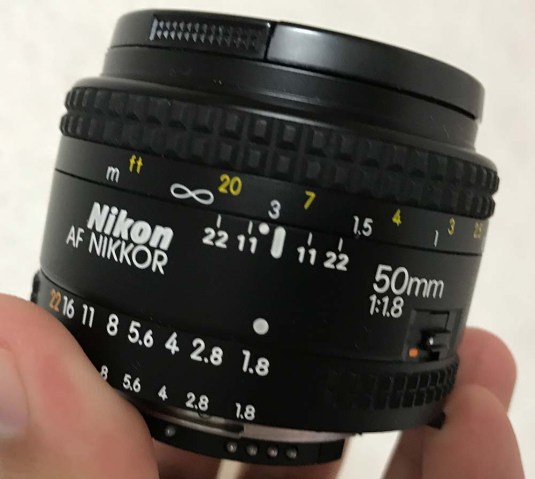 The AF-Nikkor 50mm f/1.8 is the original “plastic fantastic” lens for Nikon users back in the days. Many photographers started with one, built their portfolio with one and made a lot of money using one. They are also very easily sold soon after as they usually lust for a faster f/1.4 lens so these were very plentiful back then and maybe even to this day.
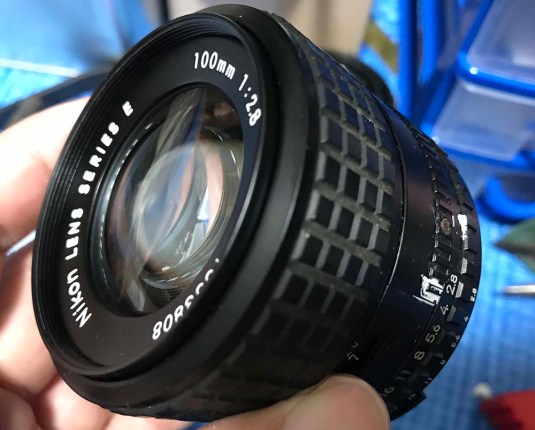 Series E lenses are generally compact and lite, the Nikon 100mm f/2.8E is no exception. Its weight is almost half of the equivalent Nikkor, is just as small as some small primes and was decently made to satisfy Nikon’s marketing and accountants. They’re pretty good but not Nikkor-good.
 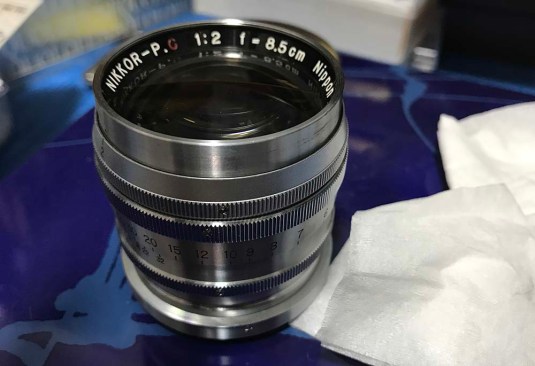 This is a compact but dense lens. The Nikkor-P.C 8.5cm f/2 is a joy to hold in your hands. It was made of chrome-over-brass with big pieces of glass, hence the weight. This amazing lens is legendary and you can even say that it was partly responsible for introducing the Japanese camera and optics industry to the world. Nikon is known here (in Japan) as one of the companies that helped revive the Japanese post-war export industry and this lens helped it achieve that. If you want to know the remarkable story of this lens then please read
  Here is the Nikon MD-3 inside the shop’s display case. It sure has seen better years. These are usually found in this condition because they were usually used pretty hard by pros.
 Here it is with the Nikon MD-3 set that I just worked on the night before I worked on this Nikon MD-4. Notice how much smaller it is? This compact form factor is very good since it helps a lot with the weight distribution. The Nikon F3 is physically smaller compared to the Nikon F2 for which the Nikon MD-3 was made for. I love mine a lot!
  This is the first lens with a maximum aperture of f/1.4 for the F-mount. Just think about the light that it’s able to gather. It’s a beautiful lens and you can start a conversation with many people just because of how it looks. Despite it looking almost identical to the
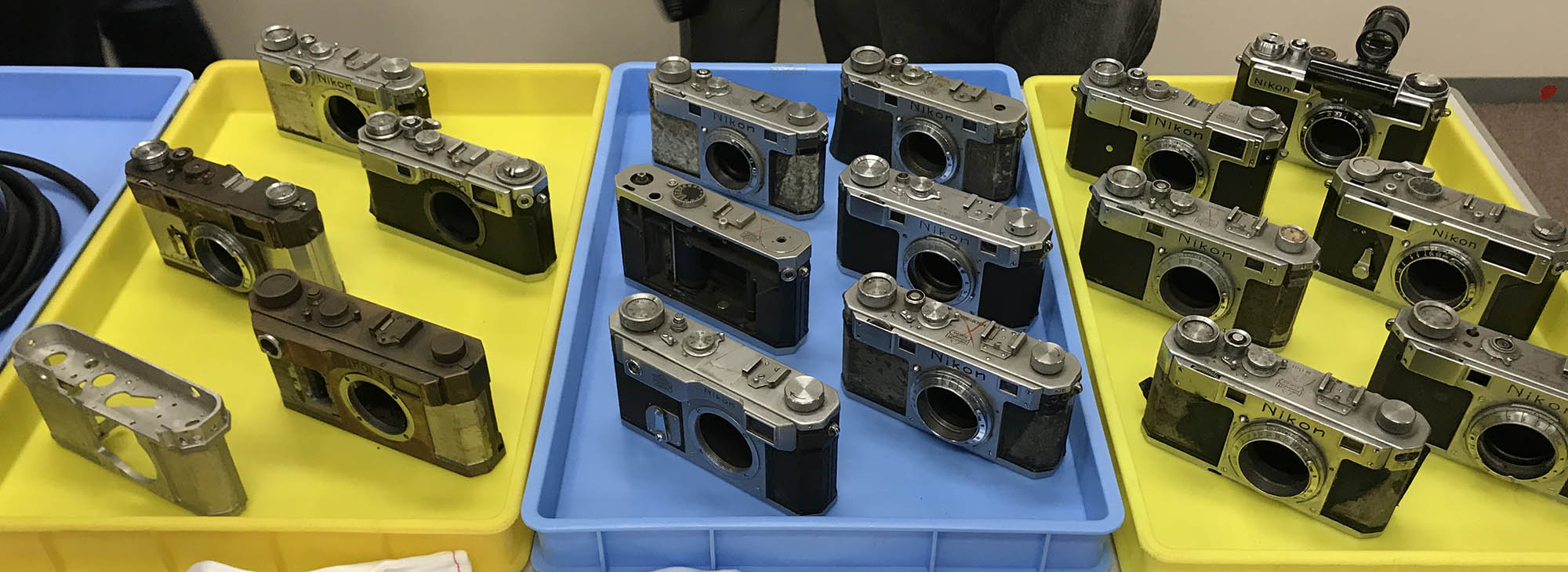 Look at all these beauties! If only I can take them home! What you see here is definitely worth hundreds of thousands of dollars! This is the closest thing we can get to traveling back in time to Nikon’s early years in consumer camera production. It is as if I can see, smell and even contact the very people who were involved in these prototype cameras.
 Richard Haw's Classic Nikon Repair and Review