Hello, everybody! I have been sleeping a lot better these days since I gave my resignation letter. I have been dreaming of things that could have been such as my high-school sweethearts. I felt like a teenager again but when it is time to wake up I am reminded that the women I just dreamt of were all married like me and they now look like Mama Fratella in Facebook! Today, I am going to show you a dream of mine that did come true, unlike the girls I dreamt of, it’s still just as pretty as the day I set my eyes on it in 2007.
Introduction:
The Nikon D3 was introduced in 2007, it is Nikon’s first full-frame DSLR and it created a big wave with its then-amazing image quality. It was considered to be the best that Japan could offer in terms of high-ISO performance and it challenged the status-quo of the time which was to go for higher-MP count. I remembered how much of an impact it created, suddenly, Canon is not the only company that has a professional-grade full-frame DSLR. Not only that, I also remembered how many professionals were talking about going back to Nikon just because of how well it performed. It was an exciting time. It was all thanks to the hard work of the engineers at Nikon. That was in 2007 and it’s almost 2021 now so how does it compare to today’s cameras?
This is a masterpiece, it’s certainly one of the most important cameras to be ever sold. I said that because the trend back then was to go for high-tech at the cost of other things that actually matter such as good dynamic range. It challenged that trend, mostly set by Canon by being both high-tech and also being able to give files that still hold pretty well to today’s standard. It has a great image processor, something that I always go back to even today.
Hello, everybody! I had to quit my job since it does not bring me happiness or satisfaction anymore. The situations and difficult people I had to endure wore me down as it’s unprofessional and toxic. This means that me and my family will have less food to eat for the moment but I also see this as a good chance to start anew since other opportunities open-up and new challenges will enable me to grow more. This and the prospect of making new friends are what’s keeping me optimistic about the future. While we’re on the topic of new beginnings, let’s talk about a lens that signaled a new beginning for Nikon, at least for the F-mount.
Introduction:
The Nikkor-H 85mm f/1.8 Auto is Nikon’s first 85mm lens for the F-mount. It debuted in 1964 and it took Nikon roughly 15 years to come up with another lens of this class, why it took that long is anybody’s guess. It’s probably due to a couple things, one of those was the unfamiliarity of designing lenses for SLR cameras wherein adequate clearance has to be obtained in order for its rear not to obstruct the flapping mirror’s movement. Whatever the reasons are, this lens is surely significant since the last Nikkor of its class is the older Nikkor-P•C 8.5cm f/2 which was made for rangefinder-coupled cameras. It’s release meant that Nikon F users could finally enjoy shooting with an 85mm lens again for portraiture and other things.
This is the earlier version wherein the information is engraved on the bezel and the walls of the front barrel is plain. Later ones have the engravings at the walls instead of the bezel. Light could reflect from the white paint and it could cause some unwanted artifacts in the photos at extreme cases. I don’t know how much of an impact that could cause but it does make sense. This is a bit rare and it took me a few years to get one that’s cheap. Many of them are in terrible state so I am lucky to get one that’s worth restoring.
Hello, everybody! Do you remember the B-52s? They sang some of the most unusual songs ever written such as “Rock Lobster“, which is basically just a collection of nonsense. Nothing made sense but I liked the song a lot. That’s just an odd song but people seemed to enjoy it. Odd things make for plenty of fun since they’re a break from the usual pattern. I think that modern pop could learn a lot from this so it could break-off from the monotony of what’s making it sound boring. Today, I am going to show you an odd lens, this is a lens that’s a one-off for Nikon and they never made anything like it again.
Introduction:
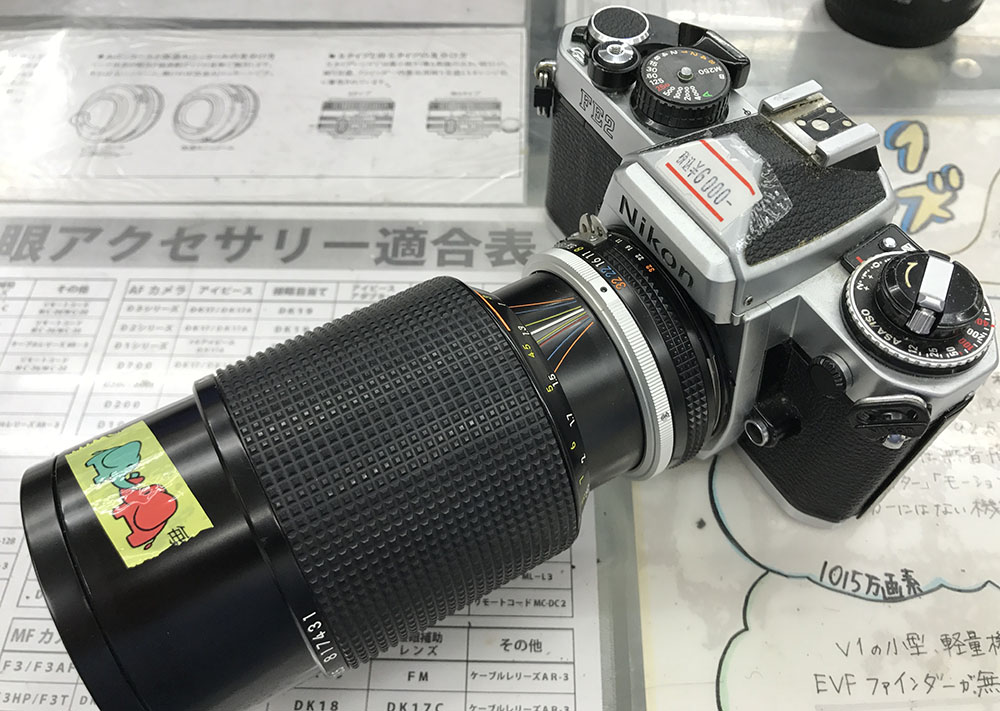
The Zoom-Nikkor 50-135mm f/3.5 Ai-S was sold from 1982 up to 1984, a short production run by any standard for a mass-produced lens. This was due to a lot of factors and one of them was the big shift towards autofocus back in its day. Despite this, it proved to be quite a nice lens for its time. It’s what I call a “compromise zoom”, a lens that doesn’t quite excel in anything but it has a lot of what’s important in a zoom and does everything pretty-acceptable. It’s quite a good lens for its class, too. It has a constant maximum aperture and that alone made it worth mentioning as one of the better zooms of its time. I have used many zooms from the era and most of them were so-so at best or unusable at worst.
I got the lens for a cheap price since it was sold as junk. Nobody wanted this because of the fungus, the Nikon FE2 was equally dirty so the whole setup is cheap. It’s quite heavy, certainly not your usual plastic lens but it balances quite well with most Nikons except for the smaller, plastic ones.
Hello, everybody! Do you remember Bruce Lee’s “Game of Death“? It’s one of the best martial arts movies ever made. It also inspired a lot of video games since each floor of the tower Bruce Lee was at is guarded by a villain, giving you this anticipation as to what or who to expect on the next floor. This is a great concept, something that has never been done before and copied ever since. Today, I will show you something similar, this time with cameras, not Bruce Lee.
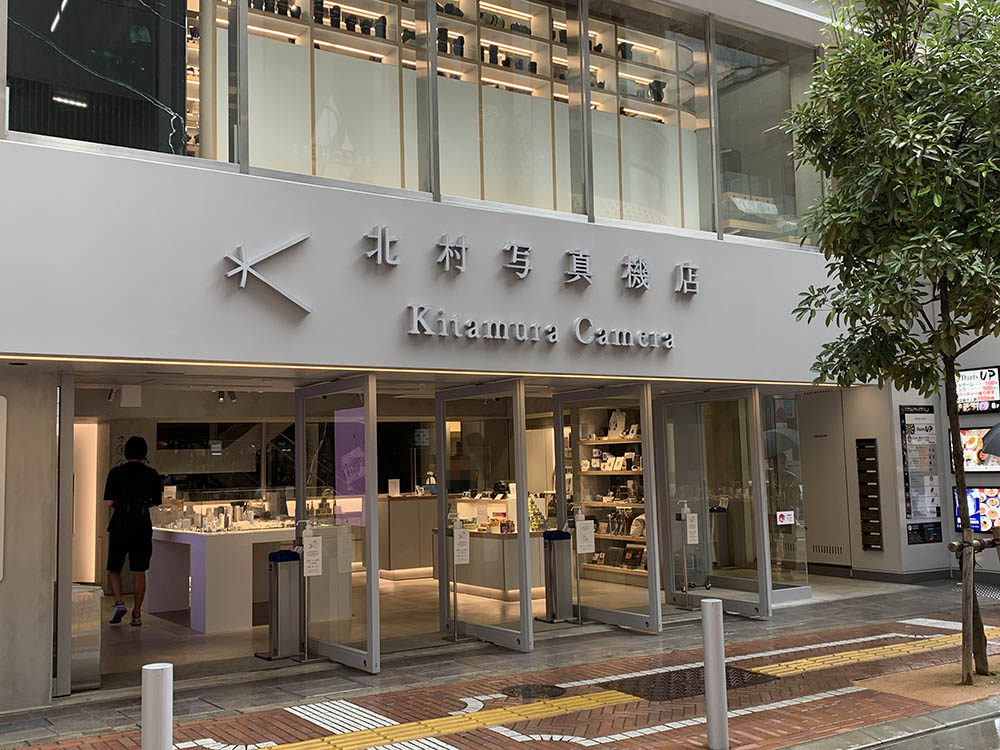
Kitamura Camera (カメラのキタムラ) is a well-known name, it certainly is a giant in the camera retail business. Unlike its rivals, Kitamura’s shops are all small and scattered. You will find several shops in an area, even. They’re also selling used gear which many of the bigger names don’t do. They offer great customer service, if you saw something from their website that you’d like to see, simply request for the product to be sent to the branch nearest to you and you could check the camera there and buy it if you wanted to. This is a unique service that nobody else offers. I don’t buy much from them but I used to have my rolls processed by them regularly until recently because they have jacked–up their fee. I was curious as to why they would do that, I now know the reason, that is probably to pay for the rent of their new shop.
This is their flagship, it’s their biggest and best shop ever. It’s open until late at night, 11PM. This is something that nobody offers! This shop is helping a lot in terms of promoting the use of film by offering this service! While I do not know about the cut-off time for processing I do know that you could get your roll from the reception any-time they’re open. This is great for tourists who value every minute of their time during their trip.
Hello, everybody! I was watching a documentary on the different types of passata, the tomato paste used in Italian cooking. They are fundamentally the same but there are numerous variations that makes each one special. I am not an expert in Italian cuisine but I do cook, which I am pretty good at and I can tell you that small differences go a long way. Small things such as the hardness of the water and where your salt came from matter at the end when it reaches your mouth. People who enjoy food will notice these subtle differences but those who just wanted to have a full stomach won’t. That is not a bad thing, it’s just differences in the way we perceive things. Today, I’ll show you a lens series which has small variations within its production but you can treat them all as the same lens.
Introduction:
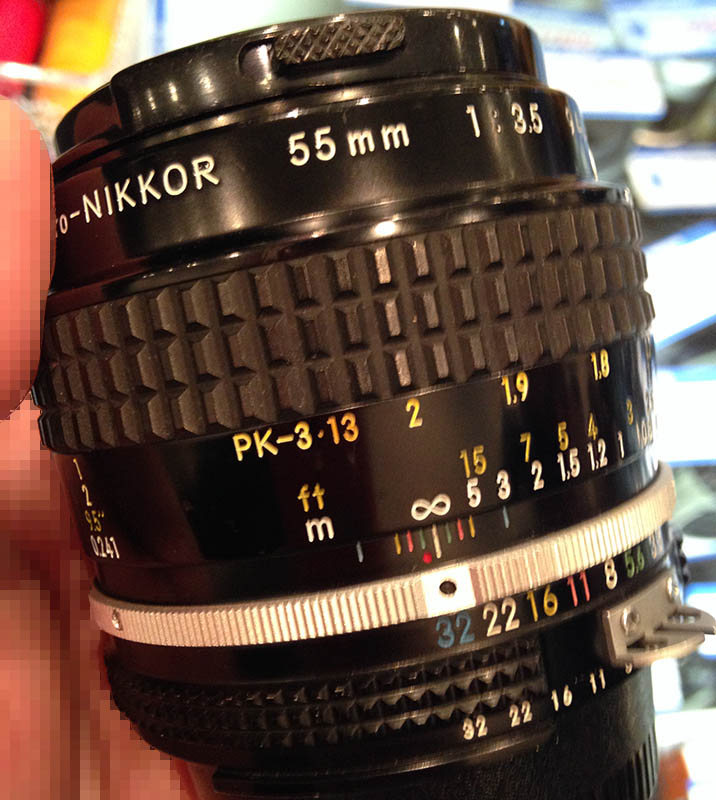
The Micro-Nikkor 55mm f/3.5K/Ai is merely a cosmetic upgrade of the Micro-Nikkor-P.C 55mm f/3.5 Auto. An excellent lens by all standards, many people claim that this performs slightly better compared to its predecessor when it comes to resolving objects that are further into the frame. I cannot confirm this myself but all I can say is that better manufacturing capabilities can be the biggest factor to this claim. Going back to the exterior, the new-look was needed to make this lens look in-line with the rest of the catalog. This set the final look of this lens for years to come until the last one was assembled. It’s the last model of the venerable 55/3.5 class of Micro-Nikkors.
It feels solid in your hands, a real tool for professionals. If you took care of this lens it will outlive us all and it will still be relevant for decades to come. The tough build of this lens is something that we don’t see these days as we are constantly introduced to plastic lenses on a constant basis. The build is all-metal apart from the optics, a true classic.
Hello, everybody! It is with profound sadness that I bring you the news that the best camera shop in Japan has closed. This shop has been an institution for 9 decades, pre-dating and surviving the war, even. Times were hard, the corona issue has been harsh to nearly-all businesses. Majority of mom-and-pop shops and medium-sized enterprises found it difficult to cope, that and the problem of nobody wanting to take-over the family business forced lots of long-standing shops to close. It’s just not sustainable. Today, I’ll guide you through this shop’s last days and through its last business hour.
For many, Alps-Do Camera (カメラのアルプス堂) is a familiar place, many of my friends, local and abroad found their best bargain here. I consider this place to be the best camera shop in Japan because of their service, price and selection. I was a regular here, at one point visiting the shop several times a day when I was working at the area. This shop helped me appreciate classic photography gear, it helped inspire me to build this blog and nurtured what I would call a “healthy addiction” to restore junk equipment to their former glory. Many people called this shop their favorite and the people here were considered friends to the regular customers.
This is the last time I will be walking through this junction with a purpose. I would meet with my wife or friends at this shop since I see to it that I visit it at least once-a-week. For many, this was a routine, a ritual. For those of you who haven’t seen or known this amazing shop, read my article about Alps-Do Camera in its better days before you proceed.
Hello, everybody! I’m pretty busy these days practicing programming. I am one of those people who prefer to use a simple text editor to code instead of using the latest code editors since I believe in good foundations. All the new and convenient features mean nothing if your fundamentals are weak. The simple ways will hone your discipline so I end up writing cleaner code. This can be translated to just about anything including photography. I like using older gear because it helps me focus and think before I click the shutter. I’m going to show you something today, it’s down-to-earth and it will teach you a lot about patience if you’re a new photographer. These don’t cost much as well and they’re great for students or people who are on tight budget.
Introduction:
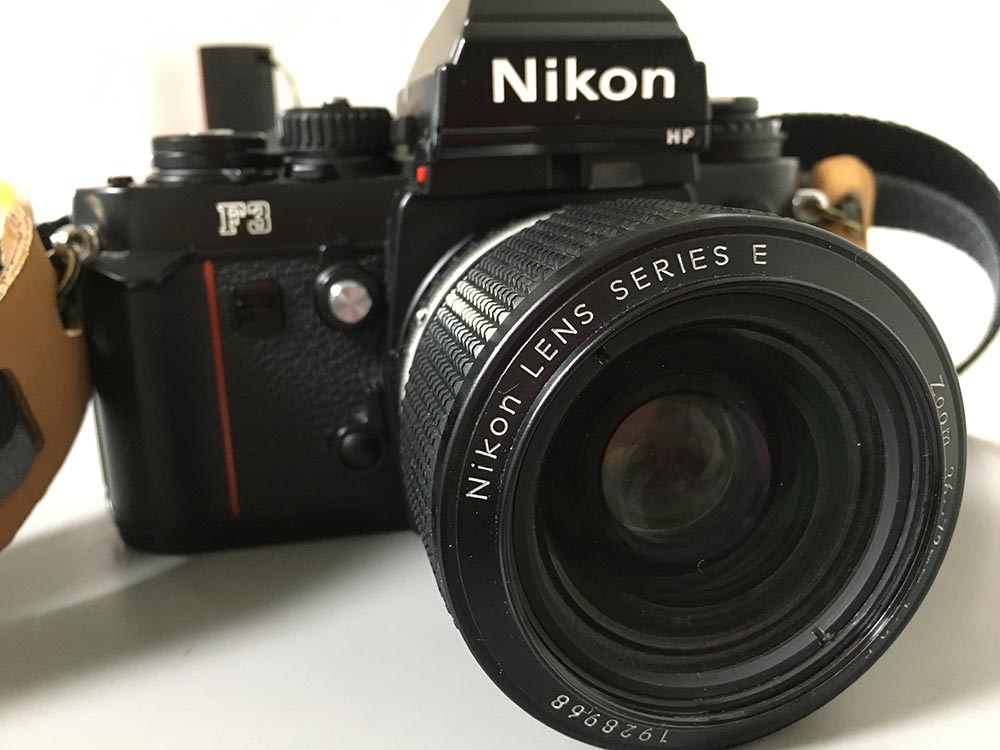
The Nikon 36-72mm f/3.5 Series-E was sold from 1981-1985, quite short for a production zoom by Nikon’s standard. It was designed to be a portable and cheap companion to the Nikon EM which was marketed towards the lower-end of the market segment, by that Nikon meant the amateurs, students and women. Yes, you heard me right, Nikon and the rest of the world back then thought that women enjoyed small, light and easy-to-use setups. This would have caused a controversy these days but that was the late 1970s. This lens was quite popular since it was sold to be cheap at a time when zooms were rather expensive and served a specialty market unlike today where it is the most common type of lens due to their convenience.
It offers a good range for practical photography, its f/3.5 maximum aperture is adequate in most cases but indoor photography will be challenging if you are shooting with film. It’s a nice lens to use with a Nikon F3 but I believe it deserves to be paired with a better lens, it was Nikon’s flagship camera.
Hello, everybody! Anybody rocked a mullet several decades ago? I once had a mullet and even had it quite recently. It’s considered ugly today, and you’ll get images of MacGyver in your mind whenever you see somebody who has it. That was the 1980s for you. But mind you, not all things from that time is ugly. There are things that were made back then that made plenty of sense, some of the most beautiful things were made during that time, too. Today, I will show you something that stuck-out amongst the rest. Compared to what the other manufacturers were making, this is pretty in a sea of ugliness.
Introduction:
The AF-Nikkor 80mm f/2.8 Ai-S is an odd lens today. Many people do not see or even knew about it but it has attained cult status amongst people who do and that all has to do with a special characteristic of this lens which you will see later in this article. This was made to compliment the Nikon F3AF, that’s the first professional autofocus Nikon that entered production. Without any lenses that could autofocus that camera would have been useless. Back then the servos and motors needed for this were relatively huge and fitting them to a small lens was challenging but Nikon did it and in an elegant way, too.
It’s a familiar-looking shape but back then many AF lenses have unusual or even out-of-place form like what Pentax and Canon had for example. Those were ugly, Nikon thankfully had better sense and taste! The engineers did a lot of work just so that the barrel is cylindrical as it should be. That made it easier to grip and it doesn’t feel odd in your hands. This may sound trivial, I don’t think anybody realized how difficult it was until they consider that it was the early 1980s and miniaturization wasn’t as good as it is today. Do you remember how ugly the old handy-cams were? That’s just the result of what technology could offer us back then.
Hello, everybody! I went to the $1 shop to buy some supplies. It’s incredible what you could buy for just $1, it’s surely helpful for my savings. What can you buy for $1? Not much, a burger from McDonald’s, perhaps? Cigarettes? I don’t think so, too. Well, maybe a loaf of cheap bread? How about a lens? Yes, a lens. I was lucky enough to find one for $1! It was sold as junk and the state was utterly poor so it was sold for just that much. I didn’t even have a second thought and I just caught it as soon as it was placed in the basket by the shop owner. Today, I will share with you my lucky find and I will show you what makes it even more special.
Introduction:
The Zoom-Nikkor 35-105mm f/3.5-4.5 Ai-S was introduced in 1983. It’s one of the new designs from Nikon to accompany their then-new flagship camera, the Nikon F3. Designing this was difficult since it had to use 52mm filters, it was important since it was conceived to be a lens for daily use. It had to be compact, too. Through great hardships, the designers eventually produced a lens that would define a new class of Zoom-Nikkors.
This is a lovely, little lens. It’s not as compact as a prime lens but for a zoom it is quite small specially considering its focal-range. It’s the first Nikkor for this genre, a general-purpose zoom-lens with a focal-range that’s more-than double, most of these lenses have the now-familiar variable-aperture. It was important to have a fixed-aperture for zooms back then, it affects metering but that’s not such a big deal in the 1980s when TTL metering became more reliable. Of course, professional lenses will mostly have a fixed-aperture but most won’t mind this at all, the most important thing is that it zooms and it takes decent photos.
Hello, everybody! I was looking at reviews of The Ten Commandments. This movie is one of my favorites, it’s the original movie that will make you pee at the seat because it’s too long! What many don’t realize is that this movie is a remake, a re-imagination of an earlier film with the same title. It was so good that people forgot about the original movie. This is rare because many remakes these days pale in comparison to the originals like Ghostbusters. It is such an entertaining film that I never get tired of watching it. Since we’re talking about remakes, I’ll show you a lens that’s a re-imagination of an old design, a modern remake of a real classic, and it’s better in many ways.
Introduction:
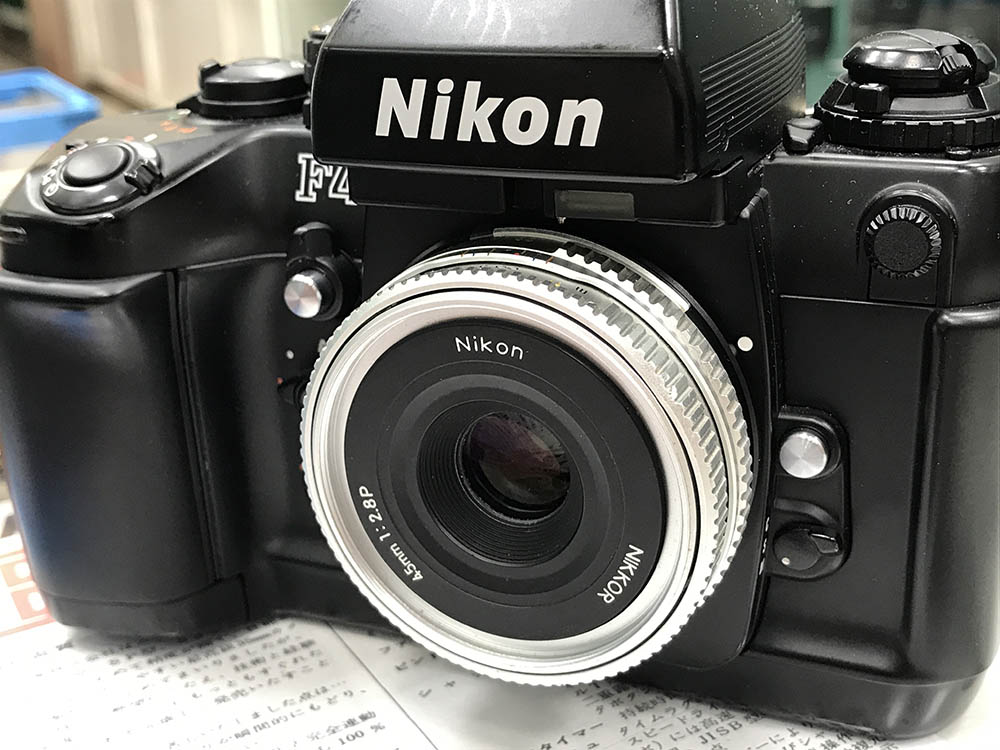
The Nikkor 45mm f/2.8 Ai-P is a modern take on a classic lens design. It was sold from 2001-2006 to compliment the Nikon FM3A. When this debuted, it kind of confused and excited the market since both it and the Nikon FM3A are re-imagination of old, manual equipment. People were used to seeing a new, modern design coming out each month at that time, but this? It has an appeal that and many people fell-in-love with this combo that they will not part with their setup. This was making a big statement, film isn’t dead. This was a time when people were selling all of their film cameras to buy digital cameras. Could it get any bolder? Hats-off to Nikon and the engineers!
It’s a really tiny lens, so-tiny that it can be annoying to use at times. Cameras with large, over-hanging prisms can be problematic since it can obstruct the view and you can’t see the aperture scale well. You can also get confused, its rings are so-thin and spaced closely-together you can accidentally turn any of them. These are sacrifices that we all have to make just so we can use the tiniest F-mount Nikkor.
Help support this site by donating to richardHaw888@gmail.com over at Paypal! If you want to buy me a beer or a roll of film then that would be great,too!





 Richard Haw's Classic Nikon Repair and Review