Hello, everybody. It’s a rainy day today here in Tokyo, it’s actually very bad timing since it is the annual Asakusa Samba Carnival today! I was hoping for good weather last night but it seems that nature listens to nobody. Oh,well…maybe it’s going to be sunny next time.
Introduction:
Today, we are going to talk about how I fixed the locking mechanism of my Nikon FE’s film door. My Nikon FE is supposed to be sold but I accidentally soiled the camera so it’s going to stay with me for now. I also fixed some other things on this camera and I will show you what I did next time. This is going to be a series like the one I did for my Nikon F.
Here is the Nikon FE along with the Nikon F. Notice how small it is but I assure you that this camera is very capable. In fact, I would say that it has most of what the legendary Nikon F3 has when it comes to features. More
Hello, everybody! I was out looking for something cheap to eat as usual. I’m budget-conscious when it comes to things outside of my camera hobby and one of the things that I try to be cheap with is food. I frequent Indian restaurants since they offer good value and cheap calories. I could ask for a roti refill or another serving of rice, for free. This means I could satisfy my caloric needs in a meal, that should last me the next day. While we’re on the topic of being cheap, I will introduce to you a lens that offers great value. Despite being an inexpensive item it’s able to give you adequate performance. Find out more about it in this article.
Introduction:
The Nikkor-Q 135mm f/3.5Auto was made from 1959 to 1979, it was made in several versions. The most common version is cheap since it is one of Nikon’s most-produced lenses. Many people disregard it today due to its modest specs and abundance. Despite that, many people don’t know that it used to be Nikon’s best moderate-telephoto lens for the F-mount for a short period and it has a couple of things that makes it appealing.
The Nikkor-Q 13.5cm f/3.5 Auto preceded it and it’s one of the original lenses for the Nikon F when it debuted. The one here is the late-production model, it’s the most-common variant and it’s the lens that we’ll showcase here. It’s an underdog, many compare it to the Nikkor-Q 135mm f/2.8 Auto, an incredible lens but it costed a lot more in those days so it’s not fair. This has its place in the Nikon catalog, it offered a cheaper, lighter alternative to the bigger, pricier NIkkor-Q 135mm f/2.8 Auto.
Hello, everybody! We are supposed to have the usual lens teardown today but I am too lazy and tired today to prepare the pictures and commentaries so I will just write a short entry this time around. I am also very busy in our studio because my cute assistant is currently working off-site for a couple of months. She should be back by the end of this month.
Introduction:
When I still had the D7200, I was always straining my eyes at the tiny DX viewfinder every time I used a manual focus lens with it. I focus using the focusing scale so I generally get a nice and focused picture when I am using the lens stopped-down. Shooting the lens at it’s biggest aperture is another story and I had to find a better solution for this.
The first solution that I thought about was using focusing screens! You can buy one for any camera or ask a shop to trim one for you but I am cheap so I simply opted to DIY the screen myself to save some money. I ended up saving enough money that if ever I failed at this, I would have enough money to attempt 3 more times! More
Hello, my dear readers. I just unloaded plenty of digital gear yesterday morning. Shooting film and using analog equipment has been so much fun for me that I have relegated all of my digital equipment for low-light and indoor shooting exclusively or for really important events where there is no room for mistakes (paid stuff). Chances are if you are reading and following my blog then you are already at the same point in your photography adventure as me. Do not believe it when they say that shooting film is cheaper then shooting digital, we will talk about it in a future post because there is just so much cow dung being posted on the internet by film snobs.
Hello, everybody! Lately, there has been a shortage of cheaper lenses at the junk shops in Tokyo so I haven’t added anything new into my lens collection for a couple of weeks now. There are many factors that contribute to this and one of them is the swarm of mainland Chinese tourists swarming here to shop. It was different several years back but what can I do? It’s an open market and it is everybody’s right to shop. Luckily, I can still find a few good deals like the lens that we are going to talk about today.
Introduction:
We are going to discuss a very important lens in Nikon’s lens lineup during the 1970s and that lens is the Nikkor 200mm f/4 K/Ai lens! The K (New-Nikkor) and Ai versions are near-identical so you can use this guide for both lenses. I have overhauled both versions and I cannot find much difference between these versions. This was a popular lens for people who like to take a long lens along with them during hiking trips because of the size and it has a maximum speed of f/4 which is kind of decent for use in sunny days but isn’t useful when you don’t have a tripod during a cloudy day because you’ll need to shoot this using a tripod to prevent blurred photos. Landscape and bird photographers may appreciate it for its size and specs and it’s a versatile lens for portraiture, too. When shooting under a controlled environment such as a studio and using strobes, the rather slow f/4 maximum aperture won’t matter because you will be be shooting this lens stopped-down anyway. It is great for full-body portraiture because the compression a 200mm lens can give is going to make people look taller and faces look thinner.
The lens feels great in your hands, it’s dense and there’s certainly a feeling of quality and precision when you use it. This lens was built during a time when Nikkors were made to last forever. This also makes it slightly-heavy and you’ll wish that it has a tripod foot, this lens can make any setup front-heavy so you don’t want to handle this carelessly. If you’re going to use this with modern Nikon cameras then make sure that you get one that comes with an Ai-ring for the New-Nikkor version or else you will damage your camera when it is mounted by force. Mine has the Ai-ring and I am glad that I got it.
Hello, everybody! Summers here in Japan can get really hot or rainy. All the heat and water will result in high humidity and we all know what that means. If you got the misfortune of having one or more of your lenses infected with fungi then head this fungus removal post to remedy the problem.
Introduction:
This is a part of our Nikon F series. Last time, we talked about how we can fix and clean the film counter display of Nikon F and now we are going to talk about how we are going to fix and clean the very popular Ftn finder!
The Ftn finder can be distinguished from earlier models by the lever on it’s right side. This lever is used to open the 2 clasps that help secure it to the front plate of the camera’s face. There are 2 other earlier finders with a light meter attached and this Ftn finder is the last and most advanced iteration, making this the most popular metered head for the F so far. More
Hello, dear readers! How are you this weekend? The weather here in Tokyo is beginning to be unbearably hot as mid summer approaches, there are times where the heat would even reach 38! Please stay hydrated by drinking plenty of water because I care for your well-being. I don’t wish to read about a photographer who collapsed because of the heat, that would definitely spoil my mood. Do take care. Speaking of heat, I’ll talk about a “hot” lens today and when I say hot I mean it’s popular these days for people who like to adapt old lenses to their cameras. Stay and read what this hot item is all about.
Introduction:
Today, we are going to talk about the Nikkor 135mm f/2.8K! For those who are following my blog for some time you may have remembered that I made a tear-down guide of the Nikkor-Q 135mm f/2.8 Auto lens earlier this year – this lens is its successor! The older lens has set the bar high for Nikon but this new lens was able to surpass that in almost every way. It has a new optical formula and a new lens barrel design. This lens is totally new, it has nothing in common with the older lens apart that it’s from the same lens class.
This lens looks great on modern DSLRs like this Nikon D750. Its image quality still keeps up with the best of Nikon’s (or Sony’s in the case of the Sony a7) sensor technology! There is a lot talk these days online about this lens and I will show you why this lens is special. More
Hello, everybody. For today’s short post, I will be showing you how I adjusted and cleaned my Nikon F’s frame counter. My F’s frame counter is a little bit offset by less than 1mm. It may not seem like a big deal, but the arrow on the counter is always pointing in between 2 numbers. This makes it hard to judge which frame I am currently at and this is driving me crazy! The camera is old and it is likely that the frame counter housing moved a bit when the previous owner was using it.
Fortunately for us, this is a very simple thing to fix and since I am detailing this camera to make it look as good as I can I also taking this opportunity to clean other things within the same assembly as you will see later.
First, loosen up these 3 tiny set screws on the frame counter housing. You do not need to remove them from their holes so you won’t have to place them back later. I really dislike these things because they are small and delicate. These set screws secure the housing to the camera by locking the whole thing into the groove underneath. More
Hello, dear readers. I was still greeted by a sad news this morning with the passing away of one of my inspirations for taking people on the street, the great Bill Cunningham. The guy was so low-key and I would often forget his name and just remember his work. Unlike the majority of the current corp of photographers who would market themselves a lot on the internet all the while having mediocre portfolio and charging a lot for workshops, Bill is the type of guy who would just do the opposite. He hated the attention and money. He is happy just to do his craft and have people recognise him for his work rather than his own persona and he would even turn down money because he valued his art and freedom more than money, such a profound way to live.
It was already bad to learn that he had a stroke yesterday and waking up finding one of my heroes dead is even worse. The photography world has lost a remarkable person today. More
Hello, everybody! I hope that all is well with you. I was not feeling well this whole week and I’m a bit sick as I write this post but thinking about my readers and seeing my page view spike during the weekends because of people anticipating a new post gives me the encouragement to write this. Imagine Hulk Hogan rising up again after getting pinned by André the Giant in Wrestlemania III (after hearing the crowds cheer). I know how it feels now. I also made a Facebook page so that people can follow any updates that I made on this blog as well as serve as a venue for people to ask and talk about Nikkors and their maintenance. Just click on this link and “like” the page.
Introduction:
Today, we are going to discuss the “legendary” lens that started the small mid-range zoom trend, it’s the Zoom-Nikkor 43-86 f/3.5! You can find many reviews on the internet for this lens so I’m not going to discuss its performance here in detail. Besides, that is not the goal of this blog as we’re more interested in the mechanical side of things but I’ll at least show you some sample pictures that were shot with this lens to help illustrate my point and to give you a better understanding of how to use this lens, something that most reviews for this lens won’t show you.
This was designed in the early 1960s to be used with the entry-level Nikkorex cameras as a built-in lens. Later, Nikon decided that this lens was worthy enough to carry the Nikkor name so it finally debuted as a separate optic for the F-mount. This is said to be the best selling zoom lens of all time and only to be outdone in sales volume by the very popular Nikkor 24-70 f/.8 AF-G (which I owned) lens several decades after.
People are divided when it comes to this lens, some say that this is the worst that Nikon made while some say that it’s respectable in a way so it deserves more respect. I fall into the latter because it was revolutionary, it’s responsible for pioneering new concepts in photography. Having this alone gave the 1960s photographer the freedom to change focal-lengths without changing lenses. It replaces a 50mm and 85mm lens in your bag and it also didn’t cost a lot, too. This meant that journalists and amateurs won’t lose a shot just because the wrong lens was attached to their camera.
Help support this site by donating to richardHaw888@gmail.com over at Paypal! If you want to buy me a beer or a roll of film then that would be great,too!

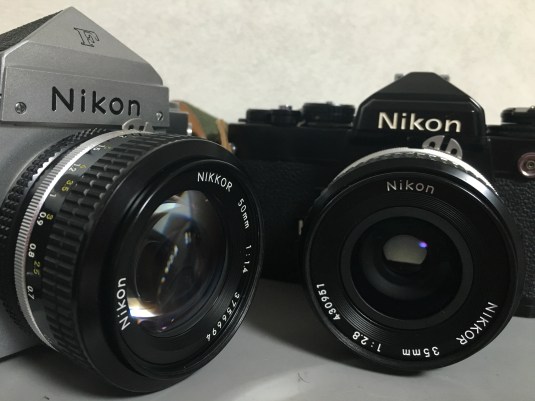 Here is the Nikon FE along with the Nikon F. Notice how small it is but I assure you that this camera is very capable. In fact, I would say that it has most of what the legendary Nikon F3 has when it comes to features.
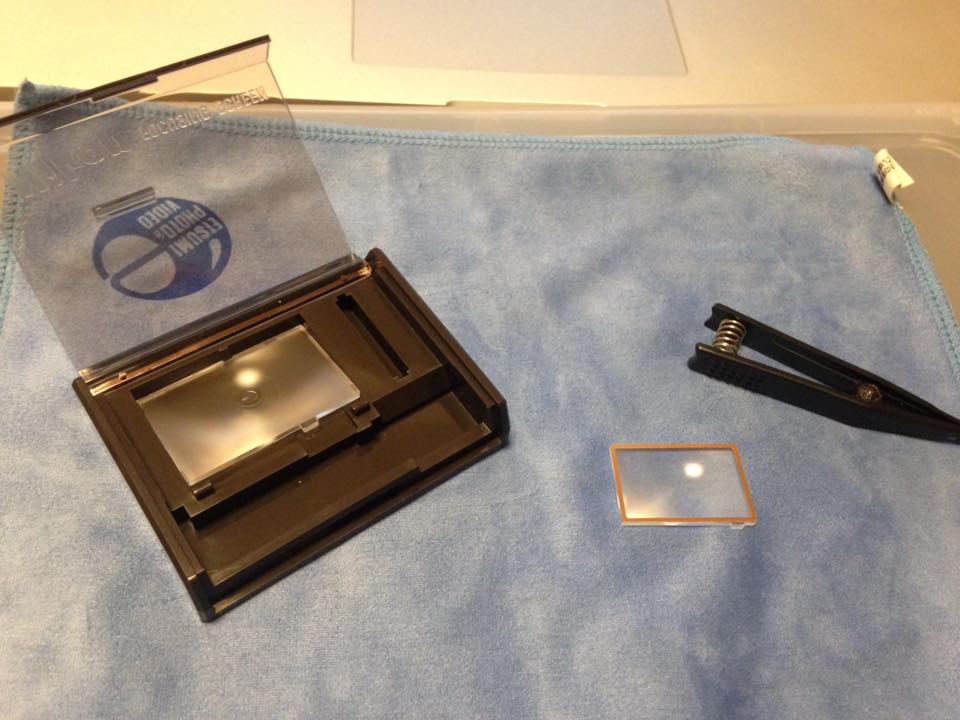 The first solution that I thought about was using focusing screens! You can buy one for any camera or ask a shop to trim one for you but I am cheap so I simply opted to DIY the screen myself to save some money. I ended up saving enough money that if ever I failed at this, I would have enough money to attempt 3 more times!

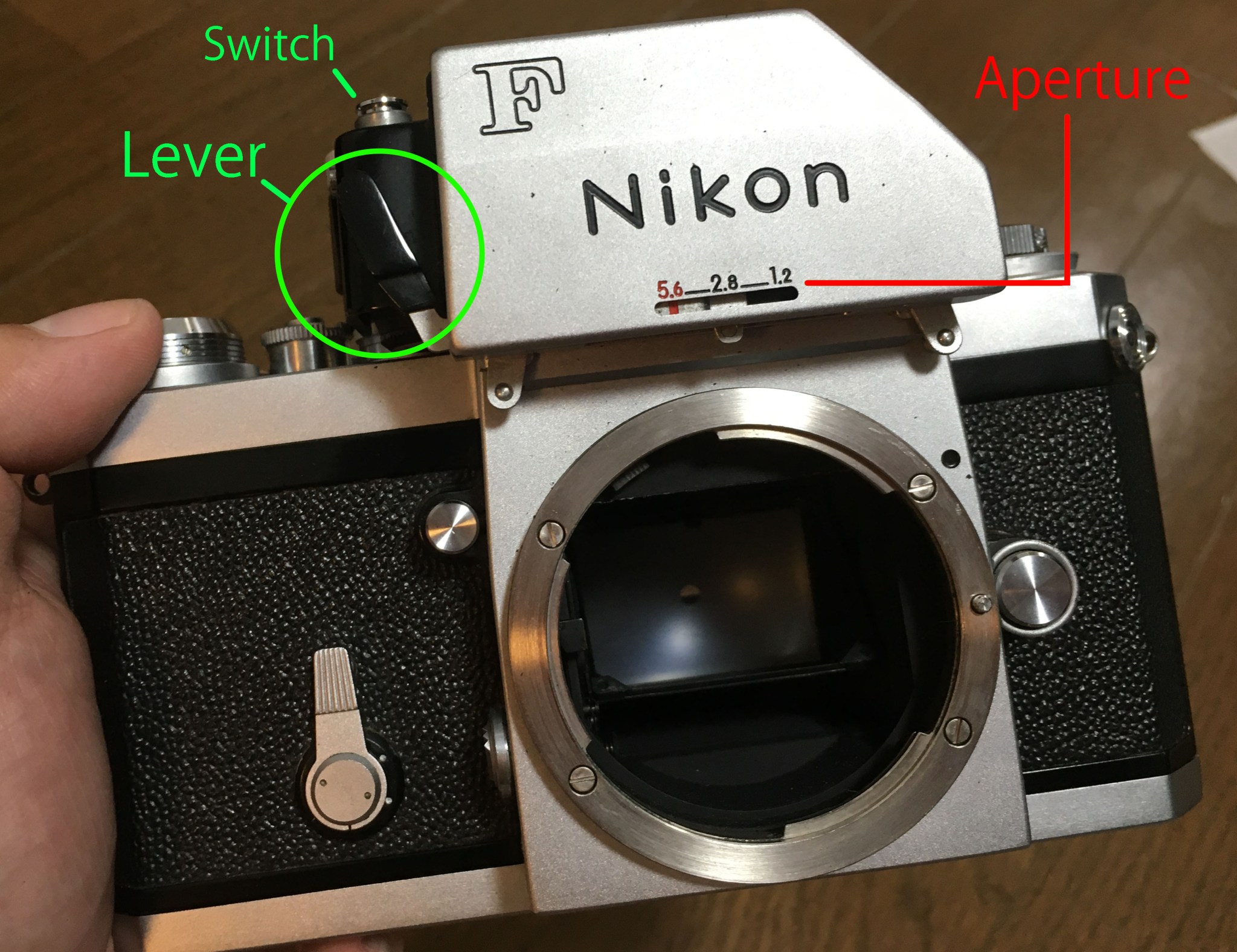 The Ftn finder can be distinguished from earlier models by the lever on it’s right side. This lever is used to open the 2 clasps that help secure it to the front plate of the camera’s face. There are 2 other earlier finders with a light meter attached and this Ftn finder is the last and most advanced iteration, making this the most popular metered head for the F so far.
  This lens looks great on modern DSLRs like this Nikon D750. Its image quality still keeps up with the best of Nikon’s (or Sony’s in the case of the Sony a7) sensor technology! There is a lot talk these days online about this lens and I will show you why this lens is special.
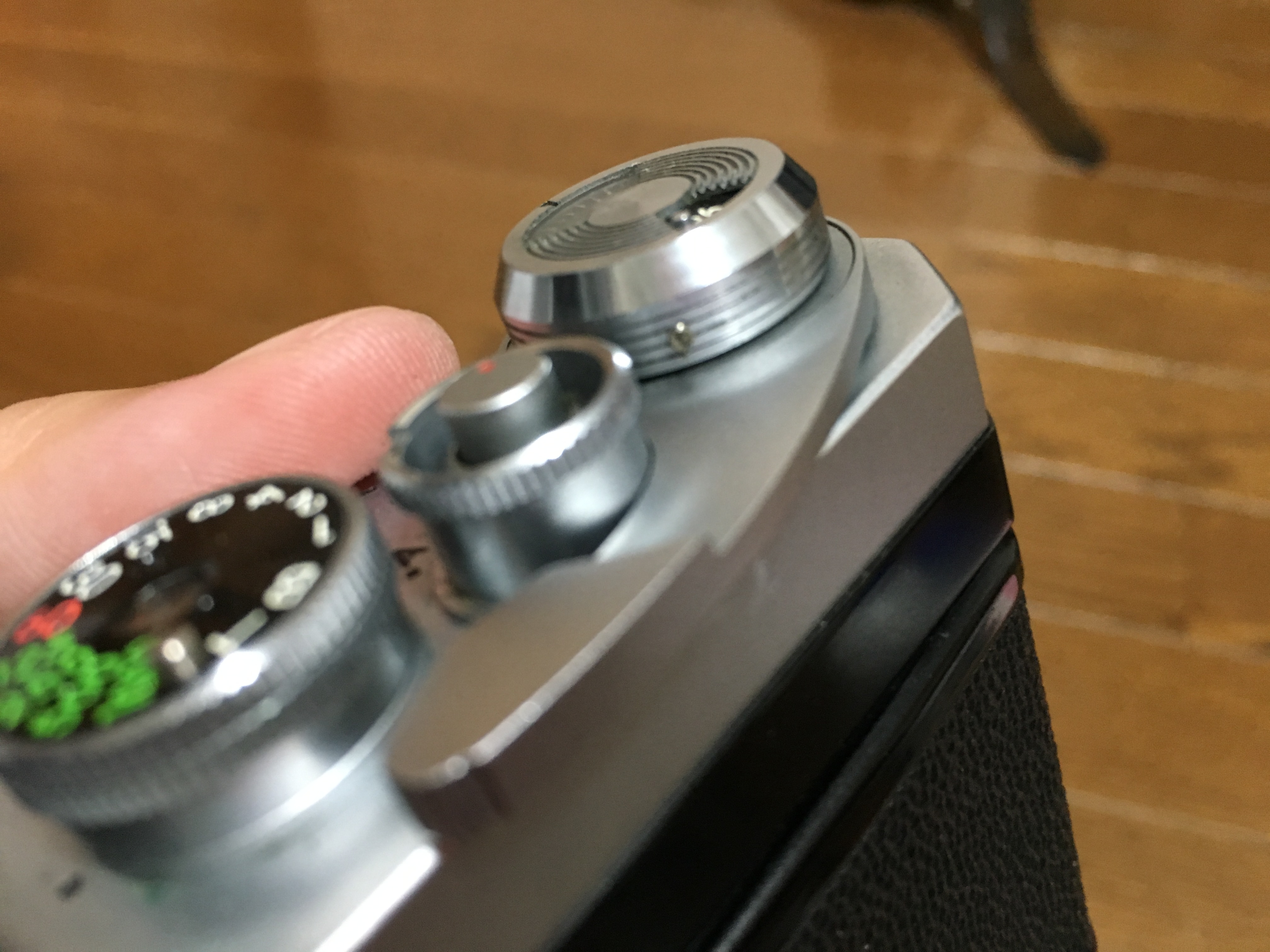 First, loosen up these 3 tiny set screws on the frame counter housing. You do not need to remove them from their holes so you won’t have to place them back later. I really dislike these things because they are small and delicate. These set screws secure the housing to the camera by locking the whole thing into the groove underneath.
 Richard Haw's Classic Nikon Repair and Review