Hello, everybody! How are you today? It’s Summer here and my head is painful from the walk this afternoon under the sun. I feel dizzy as I write this article but I really wanted to finish this one for you tonight. It feels like my vision is blurred, it feels like I was looking-through a fast telephoto lens! A fast telephoto is great for many things such as nice bokeh and subject isolation. Today, we are going to see a very important Nikkor that people can agree with me as being one of the best lenses produced in the 1980’s.
Introduction:
The subject of this article is no other than the legendary Nikkor 180mm f/2.8 ED Ai-S! It’s a very good lens and it is the successor to the excellent Nikkor-P.C 180mm f/2.8 Auto. This lens had a rather big task, to out-perform its excellent predecessor which is considered to be quite an excellent lens even by today’s standards and this lens did just that. The optics were designed from scratch and the then-new E.D. glass technology was implemented to the optics to give it better performance. It did improve the slight color-fringing that you can sometimes see while using the older lens design but sharpness and rendering were left nearly the same as far as I can tell. I am not a technical photographer shooting plants or bricks and masturbating to the results at my monitor so you will probably get concise answers elsewhere. I use my lenses and enjoy them as-is, taking notes on my impression while using them and remembering details that matter in real-world use. With that said, I will say that this lens will still give you a big smile each time you use it because it’s just that good and I can guaranty this to you unless you got a lemon for a lens.
It was built tough with all the metal parts in-and-out of the lens, you can feel the quality just by holding it in the hands. It is quite hefty because of the big glass so it’s going to be a very stable setup no matter what camera it’s mated to. This is very important, the long 180mm focal length will be a bit tricky to steady when you are shooting this hand-held since the weight is going to help you stabilize it to some extent. You will also want to shoot it with a shutter speed that is no-lower than 1/200s to prevent blurry results or so they say. This is not a rule but a guideline that many people follow. It just means you shouldn’t use a speed that is lower than the focal length of your lens. This is more relevant for the SLR because the mirror is going to add some vibration to your setup. I skip this guideline when I shoot with a rangefinder because there’s no mirror to shake my setup. This lens also comes with a built-in hood, it is very useful and convenient since you won’t need to carry a separate shade for this.
Hello, everybody! How have you been? It’s been a long time since I published anything, I have been really busy at work writing code for our new motion-capture pipeline at the company. The current one was too complicated and the code was too bloated so the guy I am working with couldn’t maintain it. I was tasked to write some new tools with Python and I suggested to make the code simpler. In a production environment the decision to go simple is a wise one because if things go wrong things can easily be fixed and you can also expand your program when you need to. I used to work more on the creative side as an artist so I know what should work and won’t. I drew this inspiration from Nikon and I will show you one example in today’s article where this philosophy was implemented!
Introduction:
This series is going to be special because we are going to talk about the Nikon S! This is a very special camera because this camera is Nikon’s first 35mm camera design. It’s just an update of the Nikon I/Nikon M models that came earlier and you can consider them to be the same camera in most respects because the differences aren’t that great. This is the camera that started it all for Nikon and it can be considered as one of the most important Japanese camera design ever. Many “experts” consider this to be a clone of the venerable Zeiss Ikon Contax 2 but I will show you that that’s not really the case in this series and I will also make a video about that so please watch it later in this article!
The Nikon S is a very sexy camera. The straight lines give it a brutalist profile and it gives this camera very solid feel in the hand. Its heft also gives you the added confidence to use slower speeds than usual because the weight will somehow give your setup stability. This is a serious tool for professionals and it earned its reputation in the harsh Korean winter fighting during the Korean war. I can confidently say that you can maul a person with a well-placed whack to the face with the bottom of this camera. Yes, I am serious.
Hello, everybody! I hope you guys remembered the article that I made last year about a certain camera shop called Nitto Camera? While the article sounded sad because the old man running the business was considering retirement he did gave us a little bit of hope because he mentioned that he may open another shop nearby if he found a good place. It is with the greatest pleasure that I will announce to you that he has indeed opened up a new store and it’s not too far from the old place. Please spend a little bit of your time and read what the new shop is all about and if you are in town, please drop them a visit! This shop is underrated by many people and some would even poo-poo it because it’s a small shop that’s situated near the big-name-shop in Nakano called Fuhiya Camera. I love both shops and I will highly recommend that you visit both shops if you are in the area or else your pilgrimage to Nakano will be half-assed! Let’s go and visit the NEWNitto Camera!
The new shop doesn’t have a storefront because it’s inside this unassuming building. You will have to go inside the IFO building and take the elevator to reach the new shop at the 8th floor (#801). It’s kind of out-of-the-way so you will have to use a little bit of effort just to get there but don’t worry, it’s all worth it once you get there.
Hello, guys! We just had the 22nd World’s Used Camera Fair held in Shibuya last May. I didn’t go there at the first day because I was busy at work and quite frankly, I don’t want to spend too much these days. It was held by the Imported Camera Society (I.C.S.). They hold similar events every season and they have been doing this for years. I come to these regularly not just for the shopping but more to meet and say hi to the shop owners or the clerks that I interact with and eventually formed a friendly relationship with. Come with me and let’s see what was going on last May 24-29 at Shibuya!
This is the entrance to the bazaar. I cannot stand the horde of shoppers at the opening so I decided to come during the weekend. There has also been an influx of Chinese buyers from mainland China (P.R.C.) lately and seeing how they behave is something that I want to avoid as much as possible. As you can see in the picture, it’s much more relaxed and I won’t have to squeeze my way just to see something. More
Hello, everybody! We had some Japanese-style steak tonight for dinner. It’s a fusion dish, a new take on a classic by adding some elements of Japanese cooking to make it more interesting and familiar to local palates. While it is arguably delicious, this is still a new thing. I estimate that it is probably only less than 2 decades old. While that was delicious, it was built on established cooking techniques and dishes, I feel that there’s still a lot of room for improvement. While we’re on the topic of fusion and improvement, I’d like to introduce to you an interesting lens, it’s an early attempt to fuse 2 paradigms. While it’s a good start, it still has lots of room for improvement but the lens had plenty of potential and that’s what’s most important if you ask me.
Introduction:
Today, we are going to talk about the AF-Micro-Nikkor 55mm f/2.8. This lens is not known by a lot of people due to its rarity. It’s only made a few years before it was replaced by a superior design. This is one of the original lineup of AF-Nikkors introduced in the mid-1980s for their new AF cameras like the Nikon F4, these gained an underserved reputation amongst hardcore Nikkor fans due to the use of plastics. Nikon at that period in time was experimenting with AF lens designs so as a result, many of these suffer from awkward handling characteristics which annoyed those who are used to using classic Nikkors.
The AF-Micro-Nikkor 55mm f/2.8 is a rather boring-looking lens. It looks like a tea cup or a salve pot depending on who you ask. But appearances can be deceiving, this lens is a great performer throughout its range until you reach f/11-f/16 where diffraction begins show. This lens can also go to a maximum reproduction ratio of 1:1 without the use of any accessory, it’s the first lens in the 55mmMicro-Nikkor line that’s able to do this natively since the Micro-Nikkor 5.5cm f/3.5from 1961. It achieves this feat by using a long-telescoping set of barrels to extend the lens to about twice its length. If it all sounds familiar to you that’s because this is the predecessor of the amazing and still in-production AF-Micro-Nikkor 60mm f/2.8D. While both lenses feel similar, they’re different mechanically and optically. Both can extend their barrels using 2 totally different methods.
Hello, everybody! Hope you are fine, I had a painful back yesterday because I slept in the wrong position. Back pain has always been a problem of mine for years and it comes back occasionally. It’s probably due to the nature of my job where I am required to sit for long hours at work. Repairing lenses and cameras isn’t much help too because I am spending a couple of hours a night sitting with a bad posture. Speaking of back pain, I’ll show you guys a lens that will certainly make your back ache if you are carrying one for too long and that’s the reason why I seldom use this lens.
Introduction:
We are going to talk about one of Nikon’s earlier telephoto lenses and it’s no other than the Nikkor-H 300mm f/4.5 Auto! This lens succeeded the Nikkor-P 300mm f/4.5 Auto. They are nearly-identical to each other except the older one only has five elements. It was a unique lens when the Nikkor-P 300mm f/4.5 Auto was released in time for the 1964 Olympics in Tokyo. It was then updated with an additional element in 1969 but its design remained nearly-identical. In fact, it can be hard to tell the difference when you have the two together in a picture. I don’t have the earlier one but people claim that it’s a decent and well-balanced lens even wide-open. This lens is supposed to be the improved version but I cannot do any tests to back it up and my copy of this lens suffered from terrible damage in the rear element which seems to be somewhat common with this lens for some reason.
This is a big lens and it can get longer when you extend the built-in hood. It balances well with my Nikon D750, I can imagine that it can be even better with a bigger camera like the Nikon D4. It’s not something that you’ll want to use today for sports and wildlife or in situations where you’ll need very fast AF performance and super-sharp images but it can be an enjoyable lens to use when you’re just playing around.
Hello, everybody! Today is the start of my 4-day weekend! I’ll have enough time for my recreation and self-healing. As you know, I’m busier now at my new studio, finding time to do what I love can be very difficult. I often find myself sleeping really late and it’s beginning to take a toll on my health. It’s great that I can recharge myself after all the work in the past few months at work and at home. Speaking of refreshes, we’ll be talking about something great that came out even better after being “refreshed”. This will be a very good example of how a good design can be pushed even further.
Introduction:
Today, we will be looking at the Micro-Nikkor-P.C 55mm f/3.5 Auto! This isn’t just a cosmetic upgrade of the Micro-Nikkor-P 55mm f/3.5 Autowhich came before it as many people would tend to believe but this lens’ optics has been tweaked a bit. Apart from the newer coatings (hence, the “C”), this lens was revised a bit so it can render objects further into the frame sharper. Nikon did this thinking that not many people are using this lens for close-up work. While that may be true statistically, people buy these things because of their performance for close-up work. It turned-off many but to be frank, I did not find this lens to be any-less sharp than the previous one. In what I do which is shooting bugs and sometimes slides, they’re really as sharp as you can get them to be from f/5.6 to f/8.
The Micro-Nikkor-P.C 55mm f/3.5 Auto is a beautifully-built lens. This lens is a little gem for people who love to shoot small objects and it also serves as a great walk-around lens due to the 55mm focal length. The new rubber ring is a welcome update to some but I like the feel of metal focusing rings more to be honest but that’s just me because I prefer durable things.
Hello, everybody. We’re finally here at the end of our Contax 2 article. In part 2, we took apart the rangefinder and removed the shutter mechanism from the chassis. It’s not an easy task to take this camera apart but the real fun begins here in part 3 where we repair the broken shutter and adjust it until we get something acceptable. This is probably the deepest most repairman will bother to open this camera to, any further disassembly will be too time-consuming and should only be done when absolutely necessary. The shutter’s clockwork mechanism should be left-alone as much as possible. A very good flushing of the gears and its parts is usually more than sufficient to get this camera back into smooth operation. If your shutter mechanism is corroded then a good ultrasonic cleaning will be the best option for you. Just don’t forget to clean it very well afterwards to prevent your shutter from corrosion due to residual salts or acids from the solution. Some liquids use citric acid or ascetic acid and that will eat-away at the metal and leave crystal-like white deposits as corrosion (“white rust”). Use distilled water to prevent mineral deposits. Use alcohol or naphtha to do a final flushing just in case.
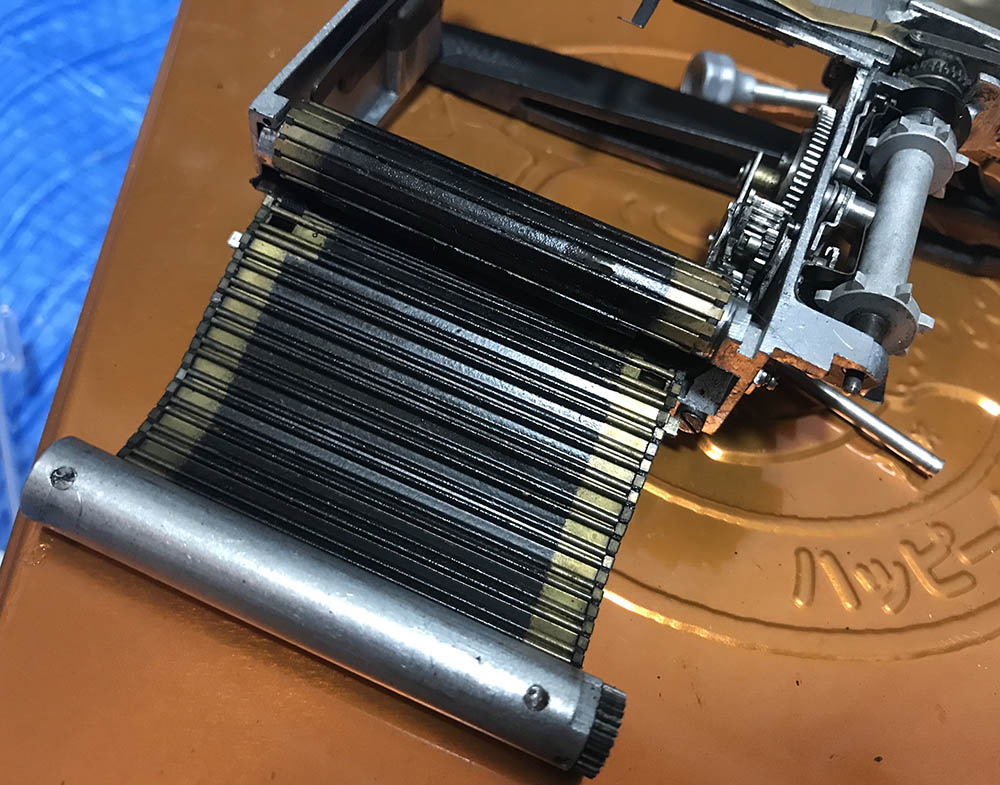
Does this look fun? Depending on who you ask, this can be a fun activity or a nightmare. The shutter of the Contax is a marvel of its time. I have never seen a shutter that is more intricate that this. Just think about it, it stood the test of time and it’s still functioning well into its 80th year. They really don’t make things the way they used to.
Hello, everybody! We are going to continue with our Contax 2/3 repair series with part 2! In part 1, we tackled how to remove the covers and outer castings of the camera so that we can access the inner mechanisms and correct any problems with the shutter or any of the inner workings of the camera. This part is going to be more extensive as we work on the shutter and rangefinder of the camera. You’ll need to be an experienced repairer at the least before you tackle this part because this is complicated work. Remember what I said in part 1, this article is just for you entertainment and education. If your Contax 2 is needing repair, please send it to a competent repairman. The repair of the Contax series of rangefinders isn’t an easy task but it’s not impossible or overly-difficult as some would make it appear. Any competent repairman will be able to repair this. You can check out Hayata Camera here in Tokyo if you want. However, they don’t speak English fluently so if you need to send your camera there for repairs I can help you do that for a small fee. It is mostly for my transportation and time so I guess it’s reasonable.
This is the sort of thing that we will be looking at in this article. We will begin opening its internals and look deep into the camera to diagnose its troubles. This is delicate work so I will highly suggest that you prepare yourself and your workspace before you begin this. More
Hello, everybody! How are you today? I just had a little midnight snack with my wife and we had some sushi. Sushi is as Japanese as cherry blossoms despite having its origins in Southeast Asia in the distant past. It’s a throwback to old Imperial Japan but its taste has not changed much since the late 1800s. It’s a testament to how something good can stand the test of time. Today, I am going to show you something that was designed long before most of the people who are reading this blog was born and like sushi, its design is still as relevant today as the day it debuted. Read the rest of this article to find out more.
Introduction:
Today, we are going to tackle Zeiss Ikon’s masterpiece – the Contax 2 camera! It was made from the second half of the 1930’s all the way to the post-war years and it’s the product of Hubert Newrin’s genius. He presided over the development of this camera and he vowed to make a camera that would fix all of the bugs of the previous model (the Contax I). The previous model was troubled with numerous flaws that it was updated so often that new updates would come out just a few months after the previous updated was sold. Reliable isn’t the word that you’ll see used in the same sentence with the Contax I except if it was used in the negative. While the last model was fairly trouble-free, it’s considered to be a lemon. The Contax 2 changed all that and it restored Zeiss Ikon’s tarnished name because it is so much more reliable and the ergonomics made plenty of sense. It feels like it was a design that came out of Bauhaus and its ergonomics and design was copied by many. It’s such a breakthrough that you can still see its influence in the camera designs that were made in recent years. This Contax 2 is to cameras as the Model T is to cars.
The Contax 2 is a beautiful camera, it’s amazing to think that this camera was designed in the years leading to the rise of the Third Reich before the mid 1930’s. The design endures the test of time and it’s still a joy to use this camera despite being almost 90 years old.
Help support this site by donating to richardHaw888@gmail.com over at Paypal! If you want to buy me a beer or a roll of film then that would be great,too!


 The Nikon S is a very sexy camera. The straight lines give it a brutalist profile and it gives this camera very solid feel in the hand. Its heft also gives you the added confidence to use slower speeds than usual because the weight will somehow give your setup stability. This is a serious tool for professionals and it earned its reputation in the harsh Korean winter fighting during the Korean war. I can confidently say that you can maul a person with a well-placed whack to the face with the bottom of this camera. Yes, I am serious.
 The new shop doesn’t have a storefront because it’s inside this unassuming building. You will have to go inside the IFO building and take the elevator to reach the new shop at the 8th floor (#801). It’s kind of out-of-the-way so you will have to use a little bit of effort just to get there but don’t worry, it’s all worth it once you get there.
 This is the entrance to the bazaar. I cannot stand the horde of shoppers at the opening so I decided to come during the weekend. There has also been an influx of Chinese buyers from mainland China (P.R.C.) lately and seeing how they behave is something that I want to avoid as much as possible. As you can see in the picture, it’s much more relaxed and I won’t have to squeeze my way just to see something.


 Does this look fun? Depending on who you ask, this can be a fun activity or a nightmare. The shutter of the Contax is a marvel of its time. I have never seen a shutter that is more intricate that this. Just think about it, it stood the test of time and it’s still functioning well into its 80th year. They really don’t make things the way they used to.
 This is the sort of thing that we will be looking at in this article. We will begin opening its internals and look deep into the camera to diagnose its troubles. This is delicate work so I will highly suggest that you prepare yourself and your workspace before you begin this.
  The Contax 2 is a beautiful camera, it’s amazing to think that this camera was designed in the years leading to the rise of the Third Reich before the mid 1930’s. The design endures the test of time and it’s still a joy to use this camera despite being almost 90 years old.
 Richard Haw's Classic Nikon Repair and Review