Hi, everybody! I was considering skipping this weekend so I can rest, since I did a report on CP+ 2017 last week I feel that I can wait for next week until I publish a an article that I’m currently writing. I do listen to my readers and friends, there was a considerable interest on this week’s subject so I decided to write this instead and publish it this weekend. You guys know how much you mean to me so I can’t object.
Introduction:
I was looking for a Nikon S2 and I found this one from Sankyo Camera. The camera was sold to me as a set with a Nikkor-H.C 5cm f/2attached to it. They gave me the best price so far and I got a camera that I always wanted but it has a few issues that has to be resolved. It was fated that this camera ended up with me because it requires a CLA.
This is the camera. It looks nice despite its age and I got it for a nice price. It has a few issues and I will tackle some of them in this short article. If you’re keen on learning more about the Nikon S2, please read this article. The Nikon S2 is tough, reliable and a fun to use, it also has Nikon’s brightest rangefinder. The handling is a bit quirky, it has separate dials for slow and fast shutter speeds and you’ll have to sync them together before you can use it at the correct speed while switching from slow to fast speeds. You’ll need to reset the film counter manually every time you load film but the advance is automatic. This was sold in the mid 1950s and it was designed a couple of years earlier so this was probably the best that Nikon had. Even with all the annoying quirks, the Nikon S2 is a big leap from it’s predecessor and is said to be the best Nikon rangefinder to use in terms of ease and simplicity.
Hello, everybody! I took a leave from work today to cover CP+ 2017 for my readers. I had to wake up early today because CP+ 2017 also coincides with the used camera bazaar by ICS in Ginza. I went there first and then quickly made my way to Yokohama for CP+ 2017. If you’ve been following me for more than a year, you will remember that I covered CP+ 2016 of last year. What’s new this year? Well, nothing much to be honest. It looks and feels the same every single year. This is Japan’s version of Photokina wherein new products are showed to the public and international brands come to Japan to sell theirs here. There are plenty of newcomers but it usually consists of the usual big boys in the Japanese camera industry.
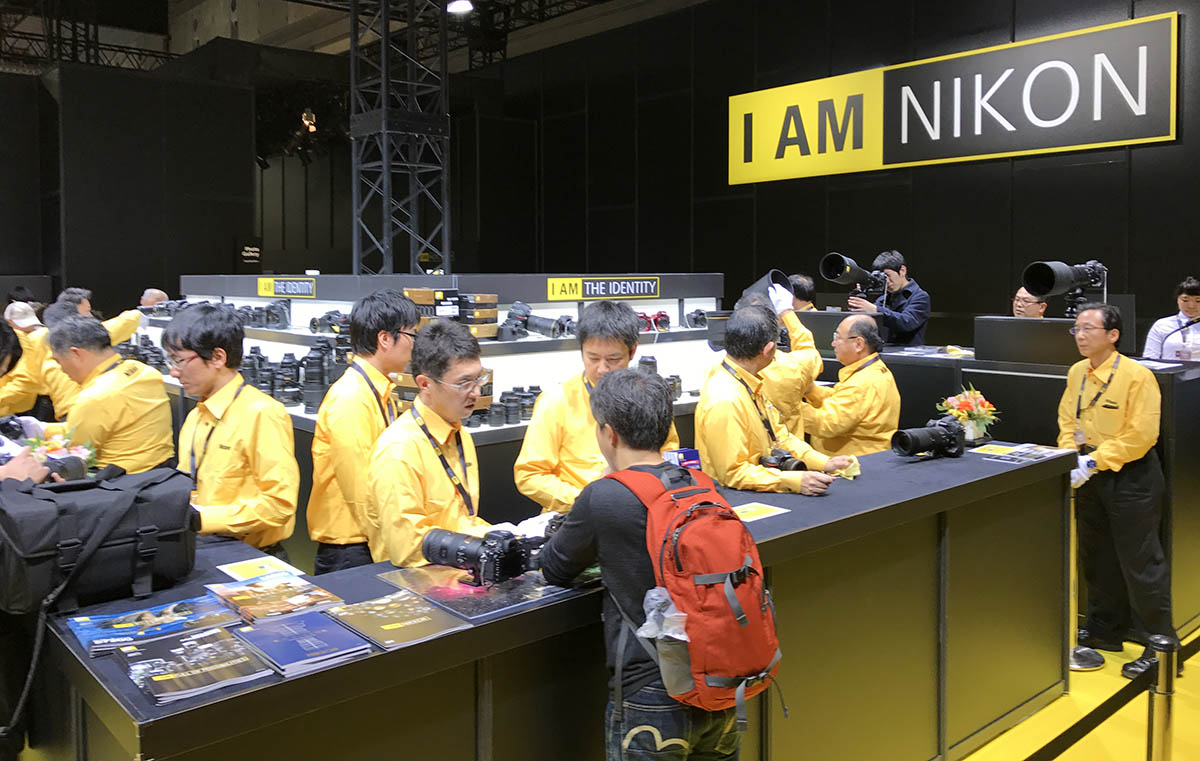
Nikon’s booth is yellow as usual. There’s nothing new in terms of layout and I hope they’ll change that next year so that we’ll see something new next time in terms of presentation and activities. Nikon has been very conservative all this time and that attitude has allowed others to leapfrog them in many things. More
Hello, everybody! I am feeling very well now, thank you very much for the well-wishes and messages that I received! The weather is beginning to get warm as Spring is just around the corner. Spring brings plenty of seasonal things like migrating birds, hay fever, the numerous seasonal produce that I enjoy and most especially – bugs! Bugs are shy creatures and taking pictures of them can be a challenge at times. For that, you’ll need a lens that will give you enough subject-to-lens distance. For me, that is only the job of a 105mm lens macro lens (or longer).
Introduction:
Today, I’m going to introduce you to the Micro-Nikkor 105mm f/2.8 Ai-S. This is a very versatile lens for portraiture, macro and just about everything. It’s an advanced lens that was way-ahead of its time when it debuted, it is still available now new for use with the scientific community wherein precise manual focusing in high magnification is important. How many lenses can boast of such longevity? Not a lot.
The Micro-Nikkor 105mm f/2.8 Ai-S lens is still being produced now in 2017. That is around 34 years of continuous production since its debut in Spring of 1983. Can you imagine that? It’s older than some of my readers.
This particular lens was bought from the junk shop and you can check from the pictures how bad this thing was. The lacquer coat is worn and the only way to restore this back to its former shiny state is to strip this to metal and repaint this. I do not have the time for that so I will just leave it as-is. I was very pleased with the results of the lens so I restored this so the operation is smooth.
Hello, everybody! Today, we are going to talk about the “Curse of the Nikon F100“! Everybody who is serious into Nikon gear should know by now that the Nikon F100 and cameras that belong to the same generation tend to develop this annoying sticky rubber problem that is most commonly found on the rubber parts of the grip the back.
This Nikon F100 works perfectly fine but the sticky mess can be annoying. I am sure Nikon added the rubber coating for added grip but never saw this coming! More
Hello, everybody! I’m now down with the flu so I’m going to keep this brief. I am usually resistant to sickness but lately stress from work has been getting to me so that probably affected my resistances somewhat. I’m feeling a lot better now but I will need to take the doctor’s recommended rest period of 5 days. After that, I’ll assure you that I’ll be back to my usual health and even better, I will practice kung fu again this coming spring so that my body will regain my old resilience to sickness. This is a tale of redemption for me and this also happens with lenses so read on!
Introduction:
Today’s topic is about a lens that many would consider fit for nothing but parts due to its heavy fungal infection but I will show you that almost nothing is not worth a try as far as old Nikkors are concerned! Ladies and gentlemen, may I introduce to you this little gem, the Zoom-Nikkor 43-86 f/3.5 Ai lens!
It looks really great on a camera of the same vintage, don’t you think it looks sexy on this Nikon F3HP? I love the Nikon F3 and for me, this is the best manual SLR ever made. You may have heard about this lens and read reviews about it. Some people will claim that it is useless due to a variety of reasons such as optical performance and ergonomics as well as the unfortunate pedigree of being part of the 43-86 family. There are some lens review writers on the net and they gave the Zoom-Nikkor-Auto 43-86mm f/3.5a bad name. Sure, I won’t deny that the Zoom-Nikkor-Auto 43-86mm f/3.5sucks but you’ll have to put things in context and then you will realize how good that lens really is and what it stood for. It’s the first zoom lens that was made affordably with a lot of compromises due to the time it was made but it’s a decent performer then. This lens redeemed the 43-86 family because its optical performace is quite good for its time and category. For a cheap lens that came with many cameras in a kit, this lens sure is a decent performer with no compromise in build quality. I will show you some samples here to back-up my claim but please do not set your expectations too high and remember that this is a cheap zoom lens thats made to give the economically-challenged photographer a zoom lens that they can use for fun and work. Yes, you heard me right – I said work. For some pros who can’t afford much, it was all they had and it sure help paid the bills!
Hello, everybody! I’m craving for some doughnuts today. I like them a lot, it can be eaten with breakfast, lunch or dinner. They can also be served from the simplest of settings up to the fancier presentations that can be found at the expensive restaurants. They also come in many different flavors, too. If you don’t prefer sweets like me, you can just enjoy the plain and un-glazed version which I consider to be the best because it’s the most versatile. I love that version a lot and I judge a shop by how delicious their plane version is. If you can’t make one the right way then there’s no point masking the taste with other flavors. Speaking about the basics and versatility, I’ll show you a lens today that’s the pinnacle of simplicity and and it does the basics right. It’s so good at the latter that it was used as the lens to judge other lenses in terms of sharpness. Its versatility cannot be denied and it does everything really well. Let me present to you one of the best Nikkors ever made.
Introduction:
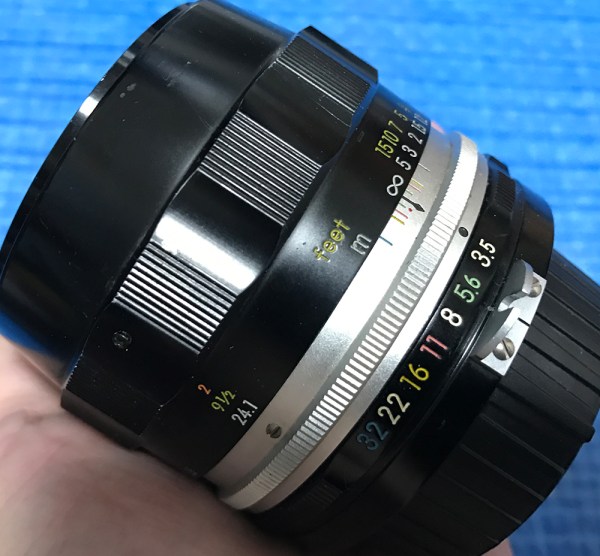
The Micro-Nikkor-P 55mm f/3.5 Auto is one of the most influential Nikkors. It was so successful that it influenced a lot of copy-cats from other brands and its legacy still lasts to this day in the AF-S Micro NIKKOR 60mm f/2.8G ED. It’s one of Nikon’s best contributions to the photography world since it turned a specialized lens into something that you can use regularly for taking almost everything thanks to its practical design. Its predecessor is the Micro-Nikkor 5.5cm f/3.5 which is exceptional in its own right but its use is limited due to its quirky handling. It does not have an automatic iris but it can focus down to 1:1 magnification but it’s tricky to use outside of its own field and you’ll have to make a lot of compromises. It can’t be coupled to a camera’s meter, too. These were addressed by the Micro-Nikkor-P 55mm f/3.5 Auto. It turned it into a more useful lens but it lost the ability to focus down to 1:1. This was remedied by the included M-ring that’s sold with it as a kit. It’s just a simple extension tube but it allows the lens to be coupled to the camera’s meter. Its length is enough to get you down to 1:1 so you don’t lose anything with this new setup so long as you have the M-ring with you.
The build is perfect, it can withstand the tortures of professional use. It can last for generations so long as you maintain it properly. It’s so simple that it can’t get broken in the field so long as you keep it clean. Its core design did not change much from its debut in 1963 to its last version that came out in 1979. Even the Micro-Nikkor 55mm f/2.8 Ai-S which is still being made today didn’t deviate much from this design. The design lasted the test of time and I don’t see any point in changing it because simplicity akin reliability. More
Hello, everybody! I am getting kind of addicted to boba tea or tapioca as the thing is called here. It’s refreshing and it reminds me of home. It’s also kind of expensive at about $5 a cup. This makes it profitable for the vendors and even the mobsters are into this according to news, which isn’t a bad thing at all because it’s an honest way to make money. It’s not cheap at all but there is a way for you to save money and that’s to make them yourself. They won’t need any special equipment at all and all you have to do is buy the required ingredients and follow a recipe. This will save you roughly $4 a cup because the ingredients are quite cheap. Today, I’m going to show you a way to save money on lenses so long as you’re fine with a little bit of hassle. It’s not the best when it comes to comfort but its performance-to-price ratio is going to make a lot of cheap photographers happy.
Introduction:
The Nikkor-Q 20cm f/4 Auto is a historically-significant lens. It made the SLR the best system to use for shooting with telephoto lenses because of its size which for its time was considered to be really compact for such a long lens. It gave the F-mount a big boost in prestige because of its performance. This lens can be seen being used by newsmen during the Vietnam War due to its ruggedness and sharp pictures. These were also favorites of sports shooters and nature photographers alike because they’re compact and you can shoot with it without the need for a tripod.
The earliest version of this lens debuted in 1961 to compliment the Nikon F and its growing collection of telephoto lenses. It’s a very old design but it’s a good one because it’s still quite nice today despite the fact that better lenses are available to us now and they have the advantage of using better coating technologies, autofocus and other refinements.
Hello, everybody! I often see people talk about how blemishes on a lens won’t affect the resulting photos. This is often mentioned by sellers as a pitch in order to sell something for a better price or assure the buyer that the item works. It’s not totally true that these won’t affect your photos, it may seem like it but there are certain conditions that will trigger any artifacts resulting from a lens having a single or multiple elements having less-than-perfect condition. Let’s study a few photos that I have here so you’ll know these blemishes will affect your phots and from what means.
Dirty Bokeh:
Some damages that are too feint to see with the naked eye without using the help of a light source such as a torch can fool you into thinking that nothing is wrong with a lens but this simple bokeh test can help you determine if the lens is still fine or not. This test only works in the dark so I do this at night or inside a dark room.
First, focus your lens to it’s minimum focusing distance, stand 1.5m-2m away from some point lights or any bright light sources. This also works on light sources that are distant like street lamps 60m meters away from you. So long as you could produce clean and clear bokeh discs you are on the right track.
Second, set the iris wide-open then set your exposure settings so that you’ll get a nice picture with clear bokeh discs, ISO400 at 1/250s usually works for me. The key to this is to underexpose the bokeh discs a bit so that things will show up.
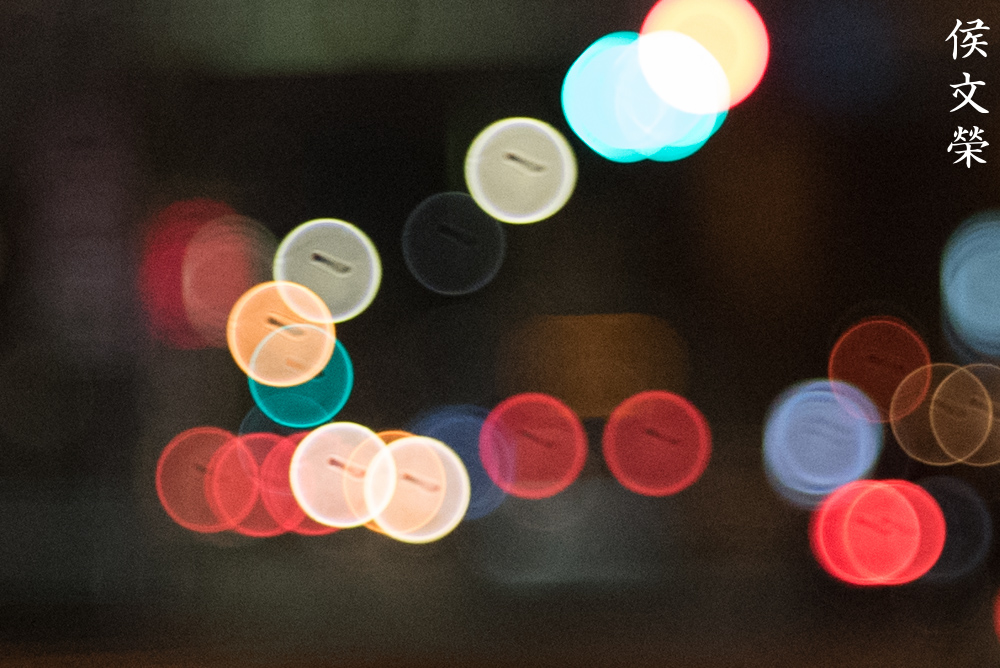
Examine your pictures and zoom into the discs to look for artifacts. The following images show a few examples of bad bokeh from some of the lenses that I’ve encountered.
Dirt or a bad scratch can cause these to appear. Depending on the cause, this can easily be corrected with cleaning in case of dirt or having a professional re-polish the problem element for you and recoat it after. This particular lens looks immaculately clean but as you can see from the picture above, it produces these lines. It may be caused by the cement deteriorating, this is known as balsam separation.
Hello, everybody! Sorry for skipping the past couple of weeks as I was busy with work. It was a very unremarkable month and all I did was work work and work. Couple that with a cold front and you get a very lazy and tired me. Apart from people messaging me that they saw my name in the latest Final Fantasy credits, this month passed on unremarkably and I would like to continue on that tangent by talking about an unremarkable lens today.
Introduction:
Today, we’ll be talking about the Nikkor 50mm f/2K (New-Nikkor) lens! I was busy in the past few weeks and I cannot decide on which lens I should make a teardown of so I made a poll and this one got the 2nd highest vote. It was such a boring month anyway and it’s just fitting that I make a teardown of a boring (but excellent) lens.
The New-Nikkor 50mm f/2 feels heavy and well-built. This feels pleasant in the hands so I would sometimes use this lens just for the heck of it. It has the right heft and balances so well on all cameras without a built-in motor drive/grip. More
Hello, everybody! I am down with a cold and I had to work yesterday (Saturday) so I do not have much time to update this blog but this morning, I found that somebody donated to the upkeep of this blog and that gave me the will to write this down. Whoever you are, thank you very much for the encouragement! It will be a short one this time. The usual lens tear-downs require around 2-3 nights to write but this should be easier.
Introduction:
We are going to look into a common (and expensive) item for the Nikon F2 camera today – the Nikon DE-1 Eye level finder!
This is just a standard finder for the Nikon F2 camera. It is really the cheapest option that you could buy back in the days because it is unmetered but since people wanted the ones with the built-in meters for obvious reasons so this one was made is smaller quantities. As time goes by, these finders age and degrade and the prism don’t hold up very well so good ones end up being expensive. The ones that have bad prisms still fetch a nice sum, I think that the cause of this artificial price is collectors. I do not remember these being sold at the current prices 4-5 years ago. More
Help support this site by donating to richardHaw888@gmail.com over at Paypal! If you want to buy me a beer or a roll of film then that would be great,too!


 Nikon’s booth is yellow as usual. There’s nothing new in terms of layout and I hope they’ll change that next year so that we’ll see something new next time in terms of presentation and activities. Nikon has been very conservative all this time and that attitude has allowed others to leapfrog them in many things.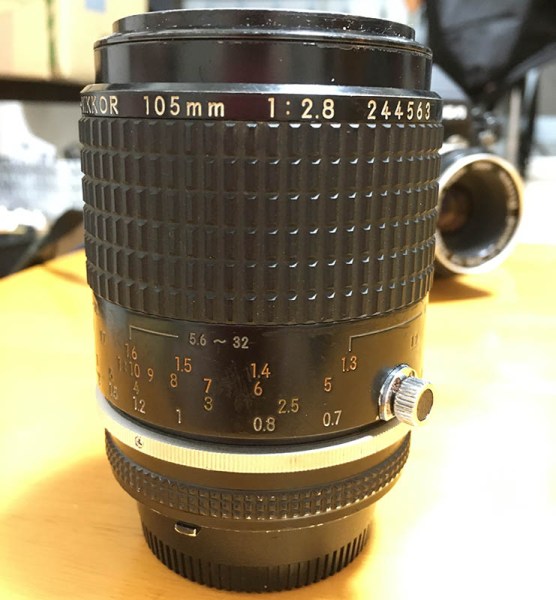

 It looks really great on a camera of the same vintage, don’t you think it looks sexy on this Nikon F3HP? I love the Nikon F3 and for me, this is the best manual SLR ever made. You may have heard about this lens and read reviews about it. Some people will claim that it is useless due to a variety of reasons such as optical performance and ergonomics as well as the unfortunate pedigree of being part of the 43-86 family. There are some lens review writers on the net and they gave the
  The build is perfect, it can withstand the tortures of professional use. It can last for generations so long as you maintain it properly. It’s so simple that it can’t get broken in the field so long as you keep it clean. Its core design did not change much from its debut in 1963 to its last version that came out in 1979. Even the

 This is just a standard finder for the Nikon F2 camera. It is really the cheapest option that you could buy back in the days because it is unmetered but since people wanted the ones with the built-in meters for obvious reasons so this one was made is smaller quantities. As time goes by, these finders age and degrade and the prism don’t hold up very well so good ones end up being expensive. The ones that have bad prisms still fetch a nice sum, I think that the cause of this artificial price is collectors. I do not remember these being sold at the current prices 4-5 years ago.
  Richard Haw's Classic Nikon Repair and Review