Hello, everybody. I am kind of busy today so I will not be making any posts about repairs or anything. I would just like to show you an old image that I have here that I found in my old folders and thought that this would make for a nice discussion piece.
What you are seeing here is the front element of the Sigma 50mm f/1.4 DG HSM “ART” lens. I really liked this lens a lot and cannot find any crippling faults with it but one thing that’s a big issue with this lens has always been the lack of weather sealing. More
Hello, everybody! It is the middle of autumn but the trees here in have not reached their peak autumn colors yet. This is starting to get frustrating for me because this is the only time of the year that I can justify shooting with FujifilmVelvia. Autumn is about the time I use my wide lenses for landscape photography and I will show you one of my favorite lenses for shooting the gorgeous colors of autumn.
Introduction:
The Nikkor 28mm f/3.5 Ai-S is one of Nikon’s cheaper but better-performing wide-angle lenses, you’ll want to shoot with it as soon as you see what this little thing could do. It was made from 1981 up until 1989 and it’s the last of the beloved 28/3.5 family that started in 1960 with the Nikkor-H•C 28m f/3.5 Auto. For many, these represent a time when lens speed isn’t the only thing that mattered but what a lens could do despite not having a fast maximum aperture value. People back then were less-concerned with the charts than they are today so these sold really well. These were loved for their value, a good ratio of price-over-performance that’s hard to beat. These aren’t really dirt-cheap when they were new but they’re certainly cheaper compared to their faster siblings and that meant a lot for some people.
The 28mm focal length is one of my favorites and I own many 28mm lenses. Here’s the Nikkor 28mm f/3.5 Ai-S with a Micro-Nikkor 55mm f/2.8 Ai-S. They make for a good setup for general photography since they compliment each other well in terms of focal length and use. You can take plenty of beautiful pictures with just these lenses and make a whole career out of them.
Hello, my friends and readers! It is getting really cold these days and I am getting lazier to do even the most basic of tasks and prefer to just hide under the thick blanket. I was really thinking of skipping this week’s post but I saw people clicking on my site just to see if any posts got published and this gave me the strength to write this. My readers usually come from Indonesia, Philippines and the EU and for you, I will dedicate this week’s post.
Introduction:
Last time, we talked about the marvellous Nikkor-O 35mm f/2 lens. I also mentioned that I got the lens from the junker and that the middle element had some cosmetic problems but since it was being sold for an agreeable price and the problem doesn’t affect the images it makes then it was a fair purchase for me.
Here is a closer look of the lens element that is going to be the topic of this week’s article. I am sure that some of you guys have seen this and wonder what this is and how do these affect the lens and the images it captures.
It’s starting to get really cold now, so cold that sitting on the wooden floor of my workshop makes my ass numb after a few minutes and we’re still at the early weeks of Autumn! The sun now sets at around 4:30PM and it gets dark around 5:00PM so taking photos during the night is fast becoming one of my primary considerations as far as making a choice as to which lens I should bring for the day. Today, I’ll show you one of the lenses that I love to use for taking photos in dark situations. It’s not the fastest lens available to me but I like it because of its practical specs. It’s an old lens that’s still useful today, it can be bought for not a lot of money these days so it’s a good choice for the cheap photographer.
Introduction:
Today’s lens is the amazing Nikkor-O 35mm f/2! This was introduced back in 1966, it was Nikon’s fastest 35mm lens for a few years until the even faster Nikkor-N 35mm f/1.4Auto was introduced in 1970. Not only was this fast at f/2, the minimum focus distance is also very short at just 0.35m. This allows for really close focusing and combine it with the shallow depth-of-field that an f/2 lens would give you wide-open and you can get creative with its use. I love how practical it is for both day-time and night photography and people throughout the decades swore by its utility so this is certainly one of Nikon’s more popular lenses.
The Nikkor-O 35mm f/2Auto is rather big for a smaller Nikkor prime but not so big as to make it look and feel unbalanced. It is common knowledge that this lens was rather difficult to manufacture for its time because it is a bit complicated but this design stood the test of time, the optical formula stayed for quite some time until the advent of the AF model lens and that says a lot.
The PN-11 extension tube is a companion accessory to the amazing, popular and very long-lived Micro-Nikkor 105mm f/2.8 Ai-S lens. This lens was introduced in the early ’80s but it’s still in production up to this day. Having said that, the PN-11 is obviously in-production as well. You have to buy the PN-11 separately which doesn’t make sense since it is so vital to the Micro-Nikkor 105mm f/2.8 Ai-S’s performance and it is needed for the lens to achieve a 1:1 (almost) reproductive ratio. Why Nikon sold these separately, I don’t know.
Hello, everybody! Sorry for the irregular blog updates as I am very busy this month. We are scheduled to have a lens teardown this time but I am too busy to write a full teardown so I am going to continue a previous series that I started many months ago. This is supposed to be just a supplement of the first part so I will keep this short.
Introduction:
The Zoom-Nikkor 43-86mm f/3.5lens that I discussed previously is an important lens in the photography world because it was the first affordable (normal range) zoom lens for the 35mm format. As I mentioned in the previous part, the lens had some quirks that needed to be ironed out and some of it was corrected in this version with the addition of a modern lens coating – the Zoom-Nikkor C 43-86mm f/3.5 lens.
The lens balances wonderfully on the Nikon D750. I had to convert this lens to Ai before I attach this to the Nikon D750 or else the lens will damage the camera’s Ai coupling tab. More
Hello, everybody! I haven’t updated anything for a weeks now and it looks like it’s going to be that way for the rest of this month. I am currently very busy with visiting family and a friend who also happens to be my dog food supplier. I will resume our normal schedule on November when things slow down a bit, until then please enjoy this little article.
Introduction:
Some earlier Nikkors have a thin aperture enough ring that doesn’t even touch the aperture coupling tab of modern Nikon cameras. Converting these to Ai is much easier compared to the ones that have a thicker aperture ring wherein you need to grind off any material that is in the way of the tab.
Today, I will show you how I make these lenses work with any Ai interface so that you can enjoy these old lenses with your modern Nikon cameras and get aperture priority metering with it.
The Nikkor-H 50mm f/2 is one such lens. This is an easy mod since the tab needed for this is not as big as the ones needed for slower lenses. More
Hello, everybody! I am not a watch aficionado, I am sure that many of you aren’t, too. Many of us know the names Seiko, Citizen, Bulova and Rado but there’s only one name that stands-out from them all – Rolex. It is a brand bring into mind tradition, quality and luxury. Even young children know about the name. There are a few names in this world that has such an impact. Today, I will introduce to you once such name, it’s not going to be as powerful as the name Rolex for the common man but it certainly has a strong presence in the hearts of many photographers – the Noct.
Introduction:
The legendary Noct-Nikkor 58mm f/1.2 Ai-S was sold from 1981 to 1998. It’s a legendary lens that many people dream of shooting with. Most of that has to do with the “religion” that was built around it. It’s an updated lens, its predecessor, the Noct-Nikkor 58mm f/1.2 Ai needed an Ai-S update so this lens came into existence. Both are special lenses made for astrophotography and for shooting at lowlight. They were optimized for the dark and their names made it obvious.
When paired with a Nikon Df you’re able to shoot in really-dark places like a candle-lit room with ease. What’s so special about this is it renders point-lights at corners beautifully, with minimal coma. Coma will make your point-lights at the corners look smeared, the only way to avoid this is to stop the iris down. You’ll lose plenty of light by doing this so this lens was designed to give you less of it wide-open. It also has some of the smoothest bokeh quality you’ll ever see from a Nikkor of its time and the corner performance is pretty good, too. It was a game-changer when it came it and it instantly acquired a legendary-status.
Hello, friends! This week was just a pain for me – literally! I had a new gout attack and my left foot was super painful! I haven’t gotten anything like this for 2 or so years now and as my doctor told me, it might be an indication that my uric acid level is going down. My foot is feeling much better now and I should be OK by Monday. The pain associated with gout is just as painful as manually focusing a fast prime on modern DSLRs like the Nikon Df and I will show you how I made my experience a lot better in this blog post, making me hate this camera a little less.
Introduction:
Today, I am going to show you how I replaced the original matte screen that came with my Nikon Df with the FM3A’s K3 screen for better focus confirmation with faster manual focus lenses (f/2 and faster)!
This is all we need for this project. Be sure to work in a clean place! More
Hello, everybody! I was at a Samba festival and it was a good change in my daily routine. I am often busy with work that I neglect so many things and this gave me a little bit of time to charge my mental energy. We sometimes need a change in perspective when in comes to life, doing the same routine day-in-day-out can really burn you out. You won’t notice it until it’s too late so it’s nice to take a break occasionally. While we’re on the topic of changing perspectives, I’d like to introduce to you a Nikkor that does the same thing, I love this lens as it helps me see things through an altered perspective. Read the whole article to find out what this is.
Introduction:
Let me introduce to you the PC-Nikkor 35mm f/3.5! This is both unusual and historically important. I say unusual because this is a specialist Nikkor that was specifically designed for architectural photography so it has gimmicks to help it do that. This amazing lens was also ground-breaking when it came out because it was the first lens for the 35mm format that can give you any control over your picture’s perspective by modifying the vanishing point of your frame and hence – “PC” (for Perspective Control). It’s the first of its kind and it helped take the small format into the realm of technical photography where it was once dominated by larger formats such as 120mm.
Such a lovely lens. This thing is heavy so do not let its small size fool you. It is a gem of a lens that was made with precision in mind. The lens is dirty in this picture but you are going to see it cleaned before your very eyes. It has plenty of knobs and rings to help you operate the lens and that’s part of the appeal of using this thing.
Help support this site by donating to richardHaw888@gmail.com over at Paypal! If you want to buy me a beer or a roll of film then that would be great,too!

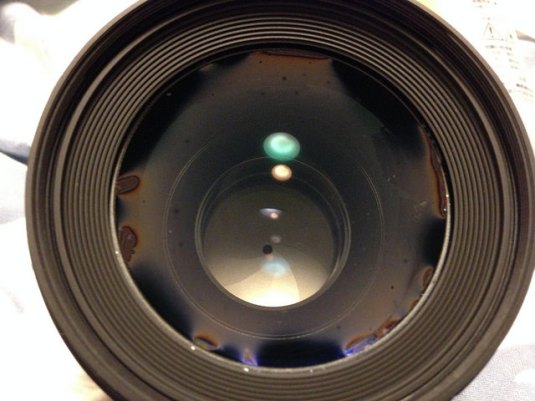 What you are seeing here is the front element of the Sigma 50mm f/1.4 DG HSM “ART” lens. I really liked this lens a lot and cannot find any crippling faults with it but one thing that’s a big issue with this lens has always been the lack of weather sealing. More
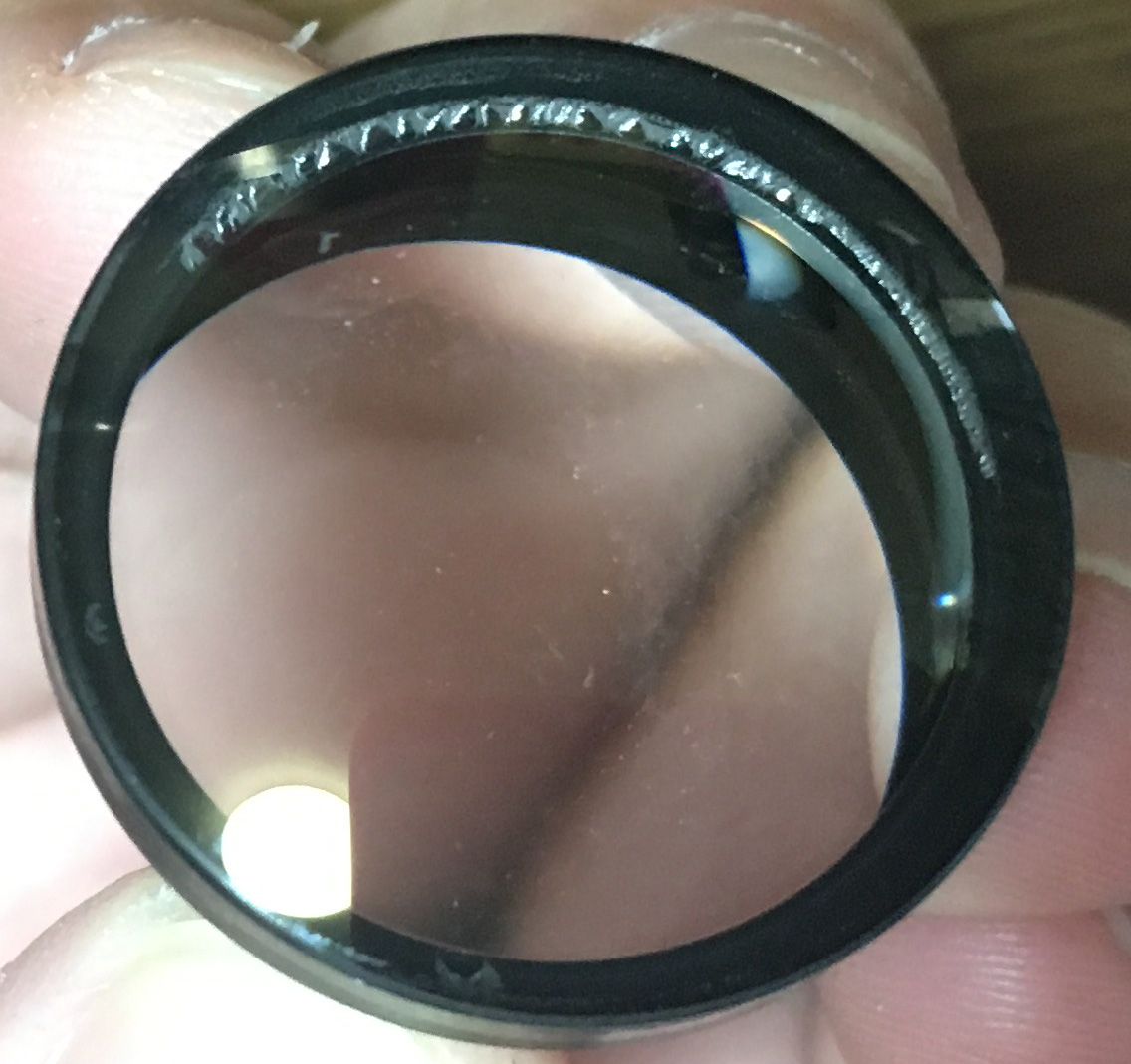 Here is a closer look of the lens element that is going to be the topic of this week’s article. I am sure that some of you guys have seen this and wonder what this is and how do these affect the lens and the images it captures.


 The lens balances wonderfully on the Nikon D750. I had to convert this lens to Ai before I attach this to the Nikon D750 or else the lens will damage the camera’s Ai coupling tab.
 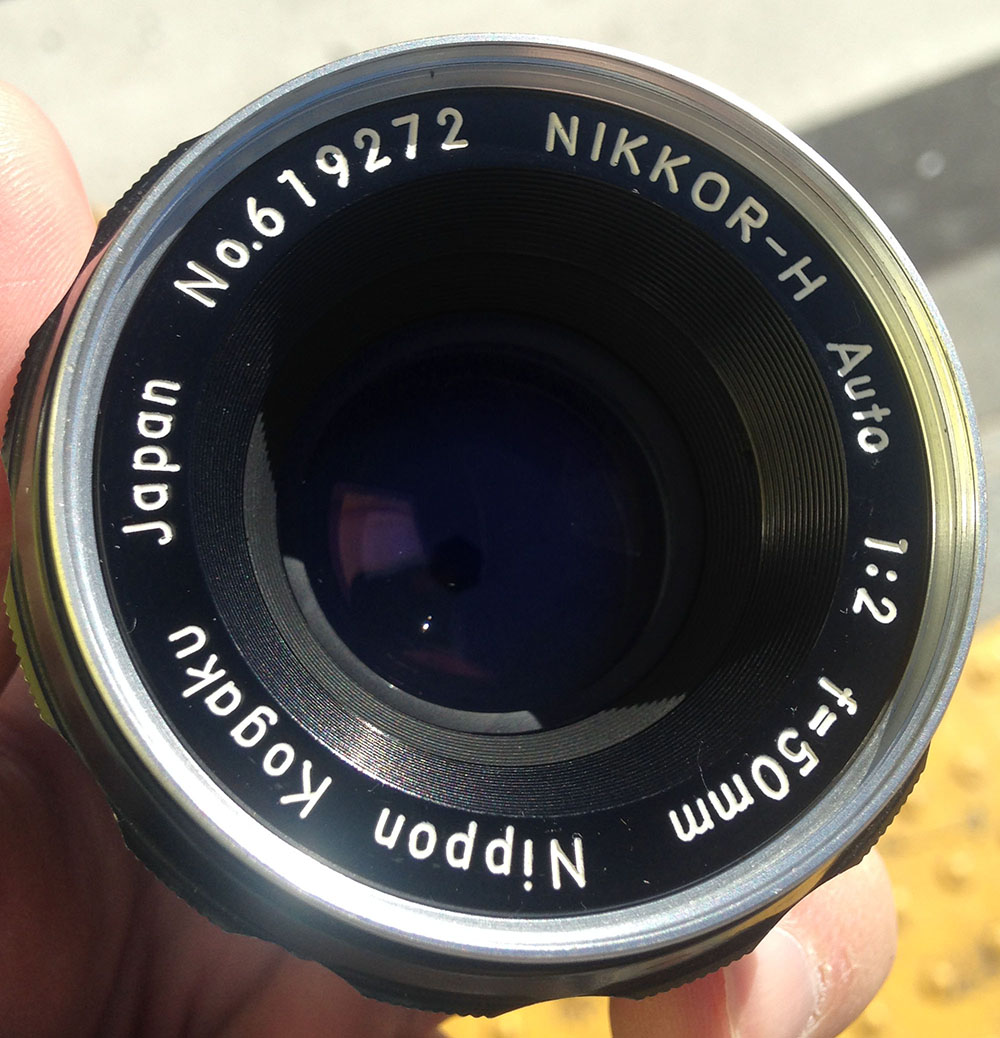 The Nikkor-H 50mm f/2 is one such lens. This is an easy mod since the tab needed for this is not as big as the ones needed for slower lenses.
 This is all we need for this project. Be sure to work in a clean place!
 Richard Haw's Classic Nikon Repair and Review