Hello, everybody! Do you know “Hi no Tori” or 火の鳥 in Japanese? It’s the masterpiece of Tezuka Osamu (手塚治虫), a work that spanned decades and many chapters. It was never finished because he died before the series was done. It’s a great illustrated novel which delves in the deep topics of humanity, suffering, philosophy and morality, heavy themes I don’t think the mainstream audience would digest readily. It’s the zenith of Japanese comics in terms of story depth, it will leave you thinking and questioning many things well after you’re done reading even a single chapter. Today, I will show you something similar, a gold-standard of its class. Just like “Hi no Tori“, it was first revealed in the late 1950s. It is my honor to introduce to you this little-known gem. Read this article to know what this is.
Introduction:
The Cine-Nikkor 13mm f/1.8 is the ultimate evolution of its class. It replaced the older Cine-Nikkor 13mm f/1.9 but I do not know when since there’s not a lot of data available but I assume that it was sold in the late 1950s. While the older Cine-Nikkor 13mm f/1.9 is a good performer it’s apparent that the optical formula has to be refreshed in order for the line to be competitive since there were many other companies manufacturing D-mount lenses back then when it was a great time to be selling 8mm movie cameras.
It’s well-made, despite being tiny it’s heavier than an acorn. It’s all-metal barrel will ensure that it will outlast us all. That large front barrel also serves as a hood because the front element is recessed and it’s situated rather deep within it. Its scales are informative, a depth-of-field scale and a focusing scale makes it easier to focus without having the need for a rangefinder.
Hello, everybody! Do you believe in “rebirth”? It’s one of the core concepts of Buddhism where beings are reborn into a different vessel each time they die, bringing psychological and moral cargo from one lifetime to another one until we extinguish them all and reach “Nibanna”. While Buddhists don’t believe in at “eternal soul” the Hindus believe in it, the “atma”. This just means that the “soul” remains unchanged between lifetimes while we Buddhists believes in “non-self” which means we transform into something different each moment even as we breath. Today, I am going to show you something that’s similar to the “eternal soul”. While its “vessel” has changed the essence remained the same, identical to the previous version in every manner. Do you think lens designers believe in “rebirth” as well? That’s a big question that we’ll never find the answer to but one thing is certain, accountants do believe in it as it saves a lot of money.
Introduction:
This version of the Cine-Nikkor 38mm f/1.9 replaced the older Cine-Nikkor 38mm f/1.9 some time in the mid 1950s. It’s a time when Nikon was modernizing the whole lineup and many, if not all existing Nikkors were given a facelift. All the barrels were given a smart-looking black finish and the materials changed from brass to aluminum alloy which makes a lot of sense since it made the lenses lighter without sacrificing a lot of rigidity.
Handling is excellent, it’s easy to distinguish the rings by-touch. It’s a tough lens but not as tough or well-made as the Tele Zunow Cine 38mm f/1.9 which shares similar specs. In terms of performance this one trumps the latter easily. This is a great little lens that perfect for tight portraits and other applications that require you to get closer to your subjects such as sports or maybe even journalism.
Hello, everybody! I love diesel engines. They’re efficient but they take a long time to start since the glow-plugs have to reach optimal temperature before you could run the engine. They’re slow-starters but once you got them going you’re going to enjoy the torque generated by these. I am a patient man so I don’t mind waiting so long as I get results. Some people couldn’t wait or even understand this so they end up miserable and worse, affecting the people around them in a negative way. Today, I will show you another slow-starter, unlike diesel engines there’s nothing much to be gained. It isn’t the best tool around but it’s certainly worth analyzing this. Read the whole article to see what this is.
Introduction:
The Tele Zunow Cine 38mm f/1.9 was sold around the 1950s to an unknown date. When Yashica took-over Zunow this lens and many others were rebranded and sold as Yashinons. Zunow was a rebel in its short time creating cameras and lenses. They made many innovative products, many were considered great while some were not-so-great just to put it lightly. This one falls into the latter as far as I’m concerned.
The barrel looks magnificent with its bold, brutalist design. It seems that all D-mount Zunows were made with the same standards. Handling is quite nice since it’s rather fat which makes it easy to grab and recognize the rings by-touch. This has click-stops for the aperture ring which feels great and reassuring. Shown here is its little hood which is inadequate, I don’t know if this is actually part of the kit but it seems that other Zunows have the same thing.
Hello, everybody! It’s refreshing to see that young people are now picking-up on film photography. They ensure that a time-honored craft won’t simply go away in under a generation. That’s reassuring but it’s even better to see them open businesses and pickup the torch from those that have succumbed to time and the pandemic. I’m happy to introduce a new shop that represents the next generation of camera shop owners.
Introduction:
Film Camera Tokyo (フィルムカメラ東京) opened its doors around 3 years ago. It’s situated near the trendy district of Harajuku where young people are seen to dress in the latest fashion and celebrate everything there is to being young. I wasn’t planning on visiting this shop but I was at the area so I might as well drop them a visit.
This is how it looks like as you enter. The ambience is nice, modern and clean. This is more like a boutique compared to what we’re used to seeing. This isn’t your average moldy, stuffy and cramped camera shop manned by silver or balding gentlemen. The place is full of vitality, optimism and good bargains.
Hello, everybody! Do you like Haribo? The tasty little bears are a classic, even grown-ups enjoy a mouthful of the fruity treats. I could eat a whole tub in a single sitting, they’re sweet but they’re not as sweet as a Creme Egg so I prefer these at every occasion. Gummi bears, sausages and beer aren’t the only German products that I couldn’t live without. There is also a German lens that is valuable to me and just like Haribo, it’s now approaching its centennial soon but of course, the delicious German candies are just a bit older.
Introduction:
The Carl Zeiss Jena Biotar 58mm f/2 is known to every person who has an interest in vintage lenses. There are several versions made, from the original one made around 1936 to the last one made until the early 1960s. We will talk about the 2nd post-war version in this article which was made from the early 1950s up until 1959 where it was succeeded by the short-lived last version of this amazing optic.
It’s a huge lens for its time, making the Zeiss Ikon Contax D look tiny. The barrel is all-metal, this is heavy despite using aluminum alloy. Handling is excellent due to the large focusing ring. The iris is of the preset-type much like what you’d see from many lenses made in that era. It has a limiter which allows you to constrain the range of the aperture ring, it’s something that I only see with post-war Zeiss lenses. Engraved in the bezel is a red “T” denoting that it’s coated and it means “transparenz“, a war-time secret developed by Zeiss. In fact, they were the first ones to master this deposition-type method which is effective but not as durable as what Nikon developed during the war that is the reason why the coating in Nikkors are tougher than what the Germans had since it was developed for use with submarine periscopes.
Hello, everybody! I will give you a tour around one of my favorite shops. I seldom come here in recent years due to its location being a bit inaccessible to me. Despite that I always find myself buying stuff from them each time I visit, their inventory is certainly impressive by local standards.
Introduction:
Gokurakudo (極楽堂) has been in business for some time now. The owner is known by everyone in the hobby, he could speak good English so it’s not hard for many non-Japanese speakers to communicate with him. I told him that I would make an article about the shop but it took me years to do so since I left my old job some years ago which was located close to them. It was started in celebration of everything “Contax“, from Carl Zeiss to the Japanese “Contax” brand by Yashica/Kyocera. It also specializes in screw-mount lenses from every manufacturer. They’re one of the shops that have transitioned well into the current online economy which helps a lot in the current pandemic situation.
This is shopfront, it’s difficult to miss because of the blue sign. When the shop is close, the shutter has a sign that says “Only Contax” in big, bold lettering. The shop itself is small but it is packed with goodies.
Hello, everybody! I was looking at the beer section of the local corner store and I found something new, Asahi made a new type of can where the whole top could be opened, giving you a better drinking experience since you could gulp a mouthful if you wish and also enjoy the aroma better compared to the usual style of beer cans where the hole is small. I am amazed at how they could make something good better, this made drinking their beer a lot more enjoyable. This is proof that something could be made even better when you just have the right idea going on. Today, I will show you something that was improved despite being fundamentally the same as its predecessor. You could enjoy the original way it renders photos but the experience is now made a lot better thanks to a couple of improvements in handling.
Introduction:
The Cine-Nikkor 13mm f/1.9 is an update of the original Cine-Nikkor 13mm f/1.9, it’s now bigger and the barrel is now made with an aluminum alloy and painted black instead of the all-brass barrel of the original one. I don’t know when it was sold but some people suspect that the change was made around the latter half of the 1950s around the same time the other Nikkors got the same update.
Handling is rather nice as the rings are easy to manipulate and the numbers are easier to see. The barrel itself is made from alloy so it’s light. We also begin to see Nikon starting to realize that having a standard size for filters is better and more economical for the user so the tip of the barrel doesn’t taper anymore.
Hello, everybody! After a string of stories about camera shops closing due to the pandemic and other reasons such as the owners being too-old for the business and other things I am happy to announce that a new shop has opened. It’s a good sign since it represents the collective will-power of the whole hobby. I’m happy to introduce this new shop to all of you who truly appreciate old camera equipment as we’re the keepers of this subculture and economy.
Introduction:
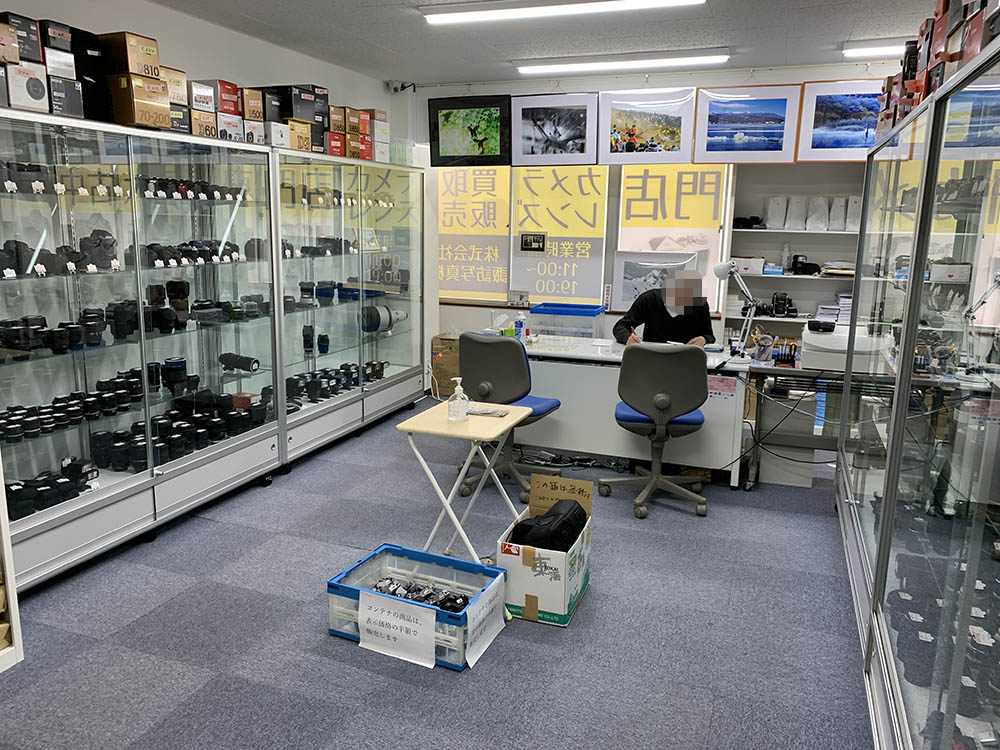
Suwa Camera (諏訪写真機) is a small used camera shop in Shinjuku, it’s recently opened its doors somewhere around last year. This is the reason why not a lot of people knew about this shop, including me. I used to work near this place so I’m familiar with area so it wasn’t difficult for me to find this shop.
The shop’s inventory is modest since it’s been in business for not a long time but it does have a nice inventory that will have something interesting for anyone. The price is also reasonable and not too-different from what you will find from other shops.
Hello, everybody! Do you remember the original “TRON” with Jeff Bridges? This movie has some of the earliest scenes that were rendered with CG, the rest are practical-effects and a lot of the glow used to depict wireframe in the movie were shot by employing some optical effects. The look is special, something that made the movie “legendary”. Today, I will show you something that could help you achieve that look. It will add an unnatural glow to your photos if you know how to trigger it. Read this article to know what this lens is.
Introduction:
The Cine-Nikkor 6.5mm f/1.9 underwent a small upgrade to the black-barreled version featured in this article. I do not know when the change happened but many people assume it to be around the latter-half of the 1950s when Nikon did a program to upgrade the look and materials of their lenses. This not only resulted in similar lenses with different color and finishes but the exterior somewhat look different, too. In most cases the material used is also different. The heavier all-brass construction of older Nikkors were dropped in favor of using lighter alloys. The optics remained the same and I couldn’t think of any Nikkor in this period that had their optical formula changed at the same time the barrel had an upgrade.
Large parts of the barrel were milled from alloy, making it a bit lighter. Since it’s a fixed-focus lens you manipulate what is in-focus by adjusting the aperture. This all sounds simple but it can be difficult to predict your depth-of-field since it has no scale to indicate what’s in-focus. This isn’t much of a problem when using this with a Pentax Q series camera, it is rather frustrating when shooting with an 8mm movie camera specially if what you intend to focus is close to you. It’s durable, the all-metal construction ensures that it will take plenty of punishment when used in the field.
Hello, everybody! I was watching a video about “Hercules beetles” (Dynastes hercules). They’re the largest of all the beetles, certainly a little monster. While many of use see beetles as little creatures this one certainly isn’t little at all, the carapace alone is huge and they can weigh more than some small mammals. Despite that, I find them cute because it’s fascinating to observe how the largest beetle species go about their lives. Today, I’m going to show you a little giant, it is certainly the largest of its kind and definitely the heaviest. Read this article to find out what this is.
Introduction:
The Cine-Nikkor 38mm f/1.9 was sold around the mid-1950s, I do not know the exact dates but these were sold along with Uryu Seiki’s then-popular Cinemax-8 series of cameras which debuted around 1953. This is Nikon’s first telephoto D-mount lens, part of a trinity comprising the Cine-Nikkor 6.5 f/1.9 and the Cine-Nikkor 13mm f/1.9. Its field-of-view is the equivalent of a 210mm lens for the 35mm format and despite having a “fast” f/1.9 maximum aperture its effective speed is actually much slower which is as expected since it was made for standard 8mm, a very small format compared to 35mm. It was a popular lens so these aren’t rare at all but not really common these days since people found a new use for D-mount lenses with the advent of the Pentax Q series of miniature mirrorless cameras.
It has an impressive all-brass construction which makes this feel dense when held. You could focus quite close with this, about 2ft according to the scales. This allows you to take photos of small things which is quite handy.
Help support this site by donating to richardHaw888@gmail.com over at Paypal! If you want to buy me a beer or a roll of film then that would be great,too!






 Richard Haw's Classic Nikon Repair and Review