Hello, everybody! Being the sentimental and romantic person that I am, I was surfing the net checking-out my old classmates that I haven’t seen for decades on facebook then I just remembered that I was pursuing a girl in my teens who everybody had a crush on. She’s popular and all but I discovered something that nobody else noticed, she has a sister and she’s just as amazing. She’s polite, simple and cute in her own way with her little flaws. It didn’t take long for me to realize that it’s her sister that I actually wanted all along. I was young so I was foolish to let her go. Did you ever have the same experience as me? There are many times when you’d realize that what you wanted isn’t what everyone wanted at all at first. I think that this is a profound feeling and this just goes to show that you have matured in a way because you now follow your heart instead of what other people say is hot. Today, I am going to share to you a lens that caught me by surprise. It’s been thrown-off to the limelight because of its “hot” sibling but it’s every-bit as good or even better for those who know what they wanted. Please read the article to find out what this lens is.
Introduction:
The Nikkor 28mm f/2.8 Ai is the successor to the New-Nikkor 28mm f/2.8 which shares lots of similarities to this one that you can consider both to the same lens in every sense. The later Nikkor 28mm f/2.8 Ai only differs in the sense that it comes with an Ai-ring, you can add a factory Ai-ring to the older New-Nikkor 28mm f/2.8 and you basically end up with a near-identical lens so what applies to this lens also applies to that one, too. There are few differences in the models that came between the first one and the last model but they’re all minor and shouldn’t matter at all except for collectors. The New-Nikkor 28mm f/2.8 is a trail-blazer, it started a new lens line because the closest model that came before this is the Nikkor-H•C 28mm f/3.5 Auto, a lens that has an old optical design and was at one time the widest SLR lens available that you can use without having to flip the mirror up. That was a popular lens and it sold a lot but people wanted a faster lens so this design debuted in 1975 as the New-Nikkor 28mm f/2.8. It took Nikon that long because designing fast and wide lenses was difficult given the technology of the time but Nikon managed to make it, it has a 7 elements in 7 groups design which is reasonable for a lens in this class. It soon became popular and it sold very well because the performance is fantastic, it’s resistance to flare and ghosting is something that’s hard-to-beat to this day and it’s sharp as well. An even bigger bonus is that it only has a mild distortion profile considering its focal length. I will consider this design to be one of Nikon’s high points in optics engineering.
The lens feels great in your hands, it certainly feels like a classic Nikkor. It’s compact but it’s just a bit bigger than the usual small prime from the same era. You can throw this to an assailant and this will likely crack his nose, they don’t make lenses like these today. More
Hello, everybody! I was watching some Culture Club MTV’s a few moments ago. I recalled how I was confused by Boy George’s persona back in the 1980s when I first saw them. It’s a time when the division between genders was clearer and homosexuality was looked at with either contempt or exoticness. Ziggy Stardust sure was different but Boy George was unique and he took it to the next level. I will admit that I admired him because of how he carried himself, he was elegant, classy and smart on his appearances on TV. I loved how he sang in Live Aid and all that ’80s thing. My confused young mind turned him into a big inspiration as to how I carry myself, I wasn’t afraid to wear what I want in school despite looking like a weirdo. That edginess actually attracted the opposite sex because girls saw me as a bad boy. If only I knew who had a crush on me then I would have chosen who to marry earlier on. Before I share too much about my private life on the net for my wife to read I will talk about a lens that confused me at first, is it a Zeiss or a Leitz? It’s neither, it is a unique lens as much as how Boy George is a unique individual and we will never see another quite like him again. Read my article to find out what lens this is.
Introduction:
The Nikkor-H•C 5cm f/2 is definitely Nikon’s most popular rangefinder lens. This lens was made in several version including the Nikkor-H.C 5cm f/2 for the Nikon S-mount, and the rigid Nikkor-H.C 5cm f/2 (Leica Thread Mount)which has the ability to focus-down to 1.5ft (un-coupled). The topic of our article is the collapsible version (Leica Thread Mount). The Nikon S-mount (collapsible) version is similar to this except for the mount so you can see this lens as almost-identical to it from a historical or engineering context. Both were saw a brief (parallel) production run and both are now expensive and rare. The S-mount lens can sell for an exhorbitant price and is highly-desirable. This one is a bit cheaper but the price can still easily go above the $400 mark at the very least. I just got lucky and found a cheap one for much less than that.
The Nikkor-H•C 5cm f/2 (collapsible) is a handsome lens. Many people will mistake it for a Leitz optic for obvious reasons. The quality of the machining is top-notch and it reminds me of the time when things were hand-made in small quantities and each part was made to fit the opposing part. The fit is exceptional, almost to the quality of Zeiss but not quite. Zeiss is the king when it comes to quality and precision, Leica is not far behind in quality but they will never match their quality until much later after they made the Leica M3. It’s a nice machine but I would say that the Zeiss Ikon Contax IIa is a better machine when it comes to engineering quality. More
Hello, everybody! Happy Spring to you! It’s hay fever season here again in Japan and for those who know me personally or for those who have been following this blog for some time now you will know that this is the season where I feel like a wet towel because of all that hay fever medication. The good thing is Spring in Japan is beautiful and the colors of the season is a delight for photographers compared to the drab brown-and-grey tones of Winter. This means that it’s time for me to shoot photos of people dressed in colorful and beautiful clothes and I now have a new favorite film for portraiture.
Introduction:
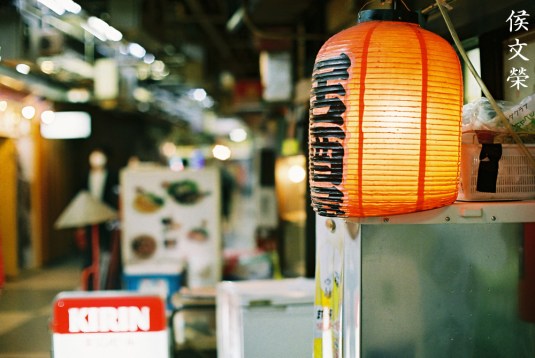
Let’s continue with our Fujifilm Venus 800 series. In part 1I showed you photos that I am used to taking, photos that people usually associate with me if you have been following me and my blog. Pictures that were taken in the night with a fast lens in an Asian setting where neon and tungsten contrasts with the darkness of the night, making for a difficult scene to meter when shooting with film. That type of photography may not be available to everybody who reads my blog and it may just not be for everyone so I’m going to show you a more common application of this film – available light photography in the shade or at least in a scene that’s not lit artificially.
You have seen similar photos in part 1 where I talked about shooting with this film in the dark. Now, I am going to show you how this film performs in a different situation so you can have a better grasp of how this film works in most situations. More
Hello, everybody! I was listening to an Eagles tribute band (one of hundreds!) and they’re so good that I thought I was listening to the real band. I was searching in YouTube for the song “Best of My Love” but the only thing I could find was from this tribute band. I was a bit upset when I found out that it’s just a tribute band but I gave them another minute. It was worth it because it satisfied the damn earworm that’s ringing for the past few days! I stopped the video and thanked the opportunity to listen to them and also for the lesson I that learned on giving something or somebody another try. Today, I am going to tell you a story about how I used to hate a certain film stock but grew to love it as I gave it another chance and learned more about its nuance and quirks.
Introduction:
Fujifilm Venus 800 is one of those films that make some people scratch their head because of its odd speed. It was made to be sold together with the disposable plastic cameras and with the lower-end of the Japanese film market in mind (mainly aunties) who don’t want or own a fancy setup or film and all they cared about are nice vacation photos. This was probably the reason for its feminine name because it was mainly aimed for this market. Fujifilm probably wanted to give the impression that it takes good photos of people and it does according to the official Japanese catalog. Many people mistake this to be the same film as the Fujifilm Superia 800 but there are small differences according to the catalog. It probably is so insignificant that you can treat them both as the same film in most cases. I am sure that the subtle differences will only show in controlled conditions or when these 2 stocks were shot side-by-side to compare the resulting prints or scans. Its official name is called the Fujicolor Superia Venus 800 just to make it clear to all that it’s a Superia with different formulation. If you want to be technical about it and if you read Japanese then I will just lead you to this official PDF and let you decide if the differences matter to you or not, you can’t get more official than that since it’s Fujifilm who wrote that film guide. You may also want to see this detailed datasheet for the Fujifilm Venus 800 (Japanese only).
Many people outside the Far-East haven’t heard of this film because it wasn’t sold outside of the region through official channels but it’s available through importers and these can be bought easily online these days. Some people treat this as a novelty film because of its “rarity” but more and more people are getting to know and love this film lately. It used to be hard to find information about this film just a few years back on the English-speaking web but you can now find plenty of sample photos online these days thanks to those who like to share their photos like yours truly.
Hello, everybody! I was listening to Air Supply this afternoon. While I liked them in my younger years I got tired of listening to this group after buying their “Goodbye” album. It is a fine album with a catchy song in it but it was played-to-death by DJs so you could hear the song everywhere you went. It got so annoying that listening to somebody singing in a falsetto voice made me want to act violent. After some 3 decades after “Goodbye”, I’ve decided to make my peace with Air Supply and began to enjoy their music again. It looks like I just need some time-off from them in order to rekindle my love for their music. It’s fun again to listen to their music and relive my younger days when you dedicated a song to a girl that you liked and had the DJ play it. Today, I’m going to show you something that was so popular that people began to treat it as a mere lens cap despite the fact that it’s a nice lens with more than decent-enough performance.
Introduction:
The Nikkor-H 50mm f/2 Auto is probably Nikon’s most prolific 50/2 lens and it’s certainly the most successful if you consider the longevity of its optical design. It was sold in 1964 as the Nikkor-H 5cm f/2 Auto, that was revised as the lens in this article and later on as the multi-coated Nikkor-H•C 50mm f/2 Auto. A huge redesign effort by Nikon in the 1970s or the late 1960s turned it into the New-Nikkor 50mm f/2 and it arrived at its final form as the Nikkor 50mm f/2 Ai in the late 1970s. All the lenses that I mentioned used the same basic lens formula and it was modified in small ways to improve its optical quality or to give it new features like the ability to focus closer. The reason why it was so successful is because its performance is great for its time and so the need to develop a better design wasn’t so urgent. This earned a lot of money for Nikon as the same design was used for almost 15 years, spanning several versions. The key to all of this is the design’s simplicity which makes manufacturing easier. These were usually sold with cameras as “kit-lenses”, as they will be called later, cheap and decent lenses. This lens fulfilled them all and so it became one of Nikon’s most successful “kit-lenses” of all time.
Many folks consider this to be one of Nikon’s best 50mm designs that could still compete with many modern lenses. This was so successful that it stayed in production until 1979 as the Nikkor 50mm f/2 Ai which is simply the New-Nikkor 50mm f/2 with minor modifications. It’s a good lens if you ask me but I like the Nikkor-S 50mm f/1.4 Auto better for artistic purposes.
Hello, everybody! I am in the process of fixing the pipeline of our studio at the moment. I am spending many hours evaluating and creating new tools for our artists and throwing away what the previous guy did. He basically made everything too-complicated and now he can’t fix it himself and so he had to quit! Making something more complicated so that only you know how to fix it can backfire, too. Instead of giving him job security, it made things more difficult for him and everybody else so the company is losing millions of yen in wasted time and missed-schedules. Being a tinker, I am used to seeing what others did and how and where things can be improved or fixed. Today, I’m going to show you a little mod that you can do to save yourself some money.
Introduction:
Many useful photography gadgets like light meters, cameras, etc that were made several decades ago all share something in common that limits their use today – the use of an old battery type that has a different size, voltage and chemistry to mainstream batteries that you can buy today. These are the old mercury-type cells that went out-of-fashion around the late 1980s. It was a very good battery type because the power drop-off is steep so this will allow it to function near its nominal voltage for longer until it exhausts itself. Newer ones that use different chemistry has a smoother fall-off curve so they’ll emit lower and lower voltage gradually until they die. This leads to erratic operation like inaccurate and intermitent operation. The call for greener batteries resulted in the end for this because it has a scary-sounding name and so these batteries are now scarce. Sure, you can buy a few alternatives like the Wein cell but they’re not cheap at all and they usually die within a few months whether you use it or not. Hearing aid batteries share similar dimensions but the voltage is different and they can be hard-to-obtain in an emergency. The best way I know of is use the common and cheap 1.5v batteries and modify your gadget so they’ll work with them with as little fuss as possible. This is a popular mod that any people do, I am sure that you have seen or heard this done somewhere, I personally learned about it some time ago in the 1990s when these batteries are beginning to become scarce.
You will have to open your gadget just like what you see in this picture. It looks scary but it’s one of the easiest things you can do if you’re an intermediate-level repairer. This is an old Sekonic Apex light meter, it’s one of my favorite meters because it’s easy-to-use and it is still reasonably-accurate in everything but poor lighting conditions where light ratios and other things may affect its performance. The only thing that I hate about it is it uses the older 625/MR-9 mercury-cells. Somebody stole my trusty Sekonic L-308 that I’ve been using for many years and so I had to bring this old meter back from retirement.
Hello, everybody! How are you today? I am busy today and my head is painful but I have to write something for you today. I am currently busy with work so I cannot maintain the blog like how I used to and it doesn’t make any sense for me to do so I will be writing less than usual from now on but I will keep this blog online as much as I can. Now, for more light-hearted news, I will continue with our Nikkorex F series today in this article so read it to know more aout what’s going on inside this little camera.
Introduction:
In part 1, we talked about how to clean the camera inside-and-out. While we will only do minimal cleaning and lubrication, it’s enough to make this camera work again and it’s a good exercise for those who wanted to get into camera repair as these cameras are cheap and simple to take-apart. In this part, we’ll go deeper and work on the mirror box. This is a common problem with many older cameras because the lubricants may have dried up or the wrong type of oil or grease was used by anybody who opened the camera before. I had to dig-deep into this camera to extract the mirror box in order to clean and oil it but it’s still relatively easy compared to the Nikkormat series of cameras.
Here’s the camera with the Nikkor-P 10.5cm f/1.25 Auto, it’s the “tick-mark” version of this lens and it makes a good partner for the Nikkorex F because both of them represent early Nikon F-mount products. While the lens is certainly of a slightly-older vintage this combo is still representative of that exciting era in 35mm photography history when the Nikon F showed the world what’s possible with the “small” format. More
Hello, everybody! I don’t know if all of my readers are aware that I work for the Japanese animation industry. I am currently working on the latest season of “Ghost in the Shell” so I am currently busy with so many things that I cannot publish a lot these days. It’s a show with characters who had their consciousness “downloaded” to synthetic / robotic bodies. While they’re actually “people”, they’re not “humans” in the true sense of the word. This makes us question what it really means to be “human”. If you ask people who grew up in the New Wave era like me, my answer will be The Human League song and its lyrics! This may sound too simplistic but the chorus goes like “I’m only human, of flesh and blood I’m made.” and then it goes “Human. Born to make mistakes…” – this is where things get more profound. The last line of the female part goes “While we were apart, I was human, too.“, this line is the most powerful line in the song, it cements the idea that making mistakes is part of the whole package of being “human”. Before I get carried-away and sound like an old man contemplating about life I’ll show you something today that makes you question what it means to be a “Nikon” and how mistakes from its marketing and experience gave Nikon a lot of valuable lessons that they used to make one of their best cameras, read on.
Introduction:
Today, I will talk about the Nikkorex F, it’s a camera that’s not being talked much about in many photography circles and many people are even ignorant of this camera. This is not a rare camera at all so its vagueness cannot come from its rarity, the reason probably lie in the fact that many people don’t consider this to be a real “Nikon” at all! Yes, this wasn’t made by Nikon but it carries the Nippon Kogaku brand so who made this and why? Well, the answer to the first question is Mamiya made it, the answer to the next question is the need to make a cheaper F-mount camera to sell along with the expensive Nikon F so that people will buy more Nikkors to use with their new “budget F“. Who proposed this idea is not really clear but one thing is sure, the late Joe Ehrenreich distributed both Nikon and Mamiya in America so he probably had a hand in this decision and so the Nikkorex F was unveiled in 1962, the 2nd F-mount camera to be ever sold!
The Nikkorex F is a solid camera despite feeling “hollow” in your hands and not as dense as true Nikons tend to be. This is due to the numerous cost-cutting decisions so materials and assembly had to be compromised in some ways. It actually feels much like a Canon 7 or a Yashica to be honest, solid cameras that feel like a tin toys due to cheaper materials and simpler construction. You’ll definitely feel that this isn’t a “Nikon” right away. More
Hello, everybody! It’s getting cold now and the walls can get moist at times due to water droplets forming due to precipitation. While the air is generally dry around this time, it’s easy for fungus to form because of the said water droplets. You won’t know what’s there until you remove the furniture and see what’s under it. The same thing goes for cameras and clocks and I will show you once such camera today.
Introduction:
We’ll continue with our Nikkormat FTn series with this article. In part 1, we saw how the steps on how to remove the top cover properly. In this part, I’ll show you around what is inside of the top cover. Most, if not all Nikkormats require some work here so this is very important. There are a few articles online outlining what’s going on here but here’s what I do and I hope that I will make a better article.
Yuck, this is not my idea of a white Christmas! The good thing is it’s localized to this thing only and the other important things seem OK. More
Hello, everybody! It’s going to be Christmas in a few days and I still haven’t received any fruitcakes! I used to get these back home and while many people don’t want one because they’re boring, I enjoy my fruitcakes for what they are. They are gifts that were given by friends and they last very long, too. A good fruitcake tastes just as good as any expensive and fancy cake from the fancy bakers and this just goes to show that they are not bad at all and can prove to be very enjoyable specially if they’re still moist. Still talking about fruitcakes and how many people find it boring, I will show you a Nikkor that many find boring but it has a certain appeal to it for people who love it and just like real fruitcakes, this lens is tough and will last a long time when serviced well. Read my article to see what this is.
Introduction:
The Nikkor 35mm f/2.8 Ai-S is an update of the Nikkor 35mm f/2.8 Ai and it retains the old lens’ optical design of 5-in-5 (5 elements/5 groups). The barrel has been updated to give it a new look as well as making it Ai-S compatible. It has a decent run from 1981-1989 so it’s considered a moderate success. It’s price made it popular for students and people who’s budget dictates what they buy. It’s great for most things and being Ai-S, it can work in all automatic modes with newer Nikons that provide the standard PSAM exposure modes. It also has a more modern construction so less materials were used to make it and it uses a more clever construction so some parts were optimized. This makes it less rugged when you compare it to the older lenses in its family but it’s still a solid lens compared to what we’re used to seeing these days.
The lens is the last iteration of the 35/2.8 lens family that began in 1959 when the Nikon F was introduced. It carried-on the spirit of this lens family to the ’80s and made it relevant in a time when people were used to faster 35mm lenses. Its light and compact design is a good selling-point for photographers who don’t want to bring anything heavy and f/2.8 is still decently-fast and should be adequate for most jobs. What ultimately killed this lens is probably the introduction of the AF-Nikkor 35mm f/2 which is just as small but is much faster at f/2 and it can also autofocus. Some will prefer manual focus lenses (like me) but the rage in those days was autofocus, very much the same way as VR today.
Help support this site by donating to richardHaw888@gmail.com over at Paypal! If you want to buy me a beer or a roll of film then that would be great,too!

 The lens feels great in your hands, it certainly feels like a classic Nikkor. It’s compact but it’s just a bit bigger than the usual small prime from the same era. You can throw this to an assailant and this will likely crack his nose, they don’t make lenses like these today. More
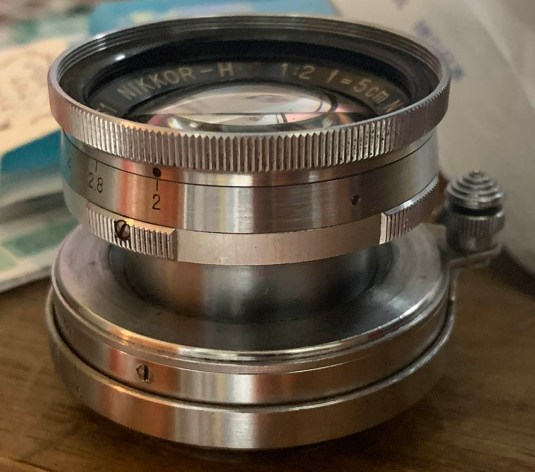 The Nikkor-H•C 5cm f/2 (collapsible) is a handsome lens. Many people will mistake it for a Leitz optic for obvious reasons. The quality of the machining is top-notch and it reminds me of the time when things were hand-made in small quantities and each part was made to fit the opposing part. The fit is exceptional, almost to the quality of Zeiss but not quite. Zeiss is the king when it comes to quality and precision, Leica is not far behind in quality but they will never match their quality until much later after they made the Leica M3. It’s a nice machine but I would say that the Zeiss Ikon Contax IIa is a better machine when it comes to engineering quality.
  You have seen similar photos in
 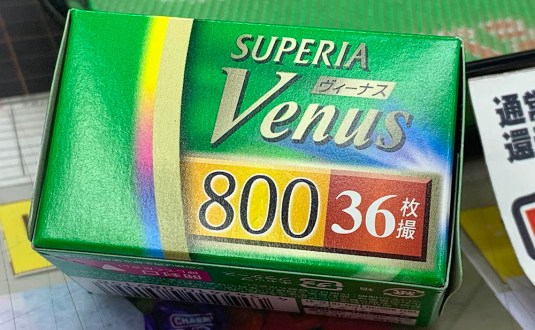 Many people outside the Far-East haven’t heard of this film because it wasn’t sold outside of the region through official channels but it’s available through importers and these can be bought easily online these days. Some people treat this as a novelty film because of its “rarity” but more and more people are getting to know and love this film lately. It used to be hard to find information about this film just a few years back on the English-speaking web but you can now find plenty of sample photos online these days thanks to those who like to share their photos like yours truly.
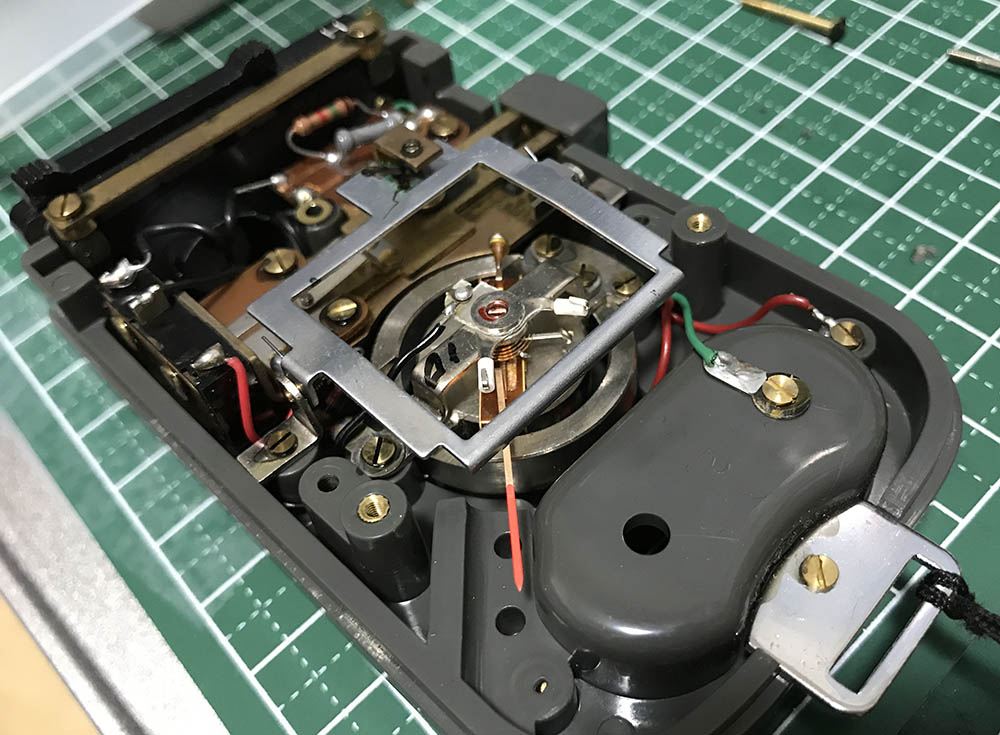 You will have to open your gadget just like what you see in this picture. It looks scary but it’s one of the easiest things you can do if you’re an intermediate-level repairer. This is an old Sekonic Apex light meter, it’s one of my favorite meters because it’s easy-to-use and it is still reasonably-accurate in everything but poor lighting conditions where light ratios and other things may affect its performance. The only thing that I hate about it is it uses the older 625/MR-9 mercury-cells. Somebody stole my trusty Sekonic L-308 that I’ve been using for many years and so I had to bring this old meter back from retirement.
 Here’s the camera with the
  The Nikkorex F is a solid camera despite feeling “hollow” in your hands and not as dense as true Nikons tend to be. This is due to the numerous cost-cutting decisions so materials and assembly had to be compromised in some ways. It actually feels much like a Canon 7 or a Yashica to be honest, solid cameras that feel like a tin toys due to cheaper materials and simpler construction. You’ll definitely feel that this isn’t a “Nikon” right away.
 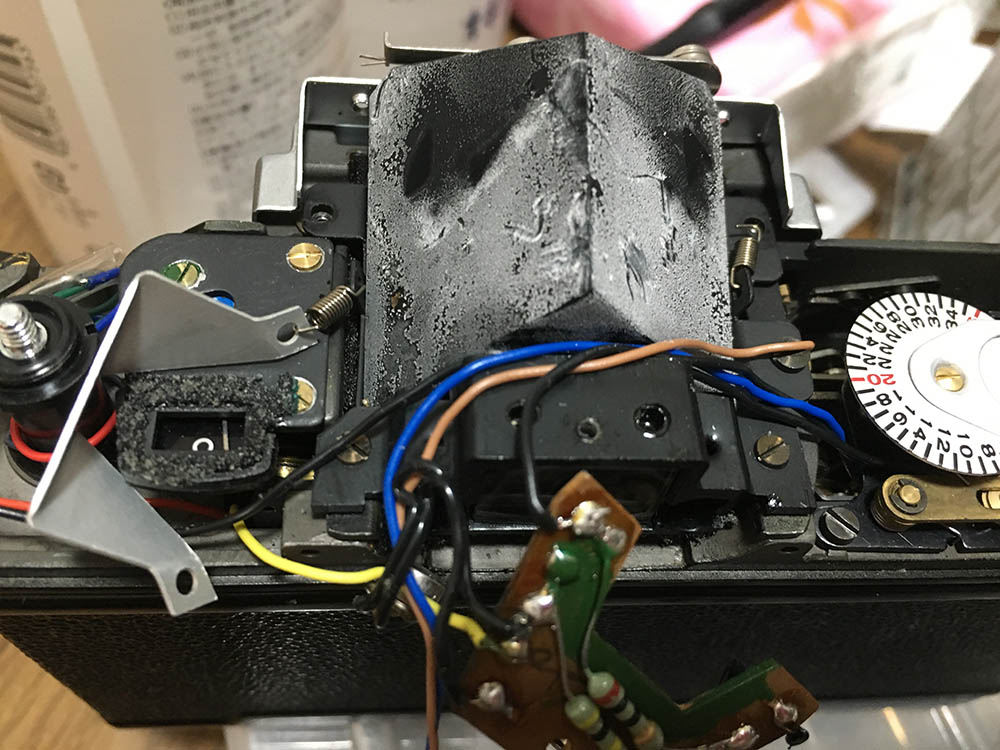 Yuck, this is not my idea of a white Christmas! The good thing is it’s localized to this thing only and the other important things seem OK.
  The lens is the last iteration of the 35/2.8 lens family that began in 1959 when the Nikon F was introduced. It carried-on the spirit of this lens family to the ’80s and made it relevant in a time when people were used to faster 35mm lenses. Its light and compact design is a good selling-point for photographers who don’t want to bring anything heavy and f/2.8 is still decently-fast and should be adequate for most jobs. What ultimately killed this lens is probably the introduction of the AF-Nikkor 35mm f/2 which is just as small but is much faster at f/2 and it can also autofocus. Some will prefer manual focus lenses (like me) but the rage in those days was autofocus, very much the same way as VR today.
 Richard Haw's Classic Nikon Repair and Review