Hello, everybody! I was watching some videos of my favorite musicians when I was young and I was shocked to see them categorized as “oldies”. Some of them still sound great while a couple seemed “dated”. I consider them to be quite decent in their time but now they’re totally irrelevant, just a blip in the music scene. This is not to say that they’re bad if you put their music in the proper context, they did entertain us at a time when a lot of musicians simply made bad music. Today, I will show you something that used to be quite good at a time when many of its contemporaries simply couldn’t make the cut but it’s dated today, something that’s best left to the lens aficionado to appreciate. Read this article to know what this lens is.
Introduction:
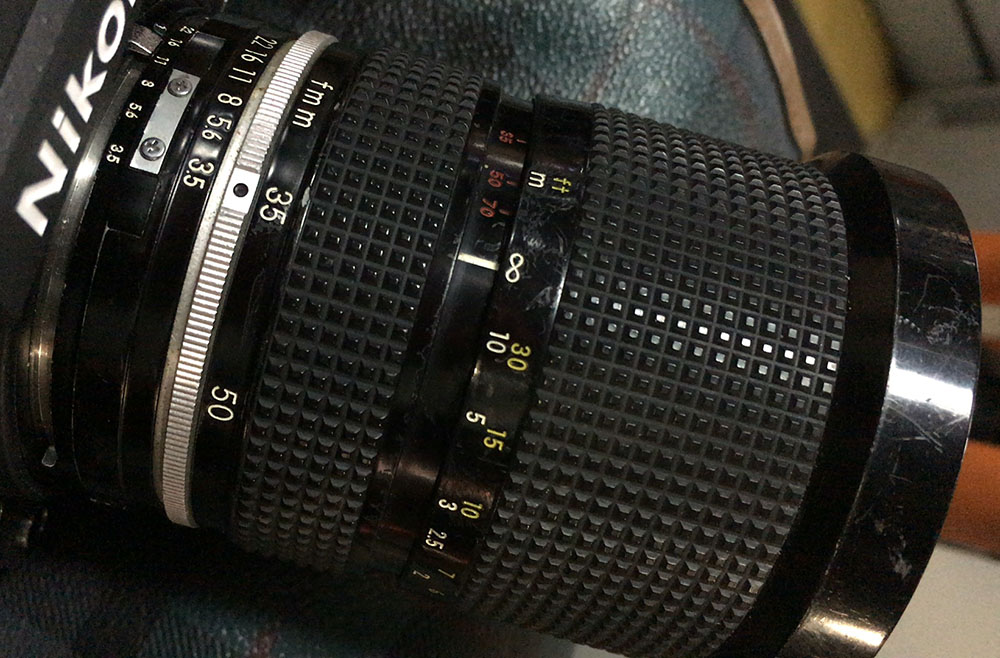
The Zoom-Nikkor 35-70mm f/3.5 Ai was sold from 1977 to 1981. It’s one of Nikon’s original “standard-zooms”, it was revolutionary in a way since it covers some of the most important focal lengths used for photojournalism and events or travel photography. That allowed this to replace 2 or 3 lenses, a big convenience at a time when carrying several prime lenses was the norm. Its maximum aperture speed of f/3.5 is respectable but not as fast as most primes lenses, that’s a price many people were prepared to sacrifice for convenience. I suspect that it was made for use by professionals because it has a constant-aperture and other features that many of use will consider to be premium such as the amazing build quality and its well-corrected distortion profile.
Unlike many zooms of its time this one came with separate zoom and focusing rings. That means it’s better for shooting with a tripod since zoom-creep won’t be a problem. You could make precise turns with it, too. All this suggests that it was originally intended for shooting with a tripod instead of action photography. I was merely making an assumption with that statement.
Hello, everybody! I like Korean fried chicken, it tastes great and I won’t get tired of eating it all-day. It’s crispy and tastes better with the special sweet-and-spicy sauce. There are some things that you’ll never get tired of, I will show you something today that’s similar to Korean fried chicken, you could reheat it and it will taste just as good as the day you bought it but this one is something that you’ll never ever digest.
Introduction:
The Nikkor 28mm f/2 Ai-S was sold from 1981 to 2005, quite a long time compared to many Nikkors. This is an upgrade of the older Nikkor 28mm f/2 Ai wherein it gets a new barrel, later serial numbers have the then-new Nikon SIC coatings applied. It’s great to use, I know many people who love these but some people will always compare this with the cheaper and tinier Nikkor 28mm f/2.8 Ai-S and claim that the latter is better. Neither is, they’re different tools for different uses. If you want something that renders a scene with a delicate look, this is the one you need.
Its barrel is beautiful, the build quality is good and it will survive professional use in the field. It has a rather pathetic depth-of-field scale which I don’t like, it’s narrower compared to many wide-angle Nikkors. For those of you who are used to focusing with the scale, this may be a problem. The good news is your view is going to be a lot brighter because more light will reach the focusing screen.
Hello, everybody! Do you remember the old British documentary called “The World at War“? Older people will remember that show with a smile. One of the things that fascinated me were the Panzers and the German gun called the 88mm Flugabwehrkanone. It’s a humongous gun that was originally designed for shooting planes. It has such tremendous firepower that it was also used as an antitank gun. It’s long, heavy, big and potent. I am not describing myself because I am anything but. Today, I will show you something that’s equally massive and like the 88mm Flugabwehrkanone and the Panzers it’s a formidable lens that commands respect each time you bring it to the field.
Introduction:
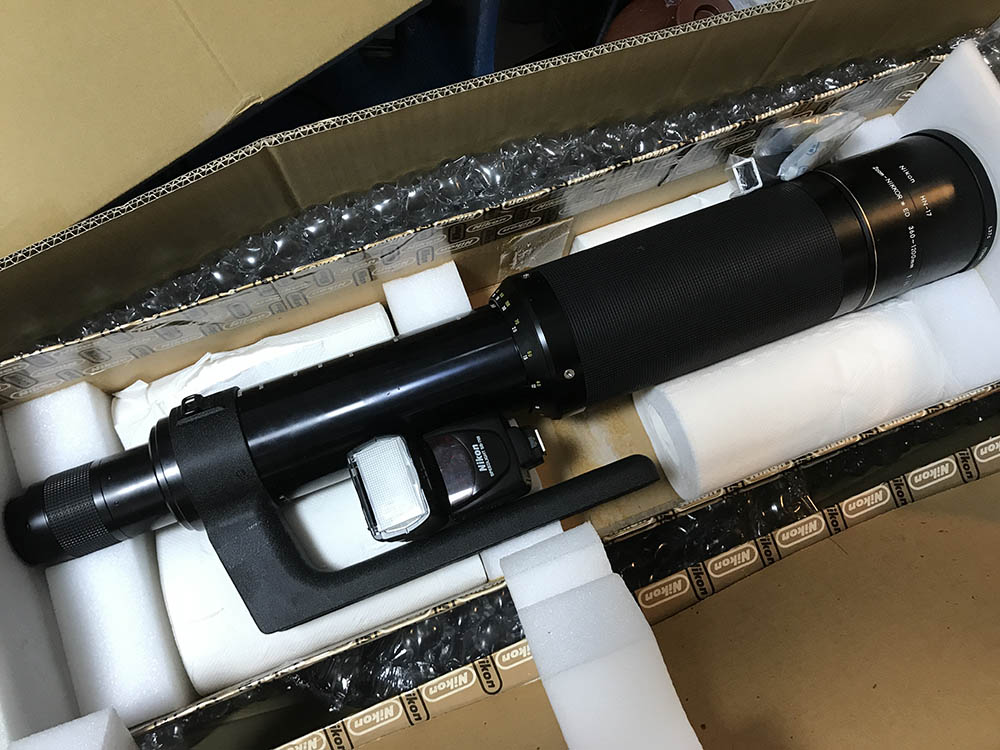
The Zoom-Nikkor ED 360-1200mm f/11 Ai-S was sold from 1982 to 1985. It’s an updated model of the legendary Zoom-Nikkor ED 360-1200mm f/11 Ai. At one point it was the longest zoom available anywhere, something that Nikon made to show the world that they could manufacture anything they wanted with what was available at that time.
It comes within its huge box. The Nikon SB-700 should give you an indication of how huge this thing is. Think about how heavy this is just by looking at the size of that tripod foot. You’ll require a caddy to help you bring this around the venue.
Hello, everybody! I was watching videos of hippos in the swamp. It’s amazing how powerful they are despite their appearances. They’re huge, fast and deadly. In fact, they cause more deaths each year compared to lions. They’re territorial and aggressive, too. It gave me a new-found respect for these beasts, it also reminded me of how we should respect beasts and how magnificent they are as creatures. Speaking of beasts, I will show you something that many photographers nicknamed “The Beast“. It’s fast, powerful and big, it commands respect even after more than 2 decades of its debut. Let’s get to know this “Beast” in today’s article.
Introduction:
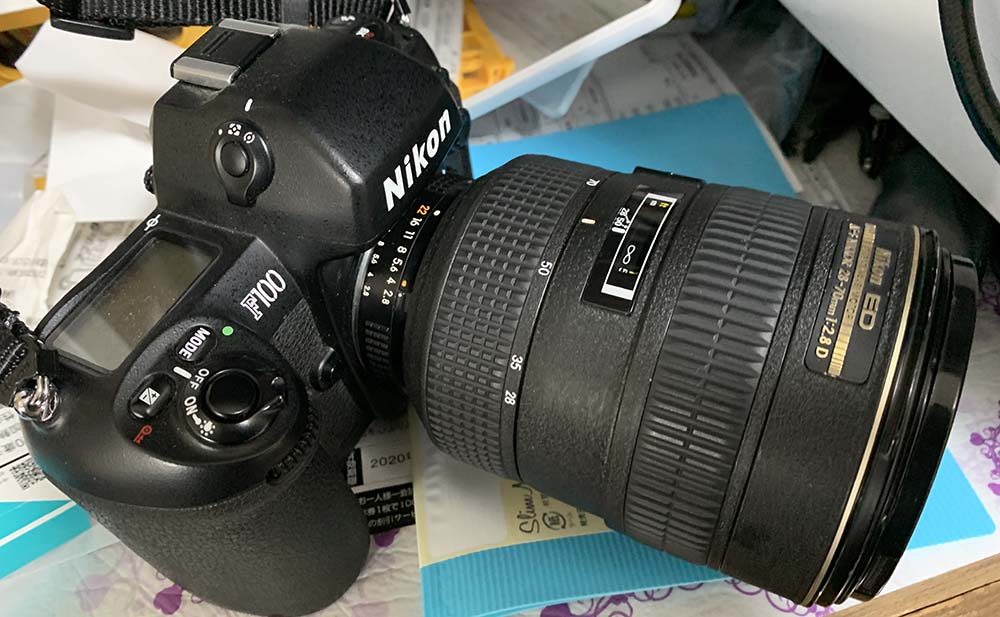
The AI AF-S Zoom Nikkor ED 28-70mm F2.8D (IF) was sold from 1999 to 2007. Many manufacturers have lenses that offer similar specs at that time, even off-brand makers have them, too. Nikon had to respond to this but it took them a few years to get it right. There was a prototype of an early attempt to bridge-the-gap but it wasn’t sold for some reasons. Maybe Nikon was trying to perfect it? By the time it was ready, it surprised everybody due to its optical and mechanical quality, it was an amazing lens. Nikon gave everything they had in it and the result is a formidable lens but it has a flaw.
It’s a very handsome lens, something that I have always wanted for many years but I couldn’t afford one and I had the AF Zoom-Nikkor 35-70mm f/2.8D at that time. By the time I upgraded it I got the amazing AF-S NIKKOR 24-70mm f/2.8G ED which was even more expensive but it’s a generation later. Finally, I got the chance to own one of these, 22 years after it was sold. It balances perfectly with my Nikon F100, this is period-correct.
Hello, everybody! I’ll be showing you today a simple procedure that I do for polishing glass. This is the safest way that I know of, the other procedure that I rarely do is more aggressive and may change the curvature of the glass. This is not something that a beginner should attempt, this article is merely for your education and entertainment.
Since I am known for buying lenses that are in poor state to dismantle and document for this blog I regularly encounter lenses with damaged glass, some of them could be corrected to some extent while some of them are beyond restoration. For cases where there’s still hope, I’ll try and polish the affected parts.
This thing has seen better times. The fungus has etched the glass and left the acid scars from the mycelium. It is common for me to encounter this but this is not something that I should worry about.
There has been a lot of fanfare about the Nikkor Z 50mm f/1.2 S, it’s the most exciting Nikkor in recent months because it’s the first 50/1.2 Nikkor with autofocus. It’s expensive but not unrealistic and you could buy one of these without hurting your finances unlike the Nikkor Z 58mm f/0.95 S Noct. Today, I’ll show you some photos that I took with it and give you my opinions based on my observations. I was only allowed to use it within the perimeters of the Nikon office since it’s a preproduction model so my subjects won’t be interesting but at least it’s better than nothing.
Introduction:
The Nikkor Z 50mm f/1.2 S is a much-awaited lens. Nikon shooters have always envied Canon shooters because they have the Canon EF 50mm f/1.2L USM for a long time but it’s nothing compared to this one, far from it. The gap has been bridged recently thanks to the introduction of the Z-mount which offers lots of possibilities. This was announced since the launch of the Nikon Z series and people have been anticipating its release since. We now have the chance to play with it since it’s now in the market.
It’s a big lens but it’s not quite as heavy as I expected. In fact, it feels light in my hands or well-balanced to use a better description. Your hands won’t miss the broad focusing ring but the customizable ring near the throat is a bit thin for my taste. You could program it to suit your needs. The LED display panel is convenient, too.
Hello, everybody! I am pleased that the site now earns around $1.15 a day from views and clicks. It used to be around $0.30 per day which is pitiful. a $0.90 boost is welcome but it’s hardly anything compared to the effort and love that I put into this thing. Despite that, I’m still thankful since this site is now recognized as one of the best there is for the Nikon shooter (and general camera repair). You couldn’t buy much with that revenue, it’s probably going to buy you 2 rolls of film at most. However, if you’ve put enough effort in finding a bargain it’s possible to acquire something more valuable with that amount of money. I will show you today what I bought for $15.00, a small amount of money but the joy I got from it is priceless.
Introduction:
The Zoom-Nikkor 35-70mm f/3.3-4.5 AF was sold from 1986 to 1994 and was made in 2 version. Today, we will look into the first version which is cheapest one on the market. It was made to complement Nikon’s then-new line of cheap autofocus cameras such as the Nikon F-501. It was designed to be cheap but adequate, this was a nice lens for its time and it covered everything an amateur wanted in the 1980s. It’s the original autofocus kit-lens for Nikon but there’s nothing cheap about its performance and build.
Handling is fine except for the inadequate focusing ring which is flimsy and thin, a common complaint of all 1st generation autofocus Nikkors. People made a big fuss over it since many still focus lenses manually back then due to the unreliable performance of early autofocus Nikkors.
Hello, everybody! There are rumors about an upcoming King Kong movie where he gets to fight with Godzilla. I would like to see that happen not only because I am a fan of Kong but I’m curious to see how this classic will be remade. Speaking of Kong, I will show you something big, long and dark. It’s not what you think because it is not Kong or Godzilla but a lens that’s just as monstrous.
Introduction:
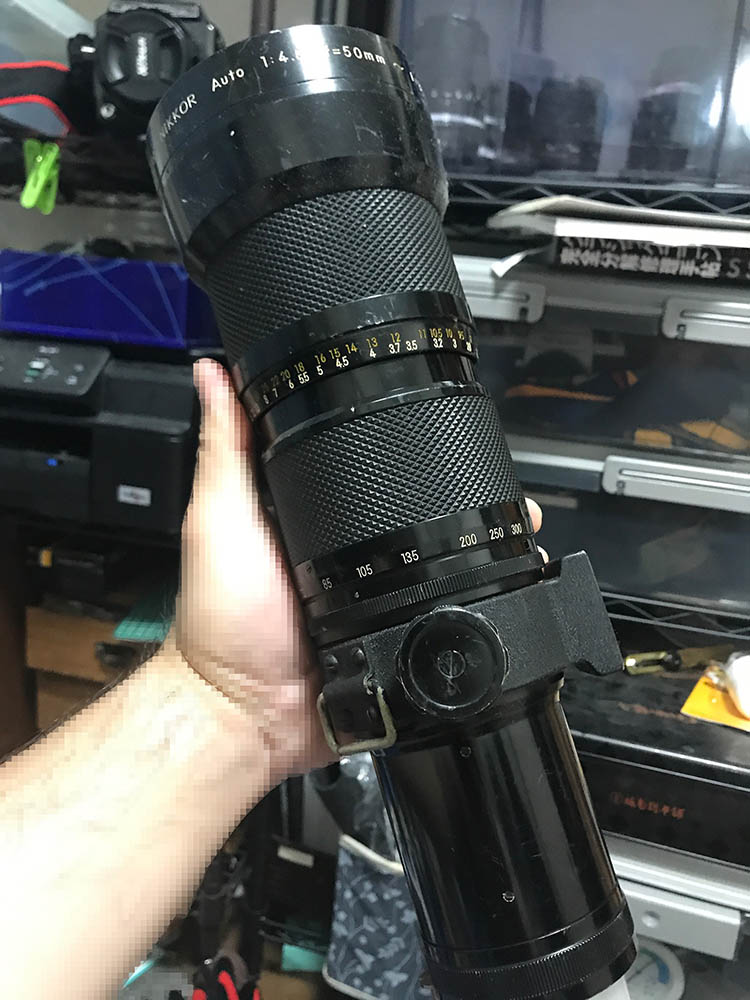
The Zoom-Nikkor 50-300mm f/4.5 Auto was made from 1967 to 1975. This is the first high-power zoom for the 35mm format. It was difficult to design specially considering what was available to the engineers. They didn’t have the advanced raytracing software that lens designers take for granted today. Needless to say, this took a long time to develop but the result was astonishing, it cemented its place as the King-of-Zooms for years and it also has a non-variable maximum aperture as a bonus, too. Another highlight is it won’t change its focus as it is zoomed, your subjects remains sharp. This made it ideal for other applications such as videography.
Unlike many zooms of its time it has a 2-ring setup instead of the “pumper-zoom” layout that was common for its era. It’s a very heavy lens, certainly not something that you’d want to handhold all-day. Handling isn’t good at all because of its scale. Shown here is the later version with the black-nose, earlier ones have a silver-nose.
Hello, everybody! Anybody codes in Javascript here? I do not like it much, it is a language that was made in a hurry. Back in 1999, it was kind of limited in some areas but it slowly matured into a more complete language. It did not arrive to its current state in just an iteration but over many smaller upgrades. I don’t even think that there’s any standard implementation, it’s confusing. It certainly isn’t fun when looking for documentation for it due to its scattered nature. Today, I’ll show you something that has continued evolving. Just like Javasctipt, it could even confuse a lot of collectors since it’s not documented. I hope that I can help shed some light into its confusing nature.
Introduction:
This version of the Nikkor-S 35mm f/2.8 Auto is the later one that was sold from 1962 to 1974. It is a refinement of the older one, the most significant is its new optical formula which enhanced its performance greatly. It’s a good lens which bought Nikon some time before the excellent New-Nikkor 35mm f/2.8 was sold with an even better optical design. Many people do not know that there are actually two versions of the Nikkor-S 35mm f/2.8 Auto. This is because they are named the same and they look similar, too. If you are a collector, you cannot be blamed if you didn’t even know about these little details since they can be easily be overlooked.
It’s a tiny lens but it feels dense when held due to its all-metal construction. I like how it feels in my hands, it was certainly made for professionals and it could withstand a lot of abuse.
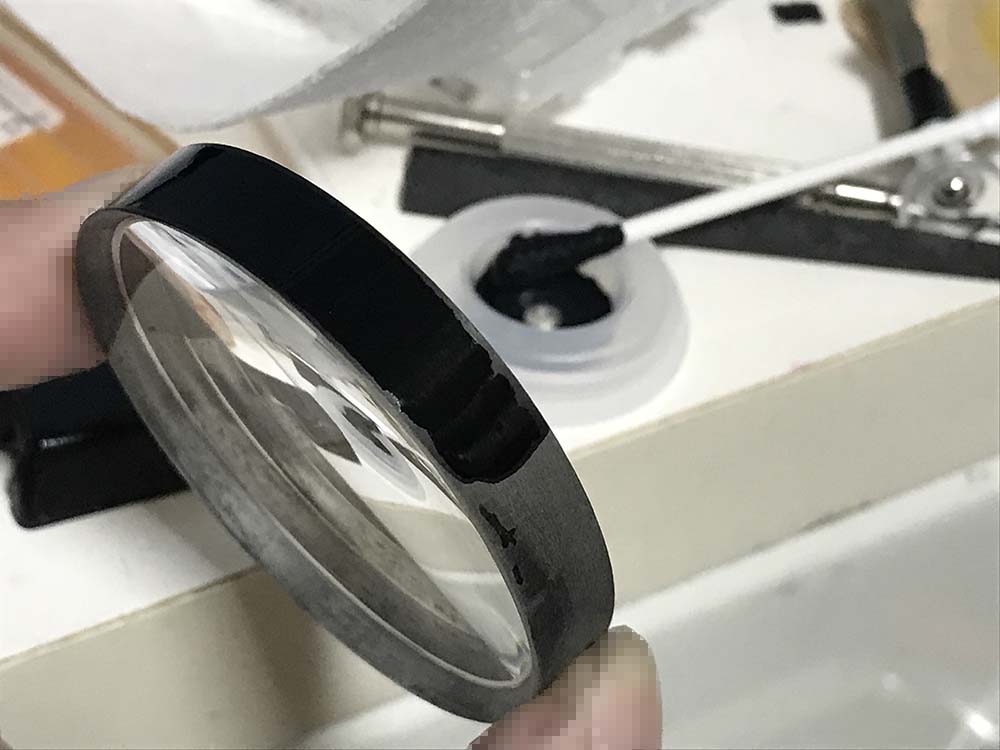
Hello, everybody! This is a short article about repainting lens groups. I see many people online asking how it’s done and most of the replies that I read mostly mention the wrong way to do it and using the wrong materials as well. In this article I’ll be teaching you the right way to do it and also share with you what the people at the factories actually use and it’s a lot simpler than what many people think.
First, wipe the old paint with a lens tissue moistened with alcohol. The material applied here is usually water-based and should easily be wiped-clean. You don’t need to remove everything, just get most of it off and you’ll be fine.
Wipe the walls of the lens group clean with lens tissue and naphtha to remove any oils. Once that is done, get yourself some calligraphy ink or India/Chinese ink. Place a small amount on a container, use a Q-tip and dip it into the ink reservoir and paint the walls of the lens group. It dries quickly, you can apply another coat if you think it’s too-thin.
Help support this site by donating to richardHaw888@gmail.com over at Paypal! If you want to buy me a beer or a roll of film then that would be great,too!