Hello, everybody! We’re now going to continue part 2 of our Nikon SP repair series. In part 1 we discussed how to open up the front part of the Nikon SP and also how to clean and do some minor calibration of the things that you can access there. Today, we’ll go to the more gritty part, that is the removal of the top panel. This partial overhaul is never going to be complete without opening the top panel, any serious work has to involve it. This article isn’t a complete overhaul article but it’s deep-enough to cover simpler CLA for the Nikon SP. This is just for your entertainment and education so if yours need attention, send it to a technician so that it can properly be repaired. This is not a DIY project for the beginner or even an experience repairer. You have to make sure that the technician you’re sending your camera to is qualified and is of good repute in the camera community. He has to be well-versed in classic Nikon repair, if not then he’s not the right person for the job.
Such a lovely machine with all those chrome dials and engraving. Shooting with this can help you improve your photography skills, it slows you down and think. If you’re really into it and want to go even slower then consider shooting medium format film. Shown here is the Nikkor-P•C 10.5cm f/2.5, it is the perfect partner for the Nikon SP.
Hello, everybody! Have you been to a Burger King lately? I love their food, it is the luxury version of McDonald’s for me. The burgers are grilled and they have better quality, too. They’re juicier, fresher and thicker in my opinion. I always crave for a Whopper whenever I see one of their restaurants. Do you like onion rings with that? Hell, yes. Speaking of luxury, today’s camera was the luxury version of any Japanese camera back in its day. It has set the bar so high that it remained as the king of Japanese rangefinder cameras to this day. Some people will be upset by my last statement but I’m sure that many people will agree with me.
Introduction:
We are going to talk about the awesome Nikon SP today. This is Nikon’s best rangefinder camera, this represented the ultimate development of Nikon’s rangefinder camera system. The Nikon S3 came after this, it’s just a cheaper derivative so a few things were omitted. There were prototypes made that will surpass the Nikon SP but none went into production so we can consider this to be the last of its kind. The rangefinder camera system (35mm format) that had so far dominated the market in the years leading to 1960 was met with a big challenger in the form of the Nikon F and the SLR system quickly overtook rangefinder camera sales until it became the the dominant system in 35mm photography. This spelled the end for the Nikon SP but many still use them well into the 1980s up until today because of its nice handling and reliability. It was then reissued in 2005 together with the W-Nikkor.C 3.5cm f/1.8 as a kit for a limited time. You can find the original or reissued ones for sale online, these are never sold cheap and they’ll appreciate in the coming decades.
The Nikon SP is a very handsome camera and many photographers consider it to be the Cadillac of Nikon’s rangefinder system. This is a fine machine but acquiring one in nice shape can be a bit difficult these days but you can get lucky. They don’t cost as much as Leicas so their prices are still realistic and within-reach for most photographers.
Hello, everybody! I hope that you’re all doing well despite the coronavirus scare. I’ve never experienced this in my entire life, I do not even recall that the SARS epidemic back then to be this severe. I hope that this thing will go away in the coming months, it’s making people act irrationally and you get news of people panic-buying disinfectants and toilet paper. The only thing this does is frustrate people who actually need them. Toilet paper is now a luxury, it’s something that we took for granted but now that it’s starting to become a valuable commodity we have to make the most of what we have. Speaking of luxury, I will show you something that’s fast-becoming one, it’s not a rare lens at all but the prices of these things are going-up in the used market since collectors and casual shooter are finding that these lenses are superb. These will become scarce in the coming years, too.
Introduction:
The W-Nikkor•C 2.8cm f/3.5 debuted in 1952 and it was considered to be the fastest lens of its class when it came out. At a time when wide-angle lenses for the 35mm film format were as slow as f/6.3 or less, this lens surely made things more interesting. This was based on an old aerial photography lens made by Nikon for the Imperial Japanese Military, it had low distortion and good resolution. It was miniaturized and that became the W-Nikkor•C 2.8cm f/3.5. This is a compact lens, its simple 6-element construction is really small and delicate. I’m sure that Nikon could’ve made this even faster but I do not know what’s keeping them from doing it since there is enough space in the barrel for a bigger objective, your guess is as good as mine.
The W-Nikkor•C 2.8cm f/3.5 is a very compact lens. If you think that this lens looks similar to the W-Nikkor•C 3.5cm f/3.5 then you’re guess is correct. This lens’ barrel was based on the W-Nikkor.C 3.5cm f/3.5 so the handling is very similar between them. It’s easy to mistake one for the other, you can end up bringing the wrong lens with you if you’re not careful.
Hello, everybody! I’m not feeling well today so I’m going to keep this short. I hate winters because it can get too cold for me to do anything at home. I am not as robust as I used to. I was almost immune to sickness but it looks like my body is telling me that I am officially a middle-aged person. On the topic of toughness, I will show you guys today a very tough Nikkor that was made a long time ago but is still worth looking at these days. Read on.
Introduction:
Today, I will introduce to you the Micro-Nikkor 105mm f/4 Ai. This fine lens debuted in the mid 1970s and it’s the first Nikkor of its class. Back then long macro lenses needed a bellows unit for you to focus. This lens changed it all by incorporating the 105/4 bellows Nikkor to a real focusing unit so you can enjoy focusing it like any normal lens. It was very popular and Nikon took a long time to make a successor to this because it’s just so good. This lens is a favorite amongst flower photographers and if you just do a bit of searching online you will find lots of people still using it. This went though a couple of versions but the optics remained the same essentially.
It’s a fat lens, it had to be because it has to house the helicoids that enables it to extend so you can get a higher magnification. It’s a simple lens but this is all you need for taking beautiful pictures of little things. The build quality is great, something that you don’t see these days. It can survive a beating so to speak, a true professional tool.
Hello, everybody! This is the last part of the series! Part 1 and part 2 shows lenses that I can call “approachable” but in this part, I will be showing you some of the really exotic Nikkors that were made and is usually off-limits to the regular photographer. They’re the lenses that Nikon fans dream of owning one day. If there are posters of these then people will probably hang them in their bedrooms just like how kids back then have sports cars on the walls of their bedrooms. I had the Beatles and Queen on my bedroom walls but I’m kind of an odd kid anyway. Enjoy this last part of the World of F-mount Nikkors series.
Fisheye:
We’re going to start this article with fisheye lenses! I have owned several and used them for my job before to take pictures and use them as light probes. It’s more technical than creative and they get the job done with their really wide picture angle.
This is what Nikon has to say about fisheye lenses. Nikon made plenty of fisheye lenses so you can consider them to be one of the leaders in this field. Fisheye lenses were designed for the scientific and engineering fields but people soon found a creative use for them.
And here are the beautiful fisheye lenses! I have never seen so many of these in a table! More
Hello, everybody! Today, I’m going to introduce to you another camera shop here that I’m a regular of and this is Shinjuku Chuko Camera Ichiba (新宿中古カメラ市場) and the name in English literally means “Shinjuku Used Camera Market”. I go here occasionally since I rarely go to this side of Shinjuku in recent years. If you’re in the area be sure to check the shop out as they have plenty of nice things there and some of the items there are priced reasonably. Some are sold for a higher price but most of the things there are reasonable.
The shop can be hard to find because it’s in a small side-street that’s not much bigger than an alley. The picture is the entrance leading to the shop located at the 2nd floor. You can easily miss this so I am going to include the map for you later just in case you can’t see it.
It is nearby the Shinjuku Central Post Office and you can find an ABC Mart (shoe store) at the corner of the street. They are open most of the year and they close during new year for a few days to give their employees a bit of a break. The shopkeepers there are nice, I seem to have made a good relationship with them. The owner is a bit of an old-fashioned gentleman so he is kind of reserved and he rarely smiles but that doesn’t mean that he is a cunt. That’s just how we are here in Asia. It is something that you should get used to when you visit Hong Kong, Singapore and other parts of the Far-East that have a strong Confucian cultural background. It’s a lot like how many people say that the Germans are cold and humorless but they’re just a bit reserved.
Hello, everybody! I’m tired from work and it’s getting so damn cold now here in Tokyo! I was sick last week from fatigue and I’m recuperating. I have managed to muster enough strength to make a video on how to check Nikkormats (Nikomat here in Japan) for faults and some simple solutions that you can do on your own. Please pardon my speech in the video as I’m tired and it’s almost past my bedtime. And no, I’m not drunk this time like in the previous video from a couple of months ago. I am sober this time, I promise.
Nikkormats are great cameras. They’re tougher than the Nikon F series in most cases and they’re a joy to use. The key to their toughness is their simplicity and the reliable Copal-S (Square) shutter used in them. They’re heavy and when properly cared for will last more than a lifetime. I would even say that they are tougher than the Pentax Spotmatics that’s known to be tough so that’s saying a lot about this humble camera. The Nikkormats are the predecessors of the great Nikon FM/FE family of reliable cameras made for amateurs and professionals alike. They share many similarities and you can see the pedigree. More
Hello, everybody! Today, I am going to update my very popular camera shopping series by introducing to you this nice shop that’s a little bit out of the way but is certainly worth visiting. This shop was introduced to me be my friend, Rod. The shop is pretty new, they have been only operating for around a decade but they’ve made a name for themselves. I am one of their regular customers because they have a great inventory and their prices are fair. If you are in Tokyo and you want to go to the Nikon Museum then make a plan to visit Matsuzakaya Camera! I promise you that you won’t be disappointed even if you are just there to look. If you found nothing interesting there then at least you’ve made a new stop-over point for your camera shopping. Good luck shopping at Matsuzakaya Camera!
This is the scene that will greet you as soon as you enter the door. That person with the maroon-colored jacket is Benjie from Hong Kong. I met him at the shop and we had a bit of talk. Looks like he collects everything. I don’t know if he owns a shop or not.
Hello, everybody! We will continue with our World of F-mount Nikkors series! This seems to be a very popular series judging from the response I got. People like gear porn and it’s totally understandable. Part 1 talked about the normal lenses and an introduction to our new series, this part will continue where we left and we’re going to look into more types of lenses. This is a long read so I hope that you guys enjoy this (and the iPhone pictures).
Wide Primes:
Nikon is a very important part of the photography industry and many lens types that we know of today started with Nikon such as the various 70-200mm lens types and some of the wide prime lens types that we know of today. Somebody told me that Pentax and the others would open a Nikon catalog in the ’60s when thinking about which lens to make next. I shall not name the source because he is a famous photographer here in Japan but this was how things were and that is one of the reason how Nikon pioneered many of our lens types today. In fact, the word “fisheye lens” is of Japanese origin and there was only Nikon who excelled in this field until the other caught-up. The normal-macro lens family was also pioneered by Nikon, nobody thought of making a multi-use lens for macro and normal lens photography back then until the advent of the 55/3.5 family of Micro-Nikkors for the F-mount. In the wide lenses field, Nikon was making wider and wider lenses for the 35mm (SLR) format and we are going to talk about some of them here.
This is what the card says about wide angle lenses. These are mostly used for landscape photography but there are also other fields where these lenses excel. Nikon pioneered a lot of technologies as far as wide lenses for the 35mm format is concerned such as its CRC and the first tilt-shift lens for 35mm photography (SLR).
Hello, everybody! I am going to start a new series today. It is about the exhibit currently being held at the Nikon Museum. Due to this exhibit’s vast collection, I’ve decided to write this in several smaller parts or else I won’t be finishing this article any time soon! I have started working on this a month ago but it’s just too long so I’ve turned it into a series. It’s a very interesting topic and I am sure that many collectors will enjoy this article.
The Venue:
The exhibit is called “The World of F-mount Nikkor” and it is the 4th and last installment for the centenary celebration of Nikon as far as the Nikon Museum is concerned. If you are new to my blog, please read my article about the Nikon Museum so you will have an idea about the venue and what it’s all about. Going back to the exhibit, the Nikon Museum will be showing their collection of F-mount Nikkors from the very early years up to present. It is not 100% complete but a vast majority of F-mount Nikkors are represented here. There are no prototypes being shown here and everything that’s exhibited here are production models. I am not sure when the exhibit will last so be sure to check it out in Tokyo!
Here’s my Nikon Df together with my Noct-Nikkor 58mm f/1.2 Ai-S. To the right is its twin setup. It has gold accents because it’s a limited edition offering from Nikon. As the flyer at the back says, the exhibit is called “The World of F-mount Nikkor“. I will take you along a virtual tour of the exhibit. Please pardon the poor and blurred (at times) iPhone pictures.
Help support this site by donating to richardHaw888@gmail.com over at Paypal! If you want to buy me a beer or a roll of film then that would be great,too!


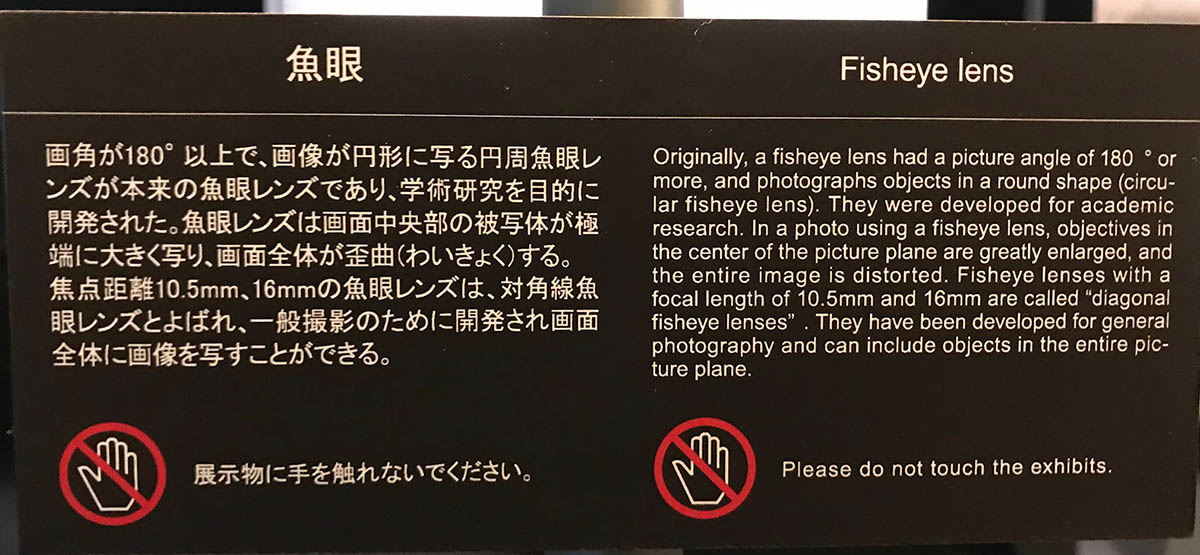 This is what Nikon has to say about fisheye lenses. Nikon made plenty of fisheye lenses so you can consider them to be one of the leaders in this field. Fisheye lenses were designed for the scientific and engineering fields but people soon found a creative use for them.
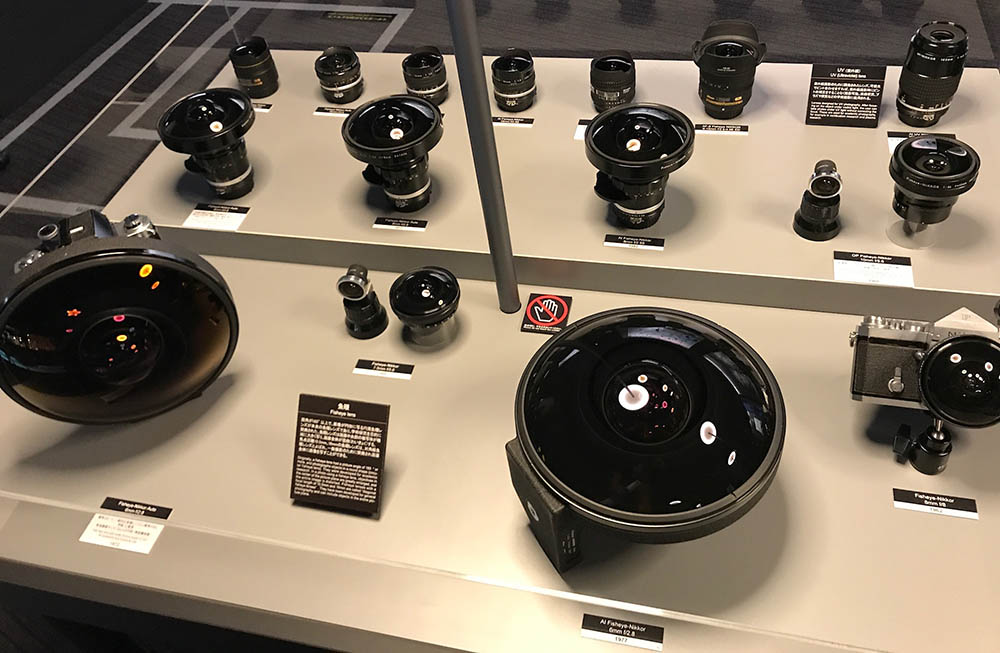 And here are the beautiful fisheye lenses! I have never seen so many of these in a table!
  The shop can be hard to find because it’s in a small side-street that’s not much bigger than an alley. The picture is the entrance leading to the shop located at the 2nd floor. You can easily miss this so I am going to include the map for you later just in case you can’t see it.
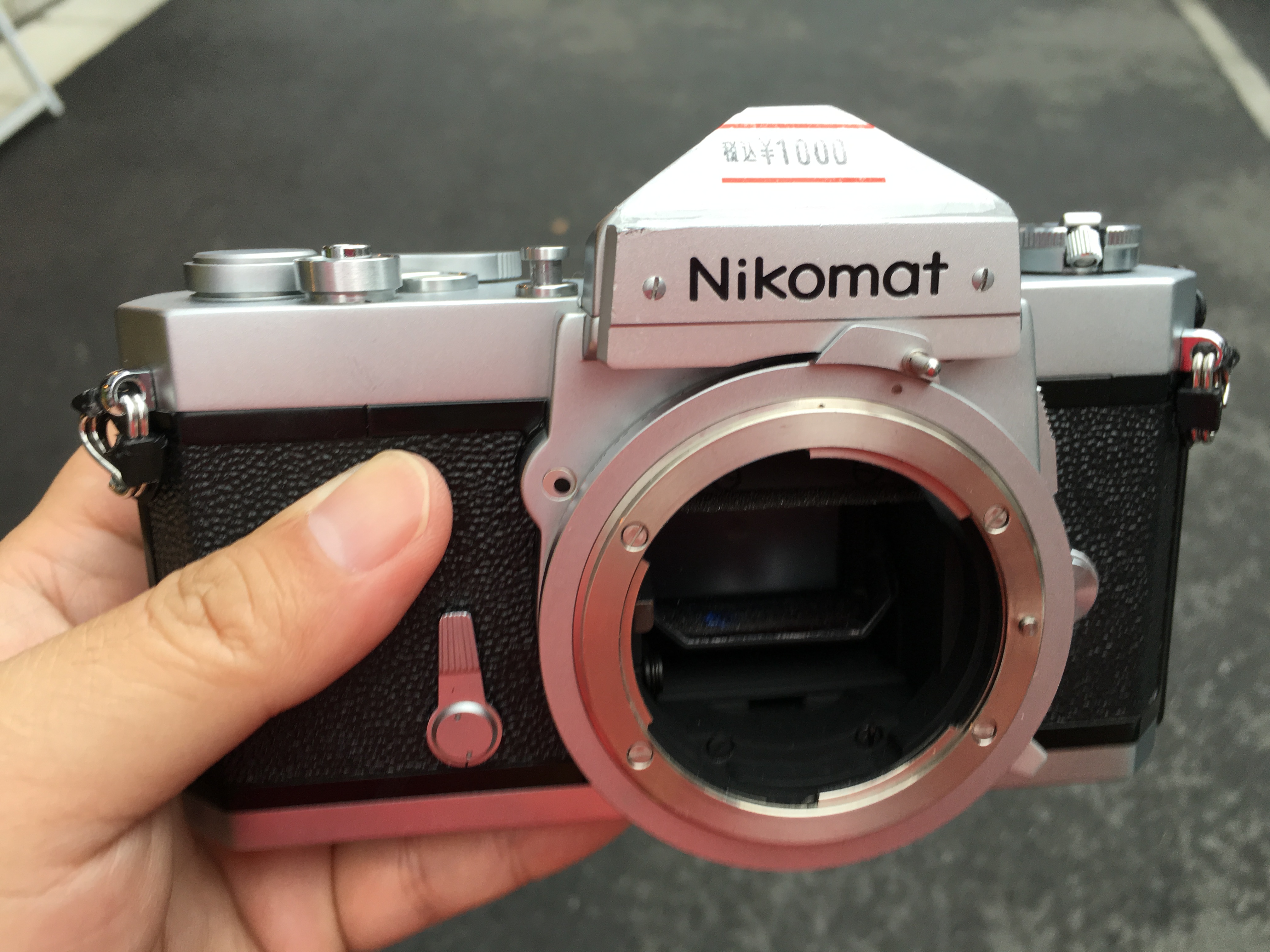 Nikkormats are great cameras. They’re tougher than the Nikon F series in most cases and they’re a joy to use. The key to their toughness is their simplicity and the reliable Copal-S (Square) shutter used in them. They’re heavy and when properly cared for will last more than a lifetime. I would even say that they are tougher than the Pentax Spotmatics that’s known to be tough so that’s saying a lot about this humble camera. The Nikkormats are the predecessors of the great Nikon FM/FE family of reliable cameras made for amateurs and professionals alike. They share many similarities and you can see the pedigree.
 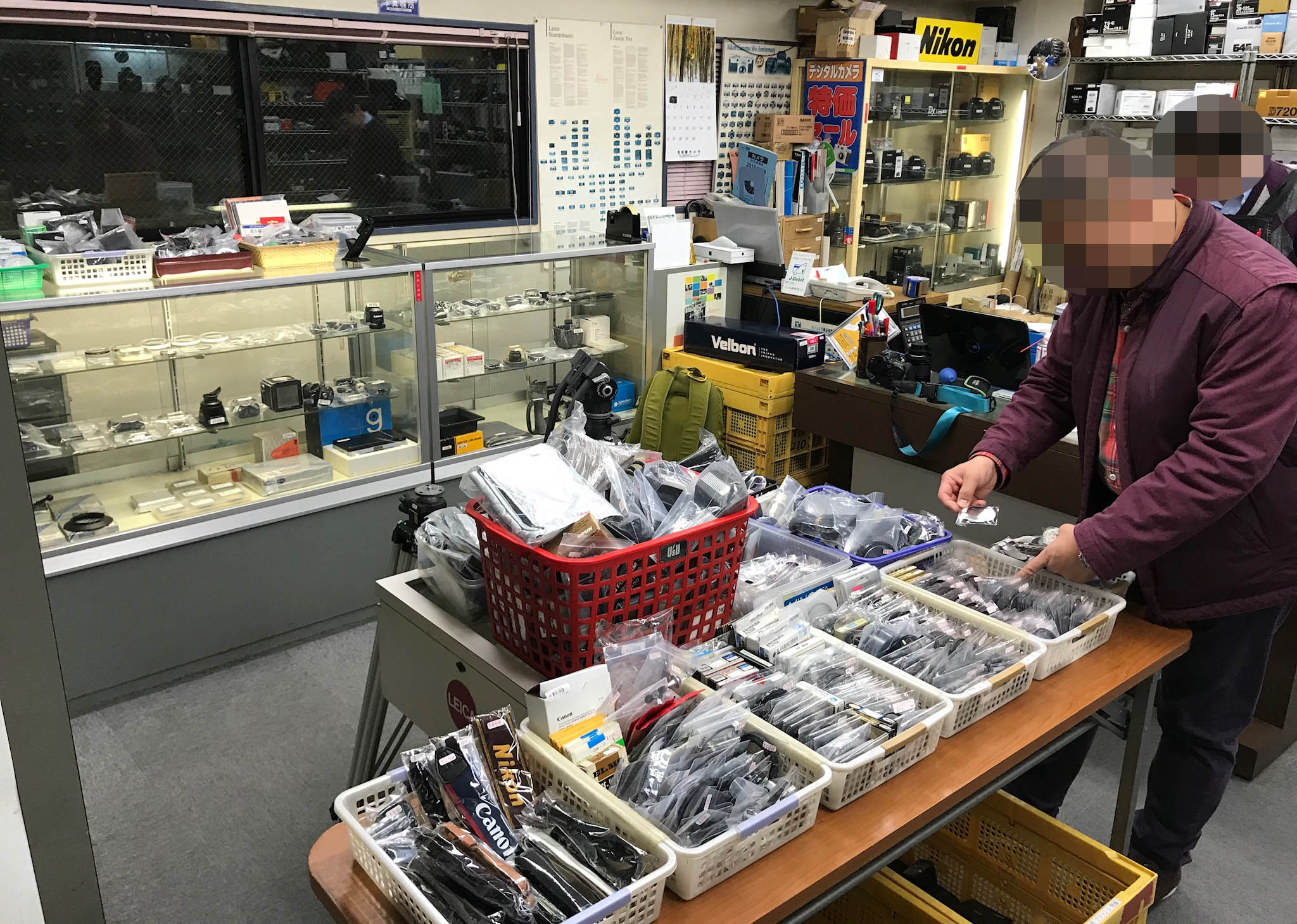 This is the scene that will greet you as soon as you enter the door. That person with the maroon-colored jacket is Benjie from Hong Kong. I met him at the shop and we had a bit of talk. Looks like he collects everything. I don’t know if he owns a shop or not.
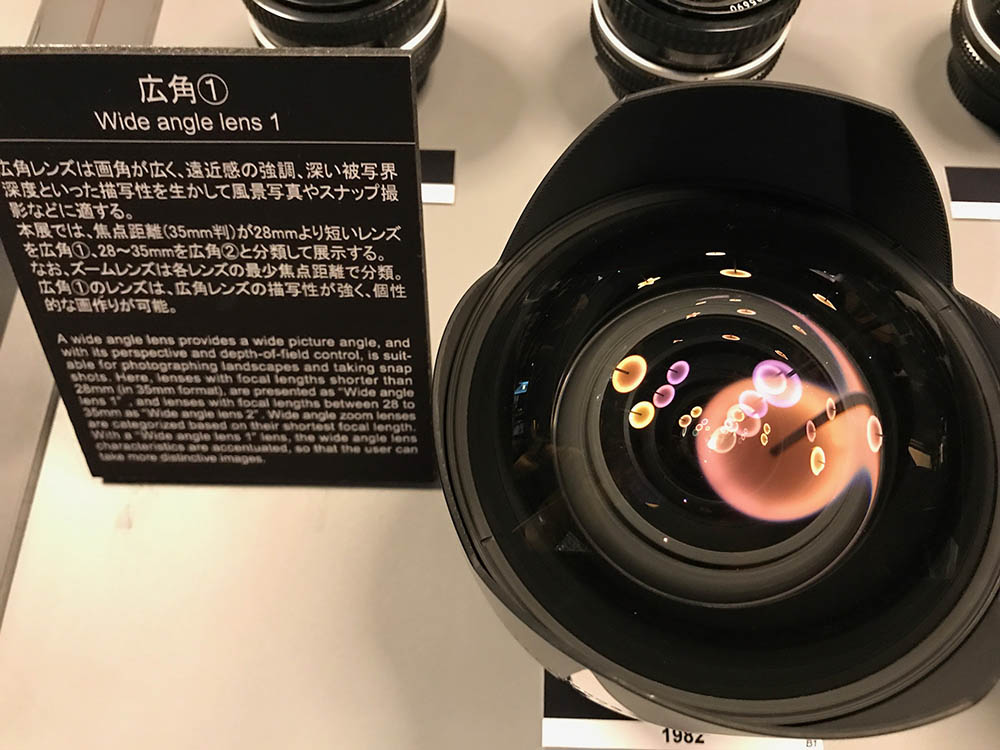 This is what the card says about wide angle lenses. These are mostly used for landscape photography but there are also other fields where these lenses excel. Nikon pioneered a lot of technologies as far as wide lenses for the 35mm format is concerned such as its CRC and the first tilt-shift lens for 35mm photography (SLR).
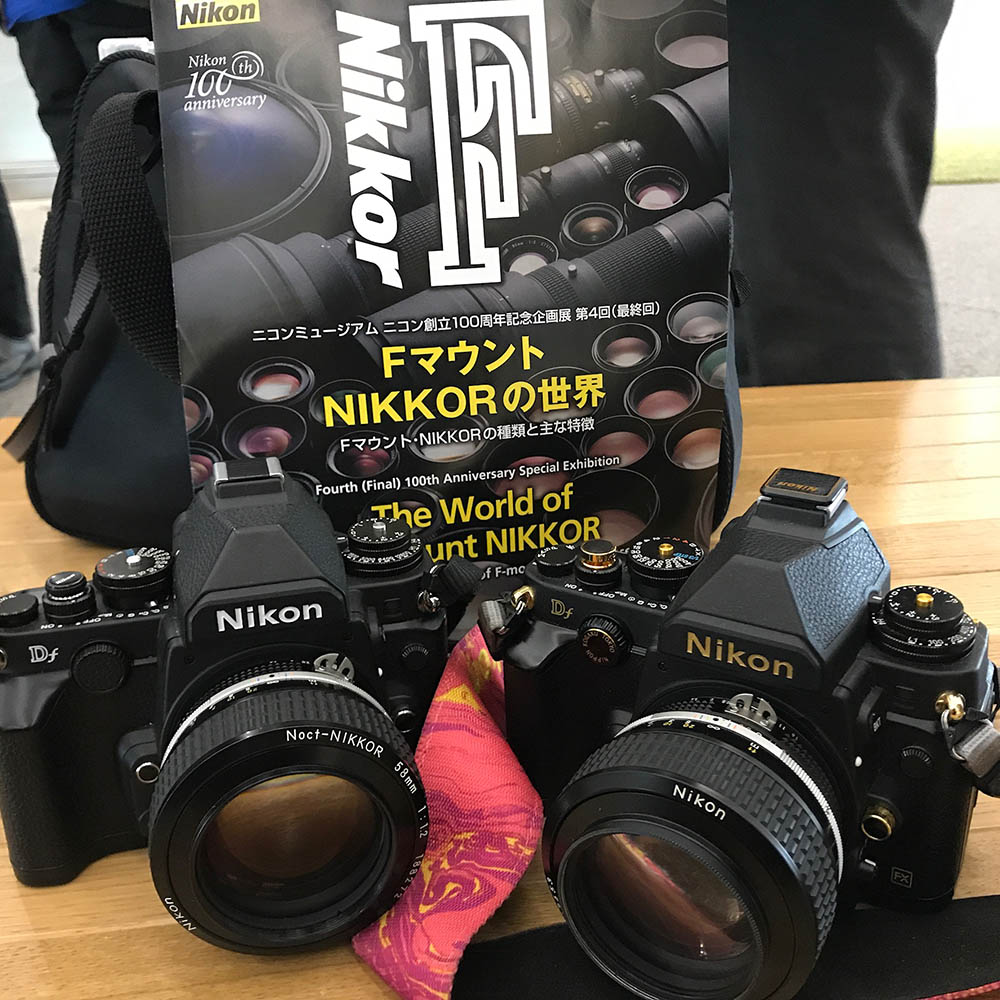 Here’s my
