Hello, everybody! I’m currenly saving money for the upcoming Nikon mirrorless camera and also for the school fees of my child. It’s not cheap sending a kid to school here so I’m going to save money whenever I can. This means that I only have a rice ball for lunch or a banana for breakfast. While it’s healthy for me, I would prefer to eat something that is more substantial. People who can’t afford stuff usually save money so they can buy what they’ve always wanted or settle for the next-best. In this articel, I am going to talk about something along the lines of economy and austerity and how you can make the most out of your money by buying something that has a high cost-performance ratio.
Introduction:
Let me introduce to you the Nikon 35mm f/2.5 Series E! This lens was made with economy in mind and just like the Nikon 100mm f/2.8 Series E, there were some cost-cutting and a lot of clever decisions made just to make this lens sell for a lower price and at the same time have acceptable performance. This lens has become quite popular lately because of the perceived value of this lens. They go from $50-90 in the used market and the optical performance is also more than decent. What many people don’t see is the lens was made using plastic and other materials that aren’t typically used in a Nikkor. This is the reason why the Series E (for economy) lenses were never slapped with the Nikkor tradename. It was sold as a product that’s below their top-shelf line because Nikon was pressured and felt the need to make products for the lower-end of the market mainly targetted at young amateurs, students and women. While this thing won’t fly these days because of political correctness and maturing social atmosphere, that was the case several decades ago. The product line along with the Nikon EM it was developed for revolves around ease-of-use, economy, compact size/weight and “good value”. The competition made a killing selling a lot of plastic cameras and lenses to this market segment and it’s big enough to get noticed by the senpai so something had to be done. At that time, Nikon products were perceived to be tough, expensive, heavy, professional equipment and while Nikon had to maintain this standard they also need to cater to the people with less buying power so the Series E line was born.
The lens is compact and feels nice despite being mostly good-quality plastic. It’s light and it balances really well with smaller cameras. The focusing scale is pathetic because it has a really short focus throw of just about 90 degrees or so. I would love this lens to have a slightly longer focus throw because I usually focus using the scale and not through the finder. The red dot is for infrared photography and this is where you should focus when taking infrared photos. I am not sure how good this lens is in IR, Bjørn Rørslett will be a better person to ask for this at Nikon Gear. More
Hello, everybody! It’s the middle of summer here in Tokyo and it’s getting too hot for me to go out or even sit at my workshop! On the other end of the spectrum, it can be too cold during winter and I don’t want to do anything but just sleep. The perfect weather for me is a happy balance between winter and summer. While we’re on the topic of balance, I’ll be talking about something that’s considered to be one of the best lenses made by Nikon during the early days due to how good it was balanced in terms of performance and the price point it was sold under. Sometimes, the best option doesn’t really have to be the top product in the catalog. The key to success is following the middle path!
Introduction:
The W-Nikkor•C 3.5cm f/2.5 is one of Nikon’s best-sellers during the rangefinder days, it was a huge hit and there are still many samples of this lens that survive to this day but it is worth noting that these lenses should be treated with the utmost respect because we’ll not going to have enough of these in the decades to come due to the demand. It was also sold in Leica-fit (looking for one myself) for the screw-mounted cameras and it became a classic combination for many people up to this day. The reasonably-fast f/2.5 aperture is more than adequate for most tasks and this was considered to be a fast lens when it was sold new. Most wide lenses were sold with a maximum aperture of f/3.5 to f/5.6 so the fast f/2.5 (back then) maximum aperture made more things possible and made it practical for everyday use in almost every lighting condition. One very useful feature of this lens is it’s minimum aperture size is f/22 so you can stop it down to get maximum depth-of-field.
The W-Nikkor•C 3.5cm f/2.5 is a nice and compact lens. It’s made from heavy brass and I love how it feels in my hands. The chrome and nickel plating helps protect the substrate and it also gives the lens barrel a nice finish. This was made during a time when chrome was liberally used for an equipment’s aesthetics. The drawback to this is it’s hard to look at the engravings and understand what’s going on during a sunny day. The barrel had a make-over near the mid-1950s and was painted black and the aperture numbers are now engraved on the outer rim of the aperture ring which made it handle a lot better. A hood is shown in this picture but I rarely use this with one because it can get in the way when I want to change the aperture so I never use this lens with a hood at all (just a lens cap). More
Hello, everybody! We’ll continue with our series on the Nikon I/M/S and I’ll show you the techniques that I use when working on these cameras. Part 1 was all about removing the external parts and how to work on the rangefinder. In this part, I will show you the more difficult scenarios when repairing this camera. While this is Nikon’s first 35mm camera it sure is complicated enough to provide an experienced repairman with a challenge. This is not a camera for the beginner to play with, buy a cheap FED to play around first before you try your hands on this. The Nikon S is much too precious to be a practice camera! It’s important to note that these are great cameras to use on a daily basis for fun and they’re going to work for decades after a good overhaul so make sure that you keep it working.
I love my Nikon S. They’re really reliable cameras and I hope that people will appreciate them more instead of being merely collectible items. With proper love and maintenance, these cameras will last for decades after a good overhaul.
Hello, everybody! I’m dedicating this article to Peggy Marsh, she is one of my readers ánd she is currently here at Tokyo doing her own junk raids and I would like to introduce her to some of the shops that only an insider would know of. Let me present to you this shop that is run by a father and son team called Arrow Camera (アロー・カメラ) / Garakuteya (我楽多屋). Arrow Camera is the original establishment and is involved with buying used gear while Garakuteya is in charge of selling them. For the sake of convenience I’ll refer to both shops as Arrow Camera. The shop is an institution for used camera gear, the old man who started the business is well-known in the used camera business and a familiar to people who see him in older Japanese camera magazines, that is his claim-to-fame. I’m sure many people outside of Japan have never heard of him and his shop so I am hoping that this article will help you get there.
This is the front of their shop. You go up the short flight of stairs to get to the 2nd floor. It can be difficult to find if you’re not familiar with the place because it’s at the side-streets on one of Shinjuku’s less-exciting districts for tourists. The place is boring to say the least and the surroundings consists of residential and office buildings. I’d get crazy living here and the only thing that would keep me sane is this shop! More
Hello, everybody! I am going to introduce to you Osawa Camera (大沢カメラ) in Ebisu! It’s a lovely little shop that I used to walk-past almost on a daily basis a couple of years ago. I used to live near this shop and I would check their inventory at times. If you just happen to be near Shibuya then please give them a visit, their shop may not look like much from the outside but I promise you that they have a decent inventory.
This is the scene that will greet you once arrive at the shop. The staff there are all nice, it is always nice to have a chit-chat with them. They also offer film processing but I haven’t used their services yet. They have a pretty well-stocked film inventory and the prices are competitive by Tokyo standards. They also have a nice parts box for small camera parts, I would sometimes check to see if I can find something that I need there but I’m yet to find something useful there. Go dig into the parts box and see if you can find something you’ll need in you’re repairs, that spare screw that you have been looking for might be there! More
Hello, everybody! How are you today? It’s Summer here and my head is painful from the walk this afternoon under the sun. I feel dizzy as I write this article but I really wanted to finish this one for you tonight. It feels like my vision is blurred, it feels like I was looking-through a fast telephoto lens! A fast telephoto is great for many things such as nice bokeh and subject isolation. Today, we are going to see a very important Nikkor that people can agree with me as being one of the best lenses produced in the 1980’s.
Introduction:
The subject of this article is no other than the legendary Nikkor 180mm f/2.8 ED Ai-S! It’s a very good lens and it is the successor to the excellent Nikkor-P.C 180mm f/2.8 Auto. This lens had a rather big task, to out-perform its excellent predecessor which is considered to be quite an excellent lens even by today’s standards and this lens did just that. The optics were designed from scratch and the then-new E.D. glass technology was implemented to the optics to give it better performance. It did improve the slight color-fringing that you can sometimes see while using the older lens design but sharpness and rendering were left nearly the same as far as I can tell. I am not a technical photographer shooting plants or bricks and masturbating to the results at my monitor so you will probably get concise answers elsewhere. I use my lenses and enjoy them as-is, taking notes on my impression while using them and remembering details that matter in real-world use. With that said, I will say that this lens will still give you a big smile each time you use it because it’s just that good and I can guaranty this to you unless you got a lemon for a lens.
It was built tough with all the metal parts in-and-out of the lens, you can feel the quality just by holding it in the hands. It is quite hefty because of the big glass so it’s going to be a very stable setup no matter what camera it’s mated to. This is very important, the long 180mm focal length will be a bit tricky to steady when you are shooting this hand-held since the weight is going to help you stabilize it to some extent. You will also want to shoot it with a shutter speed that is no-lower than 1/200s to prevent blurry results or so they say. This is not a rule but a guideline that many people follow. It just means you shouldn’t use a speed that is lower than the focal length of your lens. This is more relevant for the SLR because the mirror is going to add some vibration to your setup. I skip this guideline when I shoot with a rangefinder because there’s no mirror to shake my setup. This lens also comes with a built-in hood, it is very useful and convenient since you won’t need to carry a separate shade for this.
Hello, everybody! How have you been? It’s been a long time since I published anything, I have been really busy at work writing code for our new motion-capture pipeline at the company. The current one was too complicated and the code was too bloated so the guy I am working with couldn’t maintain it. I was tasked to write some new tools with Python and I suggested to make the code simpler. In a production environment the decision to go simple is a wise one because if things go wrong things can easily be fixed and you can also expand your program when you need to. I used to work more on the creative side as an artist so I know what should work and won’t. I drew this inspiration from Nikon and I will show you one example in today’s article where this philosophy was implemented!
Introduction:
This series is going to be special because we are going to talk about the Nikon S! This is a very special camera because this camera is Nikon’s first 35mm camera design. It’s just an update of the Nikon I/Nikon M models that came earlier and you can consider them to be the same camera in most respects because the differences aren’t that great. This is the camera that started it all for Nikon and it can be considered as one of the most important Japanese camera design ever. Many “experts” consider this to be a clone of the venerable Zeiss Ikon Contax 2 but I will show you that that’s not really the case in this series and I will also make a video about that so please watch it later in this article!
The Nikon S is a very sexy camera. The straight lines give it a brutalist profile and it gives this camera very solid feel in the hand. Its heft also gives you the added confidence to use slower speeds than usual because the weight will somehow give your setup stability. This is a serious tool for professionals and it earned its reputation in the harsh Korean winter fighting during the Korean war. I can confidently say that you can maul a person with a well-placed whack to the face with the bottom of this camera. Yes, I am serious.
Hello, everybody! I hope you guys remembered the article that I made last year about a certain camera shop called Nitto Camera? While the article sounded sad because the old man running the business was considering retirement he did gave us a little bit of hope because he mentioned that he may open another shop nearby if he found a good place. It is with the greatest pleasure that I will announce to you that he has indeed opened up a new store and it’s not too far from the old place. Please spend a little bit of your time and read what the new shop is all about and if you are in town, please drop them a visit! This shop is underrated by many people and some would even poo-poo it because it’s a small shop that’s situated near the big-name-shop in Nakano called Fuhiya Camera. I love both shops and I will highly recommend that you visit both shops if you are in the area or else your pilgrimage to Nakano will be half-assed! Let’s go and visit the NEWNitto Camera!
The new shop doesn’t have a storefront because it’s inside this unassuming building. You will have to go inside the IFO building and take the elevator to reach the new shop at the 8th floor (#801). It’s kind of out-of-the-way so you will have to use a little bit of effort just to get there but don’t worry, it’s all worth it once you get there.
Hello, guys! We just had the 22nd World’s Used Camera Fair held in Shibuya last May. I didn’t go there at the first day because I was busy at work and quite frankly, I don’t want to spend too much these days. It was held by the Imported Camera Society (I.C.S.). They hold similar events every season and they have been doing this for years. I come to these regularly not just for the shopping but more to meet and say hi to the shop owners or the clerks that I interact with and eventually formed a friendly relationship with. Come with me and let’s see what was going on last May 24-29 at Shibuya!
This is the entrance to the bazaar. I cannot stand the horde of shoppers at the opening so I decided to come during the weekend. There has also been an influx of Chinese buyers from mainland China (P.R.C.) lately and seeing how they behave is something that I want to avoid as much as possible. As you can see in the picture, it’s much more relaxed and I won’t have to squeeze my way just to see something. More
Hello, everybody! We had some Japanese-style steak tonight for dinner. It’s a fusion dish, a new take on a classic by adding some elements of Japanese cooking to make it more interesting and familiar to local palates. While it is arguably delicious, this is still a new thing. I estimate that it is probably only less than 2 decades old. While that was delicious, it was built on established cooking techniques and dishes, I feel that there’s still a lot of room for improvement. While we’re on the topic of fusion and improvement, I’d like to introduce to you an interesting lens, it’s an early attempt to fuse 2 paradigms. While it’s a good start, it still has lots of room for improvement but the lens had plenty of potential and that’s what’s most important if you ask me.
Introduction:
Today, we are going to talk about the AF-Micro-Nikkor 55mm f/2.8. This lens is not known by a lot of people due to its rarity. It’s only made a few years before it was replaced by a superior design. This is one of the original lineup of AF-Nikkors introduced in the mid-1980s for their new AF cameras like the Nikon F4, these gained an underserved reputation amongst hardcore Nikkor fans due to the use of plastics. Nikon at that period in time was experimenting with AF lens designs so as a result, many of these suffer from awkward handling characteristics which annoyed those who are used to using classic Nikkors.
The AF-Micro-Nikkor 55mm f/2.8 is a rather boring-looking lens. It looks like a tea cup or a salve pot depending on who you ask. But appearances can be deceiving, this lens is a great performer throughout its range until you reach f/11-f/16 where diffraction begins show. This lens can also go to a maximum reproduction ratio of 1:1 without the use of any accessory, it’s the first lens in the 55mmMicro-Nikkor line that’s able to do this natively since the Micro-Nikkor 5.5cm f/3.5from 1961. It achieves this feat by using a long-telescoping set of barrels to extend the lens to about twice its length. If it all sounds familiar to you that’s because this is the predecessor of the amazing and still in-production AF-Micro-Nikkor 60mm f/2.8D. While both lenses feel similar, they’re different mechanically and optically. Both can extend their barrels using 2 totally different methods.
Help support this site by donating to richardHaw888@gmail.com over at Paypal! If you want to buy me a beer or a roll of film then that would be great,too!

 The lens is compact and feels nice despite being mostly good-quality plastic. It’s light and it balances really well with smaller cameras. The focusing scale is pathetic because it has a really short focus throw of just about 90 degrees or so. I would love this lens to have a slightly longer focus throw because I usually focus using the scale and not through the finder. The red dot is for infrared photography and this is where you should focus when taking infrared photos. I am not sure how good this lens is in IR, Bjørn Rørslett will be a better person to ask for this at Nikon Gear. More
 The W-Nikkor•C 3.5cm f/2.5 is a nice and compact lens. It’s made from heavy brass and I love how it feels in my hands. The chrome and nickel plating helps protect the substrate and it also gives the lens barrel a nice finish. This was made during a time when chrome was liberally used for an equipment’s aesthetics. The drawback to this is it’s hard to look at the engravings and understand what’s going on during a sunny day. The barrel had a make-over near the mid-1950s and was painted black and the aperture numbers are now engraved on the outer rim of the aperture ring which made it handle a lot better. A hood is shown in this picture but I rarely use this with one because it can get in the way when I want to change the aperture so I never use this lens with a hood at all (just a lens cap).
 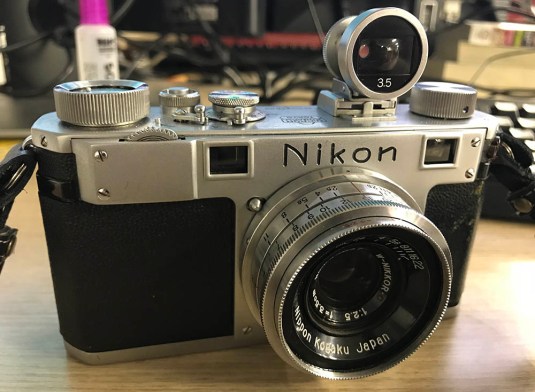 I love my Nikon S. They’re really reliable cameras and I hope that people will appreciate them more instead of being merely collectible items. With proper love and maintenance, these cameras will last for decades after a good overhaul.
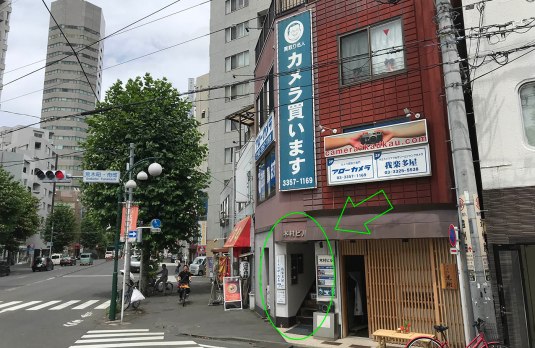 This is the front of their shop. You go up the short flight of stairs to get to the 2nd floor. It can be difficult to find if you’re not familiar with the place because it’s at the side-streets on one of Shinjuku’s less-exciting districts for tourists. The place is boring to say the least and the surroundings consists of residential and office buildings. I’d get crazy living here and the only thing that would keep me sane is this shop!
  This is the scene that will greet you once arrive at the shop. The staff there are all nice, it is always nice to have a chit-chat with them. They also offer film processing but I haven’t used their services yet. They have a pretty well-stocked film inventory and the prices are competitive by Tokyo standards. They also have a nice parts box for small camera parts, I would sometimes check to see if I can find something that I need there but I’m yet to find something useful there. Go dig into the parts box and see if you can find something you’ll need in you’re repairs, that spare screw that you have been looking for might be there!
 The Nikon S is a very sexy camera. The straight lines give it a brutalist profile and it gives this camera very solid feel in the hand. Its heft also gives you the added confidence to use slower speeds than usual because the weight will somehow give your setup stability. This is a serious tool for professionals and it earned its reputation in the harsh Korean winter fighting during the Korean war. I can confidently say that you can maul a person with a well-placed whack to the face with the bottom of this camera. Yes, I am serious.
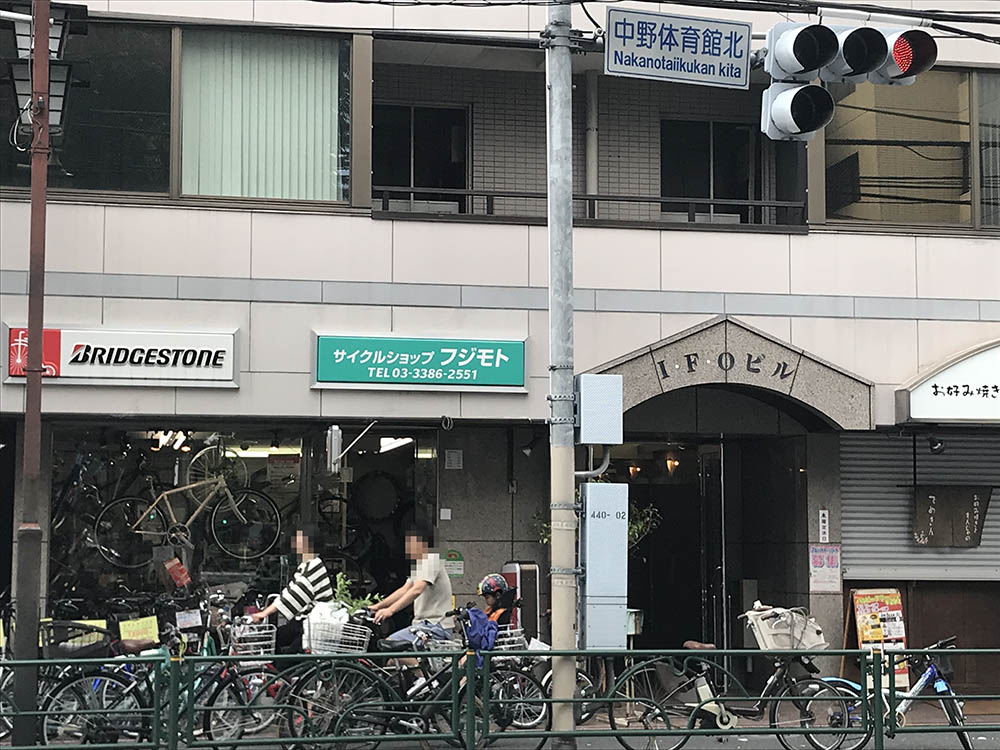 The new shop doesn’t have a storefront because it’s inside this unassuming building. You will have to go inside the IFO building and take the elevator to reach the new shop at the 8th floor (#801). It’s kind of out-of-the-way so you will have to use a little bit of effort just to get there but don’t worry, it’s all worth it once you get there.
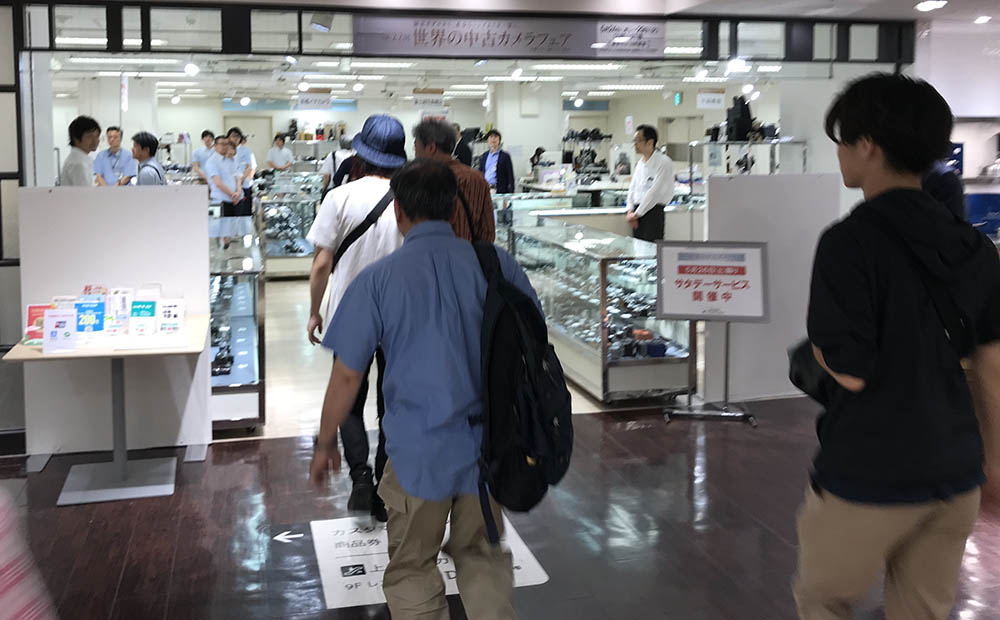 This is the entrance to the bazaar. I cannot stand the horde of shoppers at the opening so I decided to come during the weekend. There has also been an influx of Chinese buyers from mainland China (P.R.C.) lately and seeing how they behave is something that I want to avoid as much as possible. As you can see in the picture, it’s much more relaxed and I won’t have to squeeze my way just to see something.

