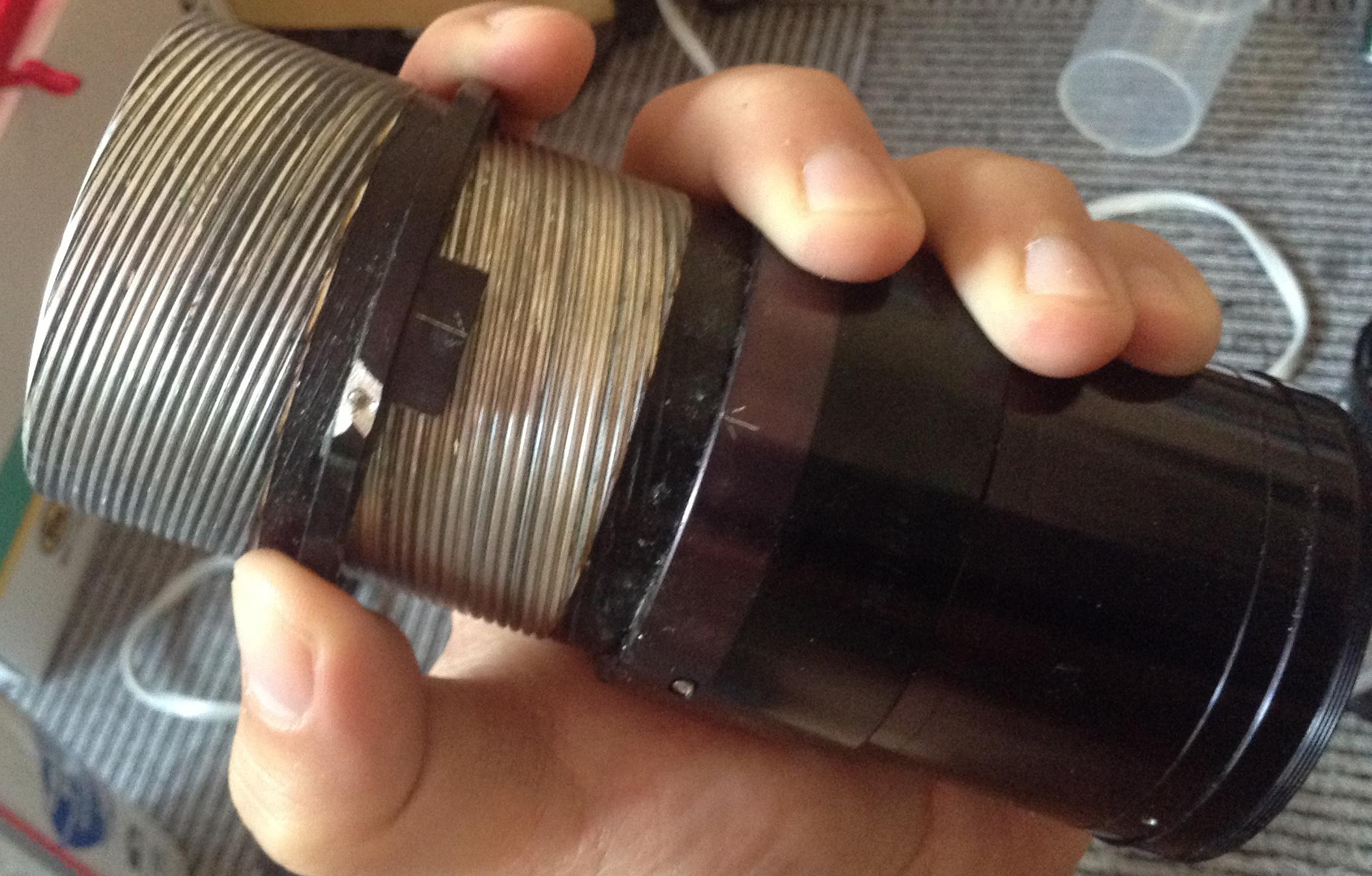
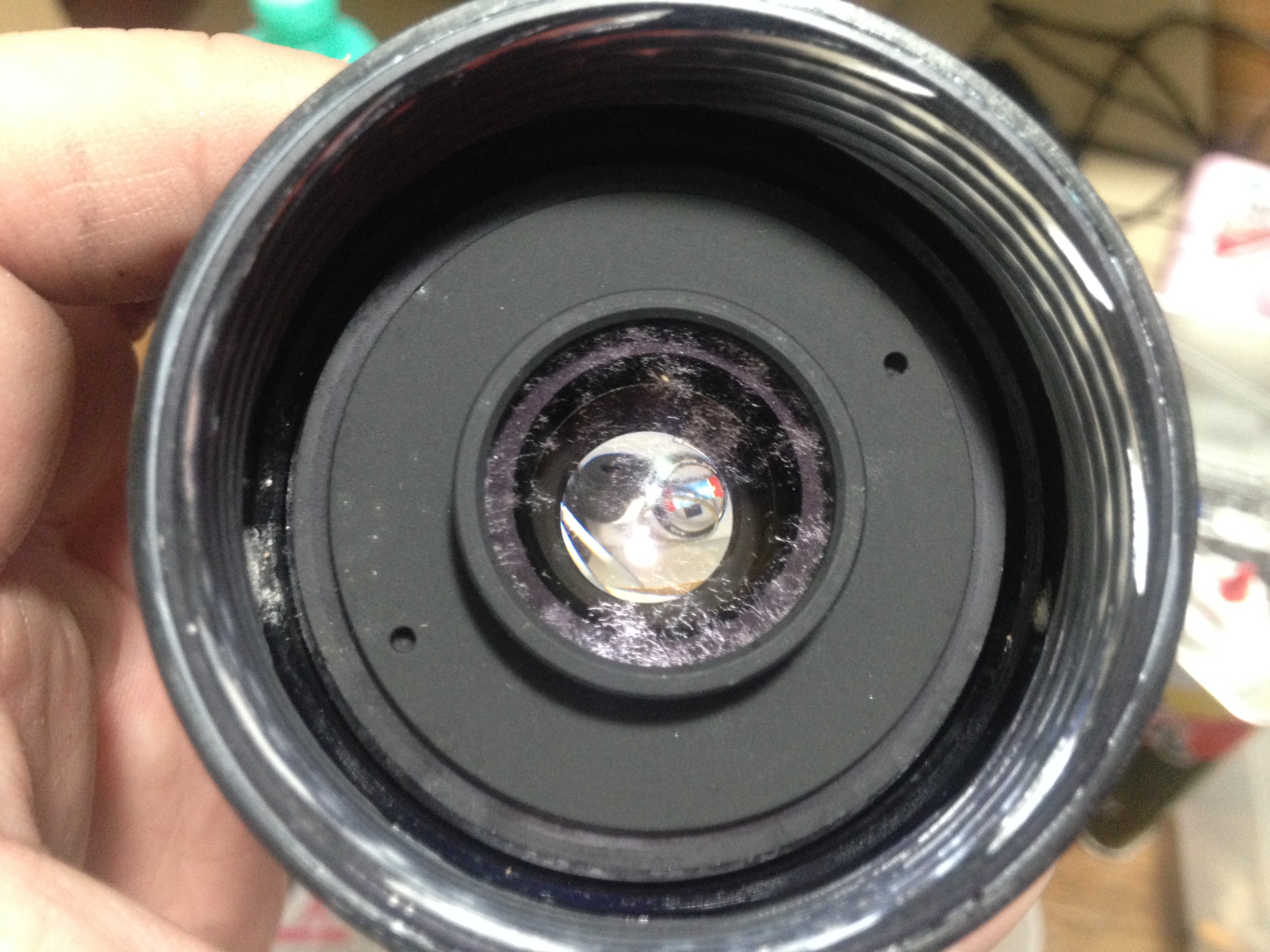
Repair: Nikkor 35mm f/2.8 Ai

Hello, everybody! I like eating sushi, it’s nutritious, fun and yummy. People used to eat these as street food but they have become quite expensive these days mainly due to sourcing and handling of the ingredients. This is why an inexpensive solution was found in the form of the “sushi-go-arounds”. They are cheap but not necessarily economical because the ingredients are not as good as the ones used by more expensive shops. Once you get a taste for the better stuff you’ll never go back. This is what I call “false economy” and this is the topic of our current article. You thought you’re getting a good deal but at the end of the day you find yourself wanting to buy the real-deal.

Introduction:

The Nikkor 35mm f/2.8 Ai was sold from 1979 to 1981, a very short time for a mass-produced Nikkor because the newer Nikkor 35mm f/2.8 Ai-S was about to be released soon. It replaced the Nikkor 35mm f/2.8 Ai which was already starting to get old by that time. Many people confuse this with that lens and so Nikon named this one Nikkor 35mm f/2.8 Ai (N) officially to denote that it is a later iteration. If there’s an existing lens with the same name, why was there a need to replace it with something similar? The answer to that is this has the newer optical formula which was used for the newer Nikkor 35mm f/2.8 Ai-S that soon replaced it and Nikon wanted to market it quickly since the 35/2.8 line of lenses was quite popular.

This is a great lens for street photography, it’s light, compact and sharp. This handles very well with all Nikons. It’s perfect with the Nikon F3HP, its dense and well-built, it will survive professional use.

More

Repair: Micro-Nikkor 5.5cm f/3.5 (1/2)

Hello, everybody! I like shooting with film. It’s inconvenient, unpredictable, expensive and unforgiving but it gives you memorable pictures that you’re not going to get with digital. It requires more skill to use compared to digital and it requires even more skill to use it properly. Many people ask me why I prefer to shoot film and I always find it hard to justify it, my only answer is usually short – “I love a challenge”. Sure, I can get instant review with digital but it doesn’t feel as satisfying and so the pictures that I made don’t have the same impact as my pictures that were taken with film which is memorable. The inconvenience of taking it makes it more precious and you’ll remember how you took that shot and why. Sometimes, a little bit of inconvenience is a good thing. Today, I will talk about an inconvenient lens to use. It is difficult to use properly but you are rewarded with nice pictures if you managed to nail a shot.

Introduction:

Today, we are going to discuss a very unusual, rare and historical lens. This is something that you do not see everyday and as a consequence there isn’t a lot of info on the net about this lens. Many people don’t even know that it exists. The Micro-Nikkor 5.5cm f/3.5 started the popular 55mm line of macro lenses. This lens line was so popular and practical that other manufacturers had to copy this idea and incorporate it into their own products and this all started with this lens.

IMG_2692

This is a compact little lens by today’s standards but this was considered to be on the fat side when it debuted. The barrel had to be wide because it can extend to about 2x its length when fully extended. If you want to read more about this lens you can go to Matthew Lin’s great writeup here.

More

Repair: Nikkor 50mm f/1.2 Ai-S

Hello, everybody! I am currently busy studying Unreal Engine this holiday and weekend so I do not have a lot of time to write a lengthy post. My baby is also getting bigger and bigger and she now requires more attention as she is now capable of walking fast! Anyways, a couple of people have talked to me regarding today’s problem and this is how I solved mine.

Introduction:

Today’s topic is the Nikkor 50mm f/1.2 Ai-S. It’s Nikon’s fastest 50mm and it’s still being produced in 2019. It debuted in 1981 as an Ai-S update of Nikon’s first 50/1.2, the Nikkor 50mm f/1.2 Ai and it stayed in production since then. I sometimes wonder if there is an actual demand for this but I remember a few acquaintances who actually bought these in the past 10 years or so. It’s the only thing Nikon has in the ultra-fast normal lens class so I guess that it is one of the reasons why this lens is still being made and sold.

It’s perfect with the Nikon F4, it’s best-paired with a bigger camera since it is heavy. Handling is perfect and I wouldn’t ask for anything more. The bright, big glass is all that you’ll see when looking from the front. It’s a professional tool and it means business.

More

Repair: Nikkor-Q 135mm f/2.8 Auto

Hello, everybody! I am craving for some smooth and creamy French blue cheese, the one that smells of feet and with the blue molds. It is one of my comfort foods so I love to spread it on top of bread and saltine crackers for breakfast. I know that this is not good for people who suffer from gout but you have to eat the things that make you happy some times. We only live once and we should live our life to the fullest! Of course, we should never abuse our health so we should take care not to over-do anything. Since we are on the topic of smooth, creamy things, I’ll show you something smooth and creamy that isn’t as expensive as the stinky French cheese that I crave. Read the whole article to find out more.

Introduction:

There are few Nikkors that can match The Nikkor-Q 135mm f/2.8 Auto when it comes to creating smooth bokeh for very little money. These lenses can be bought for as little as $10 to an average of $80 these days depending on the condition. Near-mint samples with those valuable factory Ai-rings can fetch above $120 but seldom more than $150. This isn’t as popular these days due to it being a manual focus lens, the modest f/2.8 speed is turning-off people who crave for faster glass, too. For people who know their thing, this lens is going to be a keeper. Professionals even use these today and I know a few of them (2 actually) who use these as their portrait lens for work.

The Nikkor-Q 135mm f/2.8 Auto debuted in 1964 and was made until 1975. It was then replaced by a similar lens with the same optics design but with an updated barrel. The 135/2.8 line has about six major variants throughout its long production run. The lens family existed up until the DSLR era with the Nikkor 135mm f/2.8 Ai-S being the last version. This shows how this lens line sold very well through the years and across generations. It’s a classic in the sense that it’s never going to be useless even in the decades to come.

More

Repair: Helicoids

Helicoids are essential for focusing a manual lens. While it is a joy to focus with one, it is a big pain to repair for beginners and it can really be a show-stopper if you do not know how and where these things should mate when reassembling a lens.

IMG_1160

Helicoids are a thing of the past for the AF (autofocus) generation but for connoisseurs like us who enjoy and appreciate older (or current) manual focus lenses, the helicoid is the soul of the lens when it comes to focusing because this is the one thing that affects us the most as we turn the focus ring left and right.The helicoids are also the source of frustration and the root cause for their lens’ problems for many. Lenses that were poorly kept and maintained will exhibit some form of focusing problem ranging from a seized helicoid to dry focusing sensation.

More

Repair: Fungus Cleaning

Hello, everybody! I was a bit busy with a wedding yesterday as photographer#2 so I did not have the time to prepare for a complete article. I decided to write something else instead. It dawned to me that in order to keep this blog alive, I should not post a repair article every week because I will quickly run out of items to write about! A balance has to be struck so I will write filler posts like this in between the repair articles. I hope that you don’t mind.

Introduction:

I have some people ask me about how to deal with fungus. This is also a niche topic that is not commonly discussed and even if you have found some information it is usually vague or false, so you will have to do your own tests. For this reason, I will share with you my fungus removal techniques. This is something that I have been doing to any lens that I bought that has fungus. It has worked so far and the lenses stay clean and clear.

IMG_2208.JPG

Fungus in a lens is something that all photographers try to avoid as much as possible. It’s something that is impossible to avoid because fungus spores are everywhere, from the air we breath to every surface that we touch. The only way to keep this from happening is to not provide them any chance to germinate by depriving them of nutrients and other essentials for them to thrive.

More

Repair: Nikon 75-150mm f/3.5 Series E

Hello, everybody! It’s not secret that I am cheap, so cheap that I cannot even buy myself a set of dentures or get a shave or haircut. Different people have different priorities and we tend to spend less on things that we do not view as essential to our being and that forces us to make tight decisions on these things to make the most out of our money. For example, instead of buying a pair of expensive shorts that look fashionable I opted for surfers’ shorts so I can wear them comfortably and clean dry them really quick. They last very long and they’re functional, image is only second to utility. I will show you a nice example today that pertains to lenses as far as the Nikon brand goes. It was sold cheap when it came out but there’s nothing cheap with the photos it produces so it has acquired a cult following.

Introduction:

The Nikon 75-150mm f/3.5 Series-E is considered as a hidden gem by its fans despite being a Series-E lens, a line of lenses made by Nikon to complement the entry level class Nikon EM camera. The Series-E lenses were made with cost-cutting as the main factor while maintaining superb optical design and performance. Most lenses under the Series-E brand are good and they have acquired a following so many of them have inflated prices in the used gear market.

It’s a sleek lens with a useful focal length and a decent maximum aperture. I like this lens a lot because it’s small and light. I like the push-pull layout due to the broad grip, this allows me to zoom or focus using without the need to think about 2 separate rings to manipulate. The drawback is most push-pull lenses have this annoying problem called “zoom-creep”, it’s just a name for the phenomenon where the zoom/focusing ring slides towards the camera, throwing your focus and zoom off and it does this un-assisted and gravity is the only force in-play here. Most, if not all old lenses of this type suffer from it to some extent.

More

Repair: GN-Nikkor 45mm f/2.8 Auto

Hello, everybody! Despite the busy schedule I managed to pace my time in order to post this to my blog on a timely manner. Apart from being busy at work, I was sick with hay fever. Hay fever is a thing here every spring and it affects a significant part of the populace. Keep your masks on to prevent hay fever from ruining your Spring. As I promised a before, I would like to present to you some unusual Nikkors as we have dealt with conventional ones in the previous posts. This approach is to nurture your growth and you start with simpler lenses then proceed to the more exotic ones. The subject of our post this time is a mysterious and unique Nikkor that many people do not know much about.

Introduction:

This one is a mystery to many people because it is the only Nikkor of its type that got into production. This lens was designed to aid photographers who used flash guns. Back in the days before TTL metering, photographers need to adjust flash output by re-calculating its power as you go nearer or further from the subject (hence GN for guide number). Nikon’s engineers had to find clever ways to solve this like the GN-Nikkor 45mm f/2.8 Auto and its unusual coupling mechanism. Another good example is the earlier production type Micro-Nikkor-P 55mm f/3.5 where the aperture opens up as you go closer to its maximum reproduction ratio of 1:2 (native) or 1:1 with the included M- ring accessory.

This has a switch at the focusing ring to couple it to the aperture ring so that these move together when you turn either one of them. For example as you focus your lens closer the iris would stop-down and when you focus further the iris would open-up to compensate. It allows you to shoot without even thinking about changing the power of the flash. While this is clever it has a catch, the focusing ring on Nikkors go the other-way and this means turning the focusing ring to the right makes the lens focus to infinity and in order to make this clever iris compensation trick work, it had to turn the other way! This is very annoying so I don’t use this lens as often as I would like to. It’s such a pity because I have grown to love this lens.

This is a nice example of precision engineering. Look at the nicely engraved numbers, it is something that you don’t anymore see in current lenses from mainstream brands. If you think this is all the engravings this lens has then just wait until you read the whole article. This is one of Nikon’s most ornate lenses and it’s one-of-a-kind.

More

Repair: Nikkor-Q 200mm f/4 Auto

Hello, everybody. I’m sorry for posting this late but I was having a problem with the blog so I was not able to post this earlier. For some reason. I can’t access my drafts and my site would not load at all. That was all fixed after I restarted my laptop. I was scared because I have spent a lot of time documenting/writing for this blog and if I lost all of my posts it would mean the end of everything. Now that it is all in the past we can now proceed with our subject for today.

Introduction:

Our subject for today is the amazing Nikkor-Q 200mm f/4 Auto. It’s one of Nikon’s most expensive lenses in its day and it’s the successor to the Nikkor-Q 20cm f/4 Auto which is a revolutionary lens in its own rite. This lens is an improved version and it fixed some of the bigger problems of the older lens so it’s considered to be a different lens in nearly all aspects. Apart from the obvious difference in lens barrel design it also has an improved optical design (slight variation) that makes it a better-handling lens overall. I like how the new focusing ring feels because it’s now broader. It also focuses a bit closer which makes it more useful but is still too-long compared to later lenses from this class. It’s a great lens for its time and many people bought these for taking pictures of sports, news, birds and just about anything that needs a long lens.

The silhouette of this lens reminds me of a softdrink bottle. It looks sexy and people will surely stare at you when you use this lens. As you can see from the photo, this lens is not what I would call small. It’s heavy, long and big so carrying it all-day can be a problem if you wear your setup around your neck. I wish it came with a tripod mount because it is front-heavy but I guess this lens was designed to be used hand-held so it was omitted.

More

CP+ 2016 (pt.2)

Continued from Part 1…

There you are. I have split this blog post into two parts so that people one mobile devices will not have a hard time scrolling and loading everything as well as to give me some time to pause and take a rest (I’m only human. Flesh and blood, I’m made…)

Tamron:

Oh,boy! You guys are going to like the new Tamron lenses! Just check these out…

The Tamron SP 85mm f/1.8 Di VC USD is the only lens in it’s class. It is the world’s first fast 85mm for the 135 format to have VC. That thing (VC) actually works! The focusing is very fast as you can see in my video above.

HAW_4017It is also sharp wide open and contrast looks just about right. Some lenses of this class will exhibit low contrast when shot wide open with boatloads of chromatic aberration but this lens showed none in this picture. The rendering is pleasant to me and I actually like this better than Nikon’s new 85mm f/1.8G. The Nikon lens is considered by many to be one of the best 85mm’s available in the market. More

Previous Older Entries Next Newer Entries