Hello, everybody! It’s going to be Christmas in a few days and I still haven’t received any fruitcakes! I used to get these back home and while many people don’t want one because they’re boring, I enjoy my fruitcakes for what they are. They are gifts that were given by friends and they last very long, too. A good fruitcake tastes just as good as any expensive and fancy cake from the fancy bakers and this just goes to show that they are not bad at all and can prove to be very enjoyable specially if they’re still moist. Still talking about fruitcakes and how many people find it boring, I will show you a Nikkor that many find boring but it has a certain appeal to it for people who love it and just like real fruitcakes, this lens is tough and will last a long time when serviced well. Read my article to see what this is.
Introduction:
The Nikkor 35mm f/2.8 Ai-S is an update of the Nikkor 35mm f/2.8 Ai and it retains the old lens’ optical design of 5-in-5 (5 elements/5 groups). The barrel has been updated to give it a new look as well as making it Ai-S compatible. It has a decent run from 1981-1989 so it’s considered a moderate success. It’s price made it popular for students and people who’s budget dictates what they buy. It’s great for most things and being Ai-S, it can work in all automatic modes with newer Nikons that provide the standard PSAM exposure modes. It also has a more modern construction so less materials were used to make it and it uses a more clever construction so some parts were optimized. This makes it less rugged when you compare it to the older lenses in its family but it’s still a solid lens compared to what we’re used to seeing these days.
The lens is the last iteration of the 35/2.8 lens family that began in 1959 when the Nikon F was introduced. It carried-on the spirit of this lens family to the ’80s and made it relevant in a time when people were used to faster 35mm lenses. Its light and compact design is a good selling-point for photographers who don’t want to bring anything heavy and f/2.8 is still decently-fast and should be adequate for most jobs. What ultimately killed this lens is probably the introduction of the AF-Nikkor 35mm f/2 which is just as small but is much faster at f/2 and it can also autofocus. Some will prefer manual focus lenses (like me) but the rage in those days was autofocus, very much the same way as VR today.
Hello, everybody! I was window-shopping at the watch section of the mall and something caught my eyes – a Seiko-5. The Seiko-5 movement is reliable and tough, it’s easy to fix so it’s not hard to see decades-old samples still working like they were new. It’s familiar to a lot of watch repairers because it sold very well and parts are easy to obtain. The bad side of this if you can call it that is they don’t hold value very well unless it’s special or rare. It is easy to find one for less than $100 used (and new!) so they’re popular for people who’s budget dictates what they wear. While we’re on the tangeant of cheap and reliable, I will share with you a camera that I believe has the same qualities as the Seiko-5 and it is one of the classic Nikons that every collector or Nikon user should have – the Nikkormat FTn.
Introduction:
The Nikkormat FTn is the most common Nikkormat variant you will ever encounter. This is probably the most successful one in terms of units produced and it’s not hard to figure out why because the Nikkormat FTn is a wel-rounded camera that’s still relevant today. It was developed from the earlier Nikkormat FT which is a good camera but it added things that made the original camera even better in terms of handling. Both models have built-in TTL meters that have an average 60/40 metering pattern that’s standard with Nikons. I also love how you can the meter’s needle without looking-through the eyepiece since it’s also visible at the top part of the camera. This makes it easy to measure your exposure so you don’t have to look like a creep pointing your camera at your subjects just to see if the exposure is right. It also has a handy mirror-up switch so you don’t have to waste a single exposure (like on the Nikon F) just to flip the damn mirror up. A self-time is also standard and you also have a useful DOF preview plunger for stop-down metering and checking if the DOF is right. You even get an auto-resetting film counter! I know that all these sound trivial today but they were considered to be premium back then.
The Nikkormat FTn’s are the cheapest Nikkormats you can get these days because they’re the most common type and as a consequence their value is highly depreciated. They also use the old 1.35v mercury cell batteries that are not made anymore these days and this is also another factor for their cheap price. The ones that were sold domestically (Japan) all use the Nikomat trade-name instead of Nikkormat but they’re basically the same. More
Hello, everybody! I just got back from a trip from the ¥100 shop, it’s Japan’s version of a dollar shop and you can buy just about anything you need here for your daily needs. The products are cheap and flimsy but for people who have other priorities or those who are constrained by budget, these shops offer a means of survival in an expensive place such as Tokyo. We’re simple people with simple needs and so these shops are more than OK to help with easing the burden of upkeep. Some of the products offer great value and you’re not going to find anything better in a more expensive shop. I sometimes get my tools and equipment from these shops and many of them have served me very well. While we are on the topic of being cheap, I will show you a camera today that offers great value today, they are cheap not because they’re bad but mainly because they’re old and some people prefer cameras with different sets of features and specs. This is the perfect choice for art student who can’t afford much or a traveler who wants a capable camera to bring along with them on a trip but don’t want to bring their expensive cameras with them. Read my article to find out what this is.
Introduction:
The Nikon FE was released around 1978, roughly a year after the Nikon FM debuted. The Nikon FE shares many similarities with its mechanical sibling so accessories can be used with either models. Both cameras replace the popular mechanical Nikkormats as well as the all-electronic Nikkormat EL series in their respective categories. Both are smaller and lighter, built with newer technology, used newer materials and have better handling. The Nikon FE sold decently but the Nikon FM sold better because it’s all-mechanical and you’ll only need batteries to operate its meter. People didn’t trust electronic cameras those days but the Nikon FE proved to be a reliable machine and many can still be found today for a nice price and they still work as reliably as the day they were sold. Fewer moving parts means less things that can go wrong due to mechanical failure but the flip-side of this is you will need batteries to operate the Nikon FE or you’re going to be stuck with its 1/90s mechanical back-up speed that will let you fire the shutter even when you don’t have any batteries in the camera, this gives you a certain insurance in case things go wrong.
The Nikon FE has a beautiful silhouette that it inherits from the Nikon FM. Its design is its biggest asset because everything just makes sense once you hold the camera yourself. It’s also worth noting that it has a retractable Ai-coupling tab so you can use pre-Ai lenses if you choose to and meter with it using stopped-down metering. This is the only reason to choose the Nikon FE over its successor, the Nikon FE2. More
Hello, everybody! Me and the family just had a Korean dinner at Daruma, one of the best shops for Japanese-style Korean food in Nakano. It’s not the cheapest shop around but it offers the best value when it comes to selection and quality. There are many shops near it that serve similar things for a bit less but this shop is hard-to-beat so we keep on going back when we have a chance to. Other shops may have better reviews on the food review sites or may have better/cleaner place but they are all just hype and you will soon realize it as soon as the food is served. Some customers just do not know the difference or ignorant about this shop so they thought that they had a great deal when in fact they just got ripped-off. This also applies to photography gear and there are plenty of examples of a hyped product and I’ll show you one now.
Introduction:
The Nikon 50mm f/1.8 Series-E lens is very popular. It was made to be cheap so it carries the Series-E brand instead of the Nikkor trade name. The Series-E lenses are basically just Nikon lenses that were made with cost-cutting in mind while maintaining acceptable performance and decent build quality. Cost-cutting was made by using a lot of plastic instead of alloys and parts simplification. The optics were also at times tweaked to give the impression of sharpness and contrast wide-open at the expense of other important but subtle factors. It will attract the attention of beginners but the experienced photographers will know if something is missing. The good news is this lens is one of the few Series-E lenses that did not have the optics watered-down in order to make it affordable. This lens shares the same optical formula as the Nikkor 50mm f/1.8 Ai-S, a lens that has a great reputation amongst many photographers for being sharp, small and well-rounded. It makes this a nice lens because you get similar performance for much less. That was generally true until the internet hyped this lens so much that you can buy the Nikkor 50mm f/1.8 Ai-Sat times for a bit less than this one. It used to cost about half so buying this lens had a purpose but that line has been blurred today and I will explain everything to you in the introduction and the repair section so you can compare what’s inside of this and the Nikkor 50mm f/1.8 Ai-S.
The lens is small and can be considered one of Nikon’s smallest and lightest lenses ever. I personally prefer the Nikkor 50mm f/1.8 Ai-Sbecause it’s more durable and it feels better in my hands but I certainly won’t mind bringing this out with me at all. In this photo, it’s mated to the Nikon EM. The Series-E lenses were made for the Nikon EM so Nikon can have a cheap line of lenses to sell to budget-conscious consumers. Produced from 1979 to around 1985, it has a moderate production life and is considered to be a successful lens. I am sure that this lens sold really well considering how common it is to find these in the used market.
It’s so compact when mounted on a Nikon Df and it will be tiny compared to bigger cameras like the Nikon F5 or the flagship Nikon D series. One part of cost-cutting is omitting the Ai-coupling claws, you can only meter with this lens in stopped-down mode when you use it with a Nikon camera using the older-style non-Ai-metering interface that uses the claws to communicate its aperture to the metering module of the camera.
Hello, everybody! We bought some pearl shakes from a shack this afternoon because the little one likes it a lot. This tapioca and tea drink originated from Taiwan but you can see them everywhere across asia these days. I also heard that they’re quite popular in other regions and it’s young people who consume them the most these days. I can consider the humble tapioca tea to be a classic in this regard since it has remained almost unchanged and people still buy them to this day. The only things that changed so far is the inclusion of tapioca balls and flavoring. You now get to choose from a wide spectrum of flavors like fruits, chocolate, dairy, vegetables and other things. This makes the whole thing complete unlike the original ones which were basically just based on tapioca. Today, I’ll introduce to you a camera that many considered to be near-perfect but Nikon pushed the limits and gave us a masterpiece that has endured the test of time.
Introduction:
The Nikon FM2n is one of Nikon’s longest-selling cameras. It was introduced in 1983 as an update to the very popular Nikon FM2 and the differences are subtle but important. The flash sync is now 1/250s, an improved mirror box assembly was also installed and a new type of focusing screen replaced the older (dimmer) one and a host of other changes that are too minor to point out but improves the handling and reliability of the older design. I love this camera a lot and it’s easy to see why this camera became one of the best designs that ever came out of Japan. You can still find professional photographers today using it as a “hobby camera” and kids these days prefer using these over other models because it has a “modern” feel despite being a true manual camera. Its popularity is also its curse as these are often sold at inflated prices and are usually priced as much as a Nikon F3 for a nice sample with minimal surface blemishes and no defects. I was lucky to find one for a decent price, sold by a friend to me. It wasn’t in perfect shape but it is working properly and there aren’t any serious defects that needs to be repaired, all it needed is a thorough cleaning and changing of all of its foam seals and dampers. I will outline what I did here in this blog and I hope that this will help you see what’s inside of this camera.
The Nikon FM2n’s lines are simple and elegant. It’s a robust little camera that was mostly made using brass and aluminium alloys but some of the details and fittings were made of plastic. This is a departure from the Nikon Nikkormat series where it derived from since the Nikon Nikkormat cameras has nearly no plastic parts that you can find externally. It’s a small sacrifice to make since the new cameras are much smaller and lighter so they’re going to be better as all-day carry cameras since your neck won’t get as stressed.
Hello, everybody! Me and my family just got back from a Spanish fiesta and we had some Spanish food the whole afternoon. The Paella tasted familiar but it’s certainly not authentic because the ingredients and preparation has been altered to suit local tastes. I’m not saying that it’s bad or wrong, it’s just different! The good thing is we got to enjoy it in a different way and we saw how culture, circumstances and the economy can transform something so unique as the paella into something else. I am going to show you something similar today. An example of how Japan turned a German design into their own, added improvements that made it work in a different way.
Introduction:
The W-Nikkor.C 3.5cm f/3.5 was made in 2 different mounts, we’ll look at the one that was made in Leica Thread-Mount (LTM) in this post. For all intents and purposes, it is basically the same lens as the S-mount version except for the barrel. It even shares the same serial number block as the one made for the S-mount so Nikon sees these 2 versions as a single model, only made for two different mounts. This is a bit rarer compared to the S-mount version so they cost a bit more as a consequence. I have always wanted to own one of these for history’s sake and for using them with my Barnack-type cameras. This model is one of Nikon’s earliest lenses, it was made from the late 1940s to somewhere around the mid-1950s. There’s not a lot of data concerning it and its manufacturing details so it’s hard to date these lenses (LTM Nikkors).
It’s very compact but it feels dense when you hold it because the barrel was made using brass and plated with chrome. Imagine if it has a nickel base for the plating then it will end up being a bit heavier. They do not make lenses like this these days. The design is inspired by early Leica lens barrel designs while the optics reminds me of a Tessar. Nikon looked-up to Zeiss in its early years because Zeiss was the world’s best optics manufacturer in those days. Nikon outgrew this stage after a couple of years, their designs began to look unique and even bested whatever the Germans had at the time.
Hello, everybody! I just spent $8 on a cup of coffee. It was exquisite and it’s smooth, rich and refined. It does not leave a harsh after-taste in your mouth or throat just like what many cheap instant coffees tend to. I appreciated it but I won’t drink it regularly because I can just use that amount to buy me a decent lunch. I’ll assume that many will do the same and some people won’t even think of spending that much for coffee. I’m not an expert on coffee but I do appreciate a good cup. Today, I’m going to introduce to you a lens that’s only appreciated by people who know their lenses and the going price for these things today will turn many people off. It’s a very special lens and it has a special part in Nikon’s history. Please read the article to find out what that is.
Introduction:
This is the Nikkor-Q•C 5cm f/3.5, a rare lens that not many knew about. It is Nikon’s version of the then-popular Zeiss Tessar and its simple 4-elements-in-3-groups design is a near-identical copy of the Tessar design. This design is one of “Nikon’s” oldest lens designs, it was first utilized on the 1935 Hansa Kwanon if I’m correct and it was popular until some time in the early 1950s as a cheaper alternative for shooters looking for a 50mm Nikkor. This is the later “rigid” version, the earlier version collapsible and is considered to be rare. I documented that lens in my Nikkor-Q•C 5cm f/3.5 (Collapsible) article. Apart from the barrel design and position of the iris you can consider both lenses to be the same since they share the same optics. This was made in the mid 1950s to refresh the collapsible version’s design so Nikon can stretch its profits from this old but tested design. This particular version was not made for long, it was only made for about a year or so compared to the collapsible version which saw a long production life since 1940 and sold in numerous versions. The unusual thing about it is this lens is easier to find compared to the older collapsible one and it costs much less, too.
The lens barrel design in unique amongst Nikkors, you can easily recognize it because of its pudgy look. That long post you see is used for constraining the focusing ring so it won’t turn beyond the lens’ focusing range since it is in the way of the infinity lock. This lens has a special feature, it can extend below the usual focusing range so you can focus even closer but it’s now de-coupled from the camera’s rangefinder. This will allow it do “macro mode”, that’s something that it shares with other Nikkors like the Nikkor-H.C 5cm f/2 (L39). You cannot use the rangefinder to focus in this mode and you must focus by measuring the distance between your subject and your film plane which is indicated as a red dot or a black circle with a horizontal line across it. I’m not sure if other brands offer this feature as well but it’s certainly one of the things the LTM Nikkors are known for.
Hello, everybody. I’d like to show you this interesting display that I saw on how a piece of optical glass is turned into a lens element, the finished item used on lenses, binoculars or glasses. Nikon (then Nippon Kogaku) was formed to make Japan self-reliant when it came to manufacturing optics for medical and scientific uses. Japan used to import lots of stuff from Germany and that’s draining the national reserve so a solution had to be made. The formation of Nikon not only gave Japan the ability to make her own optics, it also made it possible for Japan to make her own research and development. All of these happened in the years leading to the Great War (WW1) so you can say that Nikon has the heritage and experience in this field so you can even consider Nikon as the “Asian Zeiss”. I need to give you a short intoduction on Nikon’s heritage so you can appreciate that a company with a long history in optics is showing us how their lenses are made.
The vials to the left contain some of the materials used in creating optical glass. Its usual component is silica and rare earth elements or other additives are added to alter its base refractive index or other properties. Every manufacturer uses a different recipe for their glass and they even variations within their formulas for special purposes. The big slab of glass you see at the center was cut from a big ingot of cast glass. It’s then cut into smaller pieces like what we see to the right and it’s then ground-to-shape before it gets processed even further. This will be a constant process of refinement before we get to see the final product. It’s very time-consuming and labor-intensive to say the least.
Hello, everybody! I just watched Rocky (1976) and that movie never gets old. Young ones these days probably have never heard of it, it’s all about an up-start boxer who proved to be more-than-a-match to the champ. He went the extra-mile and won with hardwork and dedication so he eventually succeeded and turned his life around. I’m going to show you this lens that helped made an “underdog” into one of history’s biggest optics company. It also has a very humble start just like the hero in Rocky and ended up being a legendary lens that’s still relevant after it debuted around 69 years ago.
Introduction:
The Nikkor-S.C 5cm f/1.4 is Nikon’s most popular rangefinder-era lens. This used to be the fastest lens for 35mm photography at one point and Nikon’s marketing capitalized on the hype while it lasted. The lens was made for about 12 years which is considered long since the Nikon rangefinder camera era only lasted for about 15 years. It was based on another famous (but rare) lens – the Nikkor-S 5cm f/1.5. It was replaced by another legendary (and rare) lens in 1964 with the same name but it’s a totally different lens – the Nikkor-S 50mm f/1.4 “Olympic version”. That lens is very sharp and is still a great performer even when it is judged by modern standards but it’s a totally-different lens from the ground-up since it was based on a different optical formula of either a “Double-Gauss” or “Planar-type”.
The Nikkor-S.C 5cm f/1.4 is a compact lens but it feels dense in your hands. Lenses are not made like this anymore these days and you will wonder why you’re paying so much for a plastic electronic lens when you can have something like this for much less. It’s a manual lens that cannot be focused by itself so you’ll need to mount in on a camera that supports it like the Nikon I/M/S,Nikon S2, Nikon S3 or the Nikon SP. The Contax rangefinders can be used with these as well but you will have to compensate a bit because the turning rate is a little different from Nikon’s S-mount despite the fact that it was copied from Zeiss Ikon’s Contax mount. More
Hello, everybody! How are you today? The weather is getting colder these days as we are entering into mid-autumn. The migratory bird species have began flying south and this is the season for taking pictures of rare birds! Taking pictures of shy creatures require that you use a long lens that will enable you to take pictures from a distance. Nikon has made many of the world’s best telephoto lenses and I am going to show you how some some of them looked like as prototypes (some weren’t even sold at all!).
This is one fat lens that I would love to own! You don’t get to see this lens much because it was never produced outside of being a prototype. Read this article to see more lenses like this one!
This article is part of the Nikkor Prototypes series, it’s a series that I made comprising of no less than 5 parts because it has so many pictures that putting them all in one article is going to be difficult for me. Please enjoy the rest of the series by clicking on these links:
Please check them all out to see everything in their proper context. I could’ve just made it so these lenses aren’t organized but that will make things very confusing for my readers.
Help support this site by donating to richardHaw888@gmail.com over at Paypal! If you want to buy me a beer or a roll of film then that would be great,too!

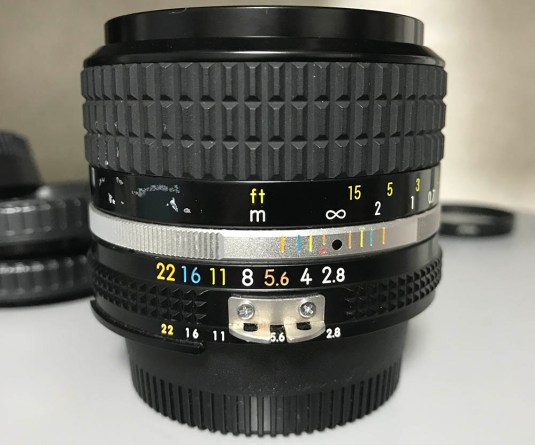 The lens is the last iteration of the 35/2.8 lens family that began in 1959 when the Nikon F was introduced. It carried-on the spirit of this lens family to the ’80s and made it relevant in a time when people were used to faster 35mm lenses. Its light and compact design is a good selling-point for photographers who don’t want to bring anything heavy and f/2.8 is still decently-fast and should be adequate for most jobs. What ultimately killed this lens is probably the introduction of the AF-Nikkor 35mm f/2 which is just as small but is much faster at f/2 and it can also autofocus. Some will prefer manual focus lenses (like me) but the rage in those days was autofocus, very much the same way as VR today.
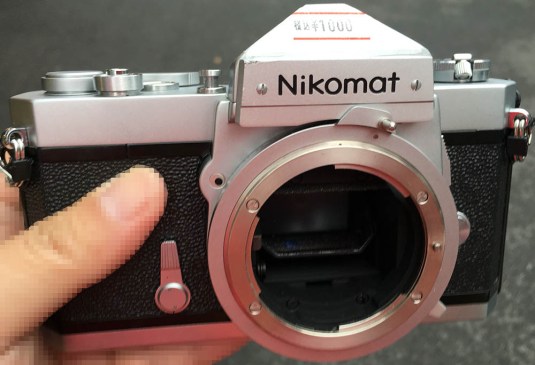 The Nikkormat FTn’s are the cheapest Nikkormats you can get these days because they’re the most common type and as a consequence their value is highly depreciated. They also use the old 1.35v mercury cell batteries that are not made anymore these days and this is also another factor for their cheap price. The ones that were sold domestically (Japan) all use the Nikomat trade-name instead of Nikkormat but they’re basically the same.
  The Nikon FE has a beautiful silhouette that it inherits from the Nikon FM. Its design is its biggest asset because everything just makes sense once you hold the camera yourself. It’s also worth noting that it has a retractable Ai-coupling tab so you can use pre-Ai lenses if you choose to and meter with it using stopped-down metering. This is the only reason to choose the Nikon FE over its successor, the Nikon FE2.

 The Nikon FM2n’s lines are simple and elegant. It’s a robust little camera that was mostly made using brass and aluminium alloys but some of the details and fittings were made of plastic. This is a departure from the Nikon Nikkormat series where it derived from since the Nikon Nikkormat cameras has nearly no plastic parts that you can find externally. It’s a small sacrifice to make since the new cameras are much smaller and lighter so they’re going to be better as all-day carry cameras since your neck won’t get as stressed.

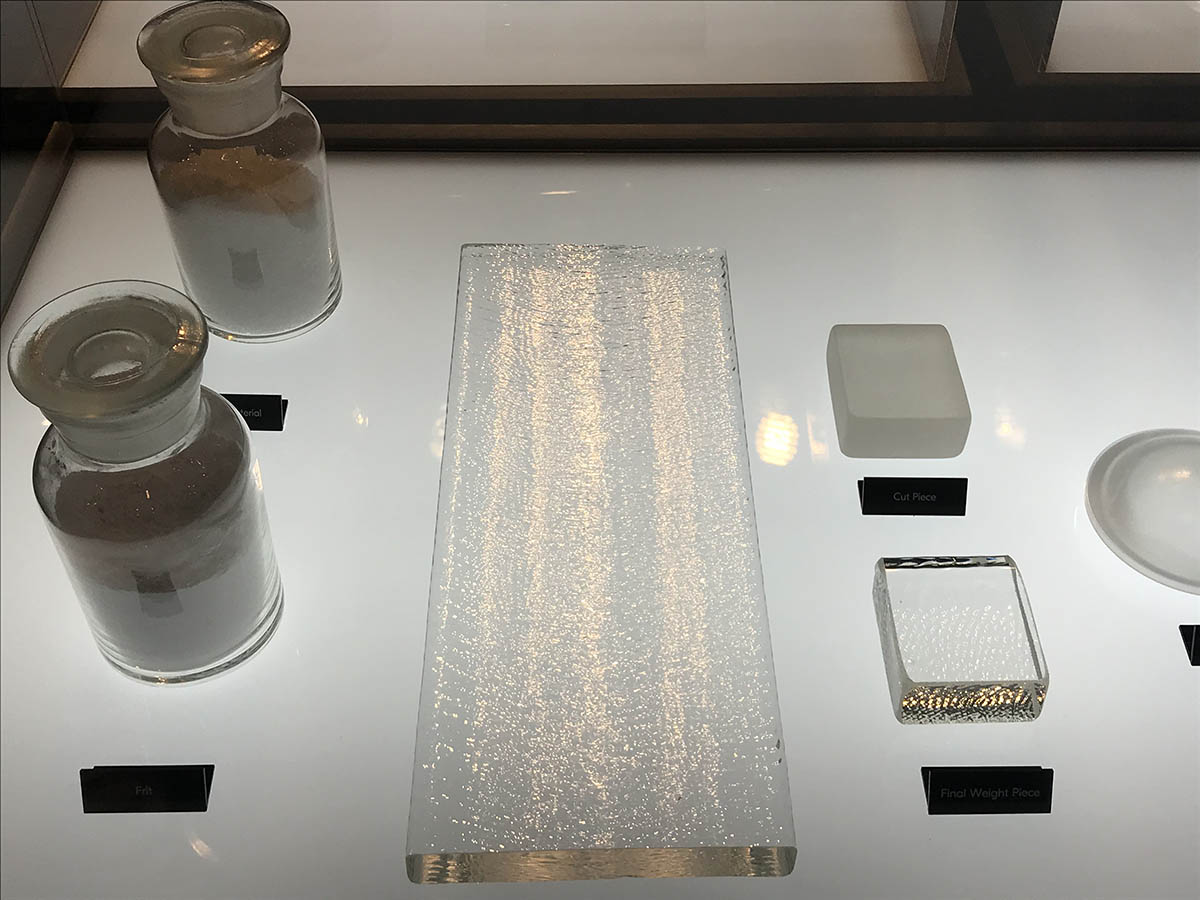 The vials to the left contain some of the materials used in creating optical glass. Its usual component is silica and rare earth elements or other additives are added to alter its base refractive index or other properties. Every manufacturer uses a different recipe for their glass and they even variations within their formulas for special purposes. The big slab of glass you see at the center was cut from a big ingot of cast glass. It’s then cut into smaller pieces like what we see to the right and it’s then ground-to-shape before it gets processed even further. This will be a constant process of refinement before we get to see the final product. It’s very time-consuming and labor-intensive to say the least.
 The Nikkor-S.C 5cm f/1.4 is a compact lens but it feels dense in your hands. Lenses are not made like this anymore these days and you will wonder why you’re paying so much for a plastic electronic lens when you can have something like this for much less. It’s a manual lens that cannot be focused by itself so you’ll need to mount in on a camera that supports it like the
 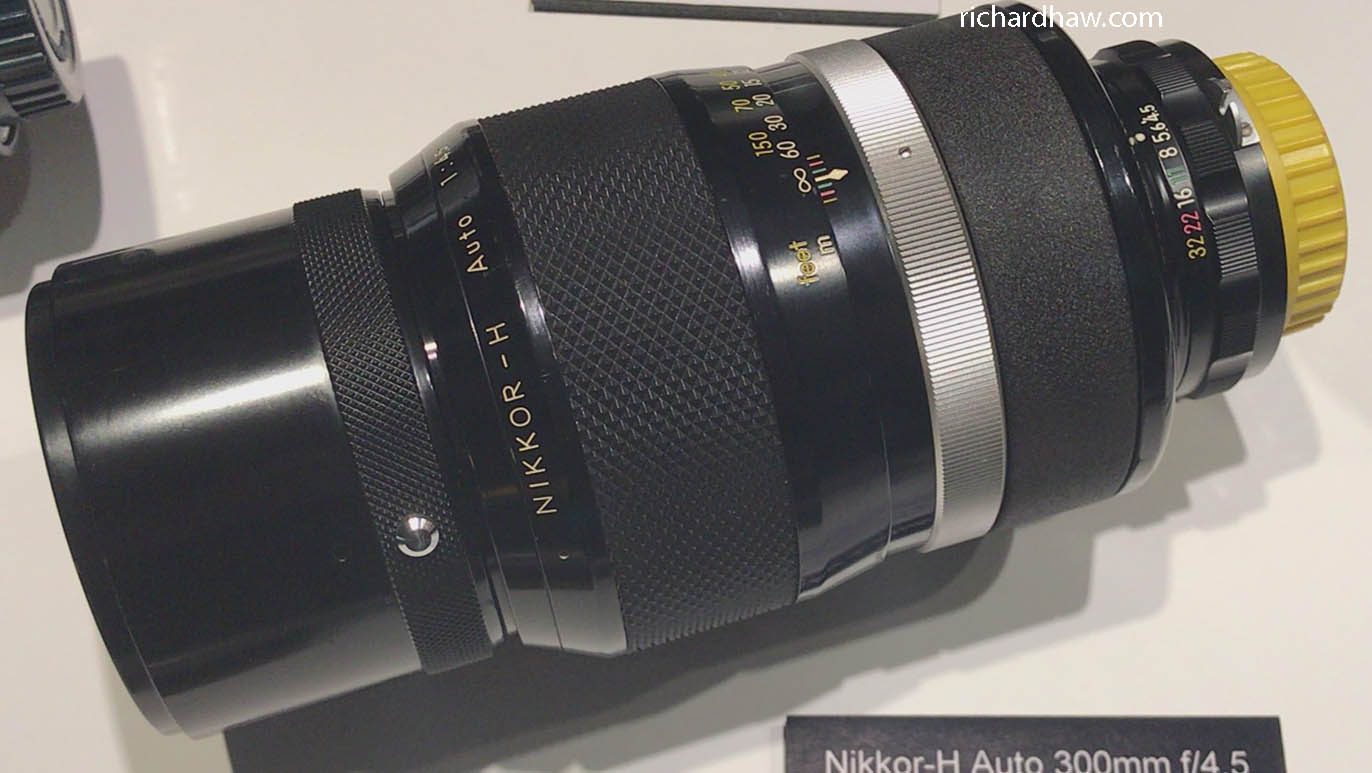 This is one fat lens that I would love to own! You don’t get to see this lens much because it was never produced outside of being a prototype. Read this article to see more lenses like this one!
 Richard Haw's Classic Nikon Repair and Review