Hello, everybody! It was my daughter’s birthday yesterday, we could not go out due to the coronavirus problem so we had to stay indoors to celebrate. I would rather sacrifice a little bit of fun than expose my child to germs. This morning, I had leftovers from yesterday’s modest celebration. It’s not that I am complaining but there are some things that tastes much better the next day such as curry and stew. I used to cook a lot, I would at times cook some stew the previous day in preparation for serving it the next day. This allows the juice to seep-into the ingredients and tenderize the meat even further. I like the resulting texture of the meat as it melts in my mount. While we are in the topic of serving yesterday’s meal, Nikon was also doing the same but it’s in the form of a repurposed lens design. Did it end up better than what’s been implemented before or was it only a case of re-housing the optics? Let us find that out in this article.
Introduction:
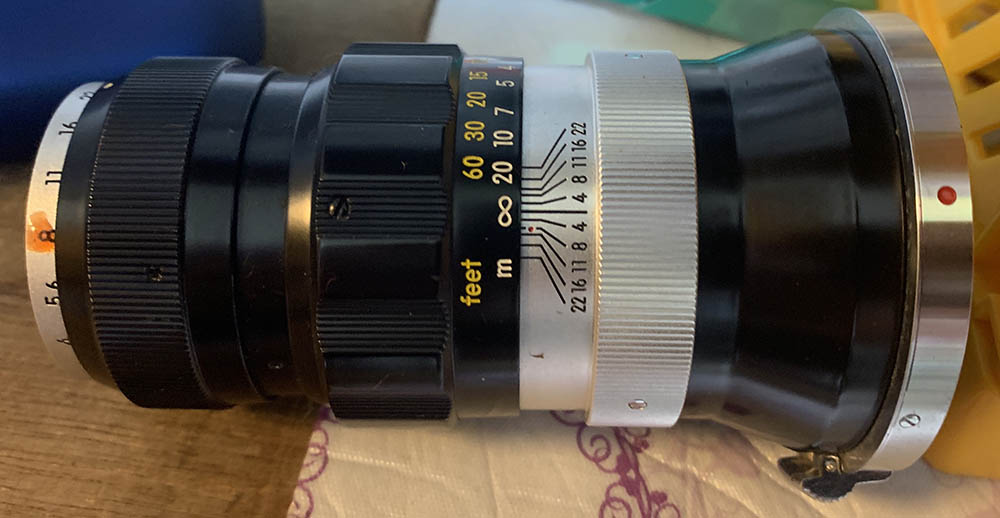
The Nikkor-T 10.5cm f/4 for the Nikon S-mount is an odd lens not because it’s a phallic-looking lens but because it has a lot of non-Nikkor traits that made people back then guessing if this was actually made by Nikon. The answer is yes, it’s a true-blue Nikkor but made to a different philosophy wherein price is the biggest concern which means that it was made to be budget-friendly. I made an article showcasing the Nikkor-T 10.5cm f/4 for the F-mount and you can read more about this lens there.
Despite being similar in essence to the Nikkor-T 10.5cm f/4 for the F-mount it has many differences in terms of external styling which made it special in a way since it’s unique to its cousin. Even details that doesn’t have anything to do with the bayonet mount were made to look different. Of the 2 versions, I like this one better in terms of styling and handling. The Nikkor-T 10.5cm f/4 for the F-mount felt awkward because it’s a rangefinder lens made to fit the more-modern Nikon F but this one is just fine.
Hello, everybody! I remembered a time several weeks ago when the world was still unsure about the impact of the coronavirus, it was a time when we could still talk outside with friends and enjoy a cup of coffee or two and eat a few sandwiches by the side of the street. I don’t think we’ll be able to see it happen again anytime soon, once-busy sections of our cities now resemble ghost-towns or a post-apocalyptic scenario. It’s depressing but even at these times there are stories to be told and good-deeds to be made. Read on.
The Story:
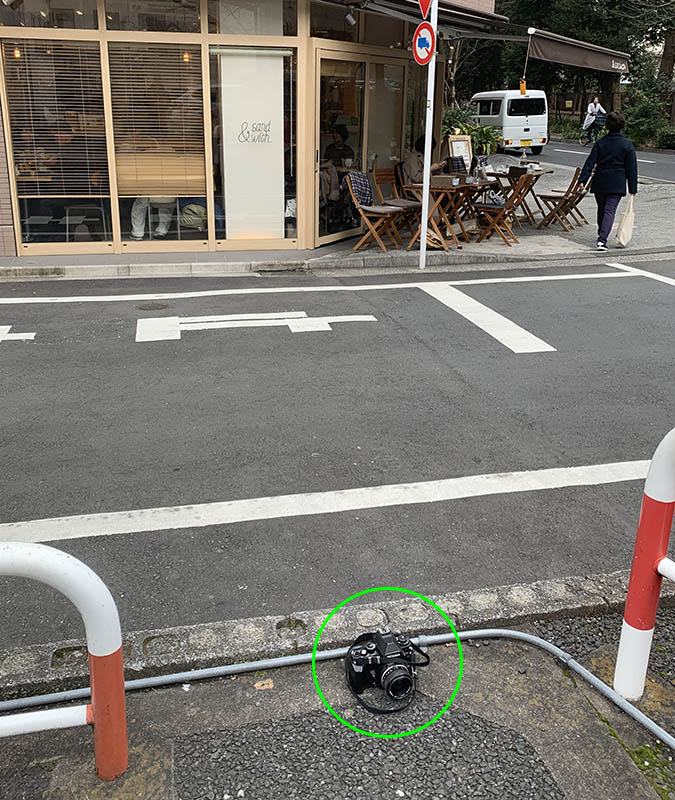
This happened around February, I was meeting with a good friend of mine named Hayashi-san. We were talking about random stuff, office politics and generally just keeping up with each other since we haven’t seen each other for a few years. On our way out I decided to have a quick smoke nearby and I found something laying at the grounds of a parking lot, scroll down to see what I found.
It’s a Nikon Df! Somebody left his camera. He was probably sitting there for a quick smoke just like me and probably forgot his precious camera. It looks like it has been sitting there for a few hours. I would have missed it myself, it blended well with the urban environment, you could’ve mistaken it for an abandoned pile of rubbish.
Hello, everybody! In the coronavirus era we’re all scared about germs and what it can do to us if we are not careful. We should wash our hand well, if you went to the toilet, wash your hands first before touching your peter. It’s equally important to wash your hands after doing the deed, too. This helps in preventing the spread of germs. What really helps a lot is using masks as it prevents the spread of germs and you’ll inhale less of it, too. Hygiene is an important part of living, this goes for your cameras and lenses as well. They constantly get close to your face, whatever germs are there will reach your face and enter your body. Today, I’ll show you how I cleaned a camera so it won’t infect me with anything nasty. Old cameras can be health risks if they were used by somebody sick before it got to you. If it was stored in a cabinet for a long time then fungus or other things may have bred in it, too. This is a big risk that’s why people who love old gear like me should be very careful.
Introduction:
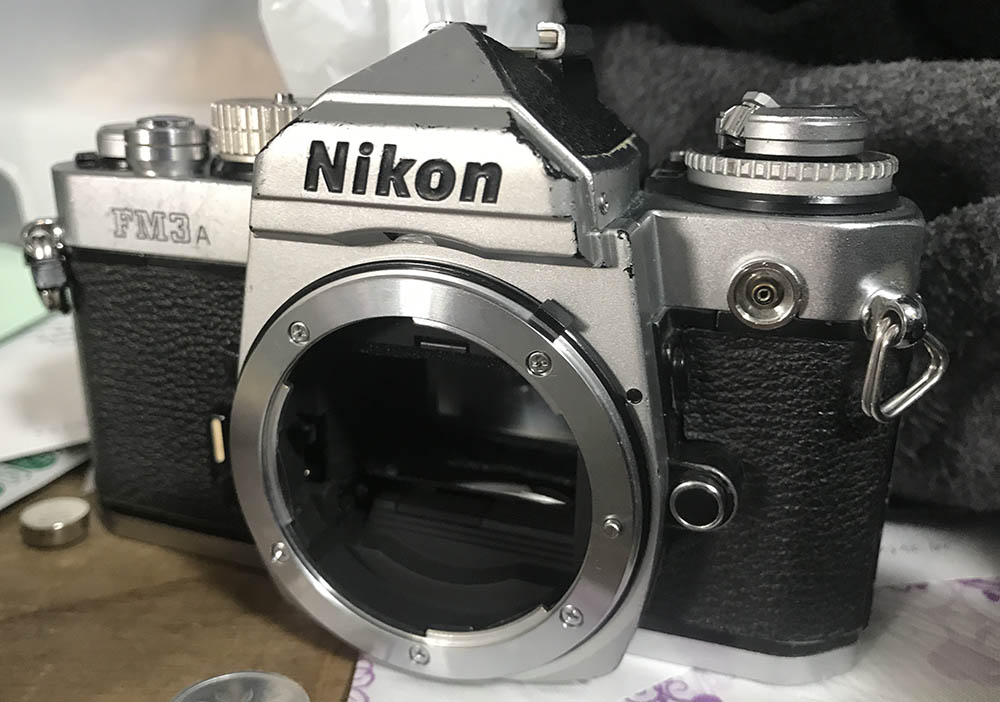
The Nikon FM3A was sold from 2001 to 2006. It’s a wonderful camera, it’s so advanced when it came out that nothing in Japan could match it. If you look at it, you’ll think that it’s nothing special because it looks like any other old, manual camera from the 1970s but the insides of the Nikon FM3A is modern and state-of-the-art. Nikon managed to combine an all-manual shutter with an electronic-override for aperture priority, this means that you can use the shutter with all the speeds available to you in manual mode if the batteries failed. Sure, the meter won’t work but you’ll still be able to shoot with it and you’ll have all of the speeds available to you unlike most electronic Nikons where you’re only able to use a single backup manual speed.
It has more things in common with a Nikon FE than a Nikon FM, even how it looks reminds you of the former. I don’t know why they named it the Nikon FM3A, maybe they’re referencing its all-manual shutter. The shutter is very advanced, it’s an electro-mechanical hybrid. Not only that but Nikon made it small enough to fit inside a tiny chassis.
Hello, everybody! There is lots of hype today regarding the iPhone’s camera. Phone photography has evolved to new-heights and they take great pictures so many people just ditch digital cameras because smart phones made them obsolete. This is most apparent when it comes to compact digital cameras, if we are talking about cameras with a decent-sized sensor then that’s another story. The hype is true, I don’t see the need to carry a small camera anymore just to shoot mundane things, I can easily share my photos, too. Speaking of hype, we’ll talk about something that’s hyped in the internet so it now has a cult following. Let’s see if this will live up to its reputation.
Introduction:
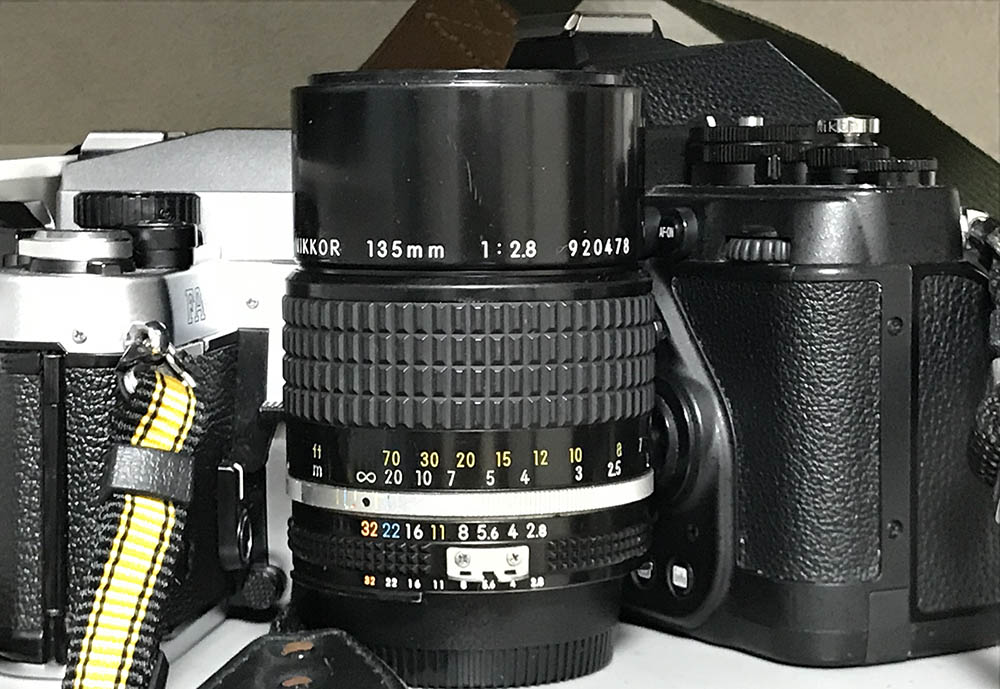
The Nikkor 135mm f/2.8 Ai-S debuted in 1981, succeeding the Nikkor 135mm f/2.8 Ai. It’s a very popular lens because of its optical quality and utility. It is one of the best portrait lenses you can buy today despite production halting in 2005. Its production run is quite high, a lens that’s made for 24 years is a sign of success. The prices went down for a time but the internet hyped this recently so the prices went up again. Let’s find out if the hype is true in this article.
The build quality is top-notch but not as solid as the Nikkor 135mm f/2.8 Ai. The older lens was made tougher, with plenty of screws while this one was made with more-modern production techniques which includes the use of scotch tape and other cost-cutting techniques. While that is efficient it’s not what I would call “durable”. The Ai-S lenses were made with high quality in general but they pale in comparison to the earlier Nikkors when it comes to toughness, just read my other articles and you’ll see what I mean.
Hello, everybody! With the coronavirus lockdown being loosely enforced, I cannot go out from my house to enjoy my usual weekend routines. Staying home gives me chance to enjoy some simple things that I took for granted. Things like eating a simple meal and enjoying a smoke afterwards or taking a nice, long siesta surely feels refreshing. It’s sometimes nice to get out from our usual routine and enjoy the simpler luxuries of living. It’s like riding an old car around town in a lazy weekend. Speaking about simple things, we’re going to talk about a simple Nikon that touches on the basics. It’s something so simple that it takes us back to the roots of photography, all that without having to spend a lot of money. It’s cheap yet it’s feature-packed, something that will benefit students and the casual photographers alike.
Introduction:
The Nikon FG is an advanced version of the Nikon EM, it debuted in 1982. It was only made for 4 years and was replaced with the Nikon FG-20, a cheap, dumbed-down version of this capable camera. This camera is an improved Nikon EM with manual shutter speeds, programmed (P) mode and the usual aperture priority (A) mode amongst other things. Despite being a cheap and somewhat flimsy Nikon it has everything an advanced photographer needs. It can even mount to the Nikon MD-14, a more advanced motor-drive that’s also compatible with the Nikon FG’s siblings. It’s able to use the Nikon MF-15 data-back which makes it even more useful for documenting.
Despite all the advanced features the Nikon FG is still an amateur camera, it is most-apparent in its build quality where you get a sense of flimsiness and it doesn’t have the reliability of its more expensive cousins like the Nikon FE and specially the flagship models. The shutter mechanism for example isn’t as tough as the ones found on the more expensive models but it’s not so bad either and it will last you hundreds of rolls before it taps-out. A nice touch is the little screw-on hand grip, it makes the camera easier to hold but I find it annoying as it gets in-the-way, you’ll have to remove it in order to mount its motor-drive. Needless to say, these are easily-lost.
Hello, everybody! I’ve been granted permission to work-from-home due to the coronavirus pandemic. It is essential that every member of the team is synced to the main workflow seamlessly from home. This requires plenty of effort in the engineering side as data and communication needs to flow well despite people being scattered in multiple locations. This reminds me of the rangefinder cameras of old, it’s amazing how the rangefinder couple to the lens and how it can still accurately depict what’s going to be in-focus. That’s very clever considering that it was pioneered nearly a century ago. This is a complicated mechanism that links 3 things and that’s the topic of our article today.
Introduction:
The shutter-speed selector of the Nikon SP chassis is robust, the same goes for the Nikon S3 / Nikon S4 and the Nikon F, too. All of these share the same chassis except for the Nikon F which uses a modified one that will accept a mirror-box so it’s made wider. The shutter-speed selector mechanism is not a new design entirely, it inherits a lot from the older Nikon S2 as the basis. It is not identical yet not too-different either in principle and you can see their similarities once you get to know how they both work. Despite that, this is a big leap for the Japanese camera industry, the shutter-speed mechanism is a modern one wherein you can change every speed of the camera using one convenient dial. I am not aware of any Japanese camera that can do this at the time the Nikon SP debuted since most, if not all Japanese cameras used the Leica-type shutter (as far as 35mm goes).
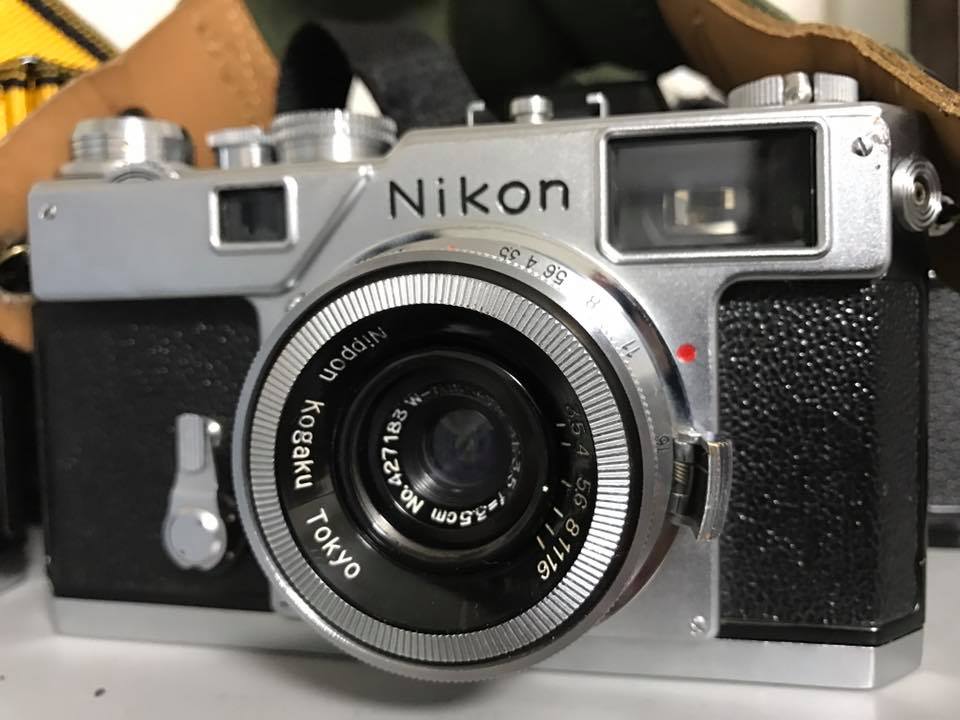
The W-Nikkor 3.5cm f/3.5 is a good partner for the Nikon S3, it balances very well with the camera and the 35mm frame-lines help you frame with it. You won’t need a separate accessory just to frame your shot.
Hello, everybody! It was snowing yesterday despite the sakura trees being in full-bloom. This is a rare occurrence, something that not a lot of people experience in their lifetimes. It’s like watching Tom Jones perform with his stable-mate Engelbert Humperdinck at a pub, can you imagine that? This is my first time to experience such a thing and this will certainly stay with me for a very long time. Speaking of rare occurrences, I’ll show you a rare lens that many people don’t see often. It was only made for over-a-year and that is the reason why it’s rare. Owning one is special but I have two of these so that makes it even better.
Introduction:
The Nikkor-S 5cm f/2 Auto was made from 1959 to 1963, it is the first 50mm lens for Nikon’s then-new F-mount. The flapping mirror of an SLR became a challenge for lens designers back because existing rangefinder lenses have long rears that will hit the mirror. This became such a problem that making a “standard” 50mm lens became a challenge. Nikon had to improvise just to create a proper 50mm lens for the Nikon F and the solution was to have the front element act as a sort of “magnifying element” to achieve a 50mm AOV or angle-of-view. It’s a stop-gap until the Nikkor-H 50mm f/2 Auto succeeded this lens a few years later.
Admire the beautiful lines in the aperture and focusing rings, these are the reason why the earliest F-mount Nikkors are called “tick-mark” lenses by the majority of the Nikon collectors community. It’s a throwback to rangefinder Nikkors, to an era where craftsmanship reigned supreme.
Hello, everybody! Looks like I cannot go out for the weekend as the city is in a state of voluntary lockdown, thanks to coronavirus. This is starting to be a big inconvenience for a lot of people, including me. My usual work routine’s time has been affected, too. Even time for social functions is affected and it is wiser to stay home than going out for a pint after work. Abstaining from a lot of vices and unnecessary things will be the theme for the next couple of weeks for everyone. While we’re on the topic of only doing the essentials, it is time that we take a look again at the Nikon S4, a stripped-down version of the Nikon S3.
Introduction:
Let’s now continue our series on the Nikon S3/S4. In part 1, we talked about the reasons why both cmaeras exist. We’ll mostly talk about the Nikon S4 in this article and what makes it unique from the more-common Nikon S3.
The Nikon S4 is an elegant camera. The viewfinder doesn’t have frame lines for 35mm which makes it less-cluttered and less-stressful to view. If you like shooting with 50mm or 105mm lenses this camera has frame lines for them. You won’t have to see the 35mm frame line that you won’t need. I love using the Nikkor-S 50mm f/1.4 Millennium with it. The Voigtländer VC meters work perfectly with it despite not being coupled.
Hello, everybody! I am currently lusting for a Nikon D700. I had one a few years ago, most of my published pictures were taken with it. I missed it very much, it’s not as tough or feature-packed as a Nikon D3 but it has everything you’ll ever need. Because of my last statement, many professional lensmen bought the Nikon D700 instead of the Nikon D3 and just added a grip. You’re now able to get Nikon D3-like functionality for less. It became a problem for Nikon so they stopped making similar business decisions in the future. This is the reason why the Nikon D8XX series compliments the Nikon DX series. It won’t make any business sense for a lower-tiered body to compete with the flagship. That wasn’t the first time Nikon had the same issue, many decades ago in the 1950s, there was a camera that had nearly-all of the flagship’s big features but Nikon played their cards really well when they introduced the cheaper version of the camera, that is the topic of our article today.
Introduction:
The Nikon S3 came after the Nikon SP, it’s basically a stripped-down version without the amazing viewfinder and rangefinder mechanism that made the Nikon SP such a formidable camera. It had in its place a simpler viewfinder with frame lines for 35mm, 50mm and 105mm. This made the viewfinder a bit cluttered but it’s fine since the viewfinder of the Nikon S3 is bright and it is also quite wide, with 1:1 magnification which makes it easy to view. This was done to make a camera that’s more affordable without sacrificing what made the Nikon SP’s chassis such a success. Sure, you won’t get the amazing viewfinder of the Nikon SP but it’s pretty-much the same camera without it.
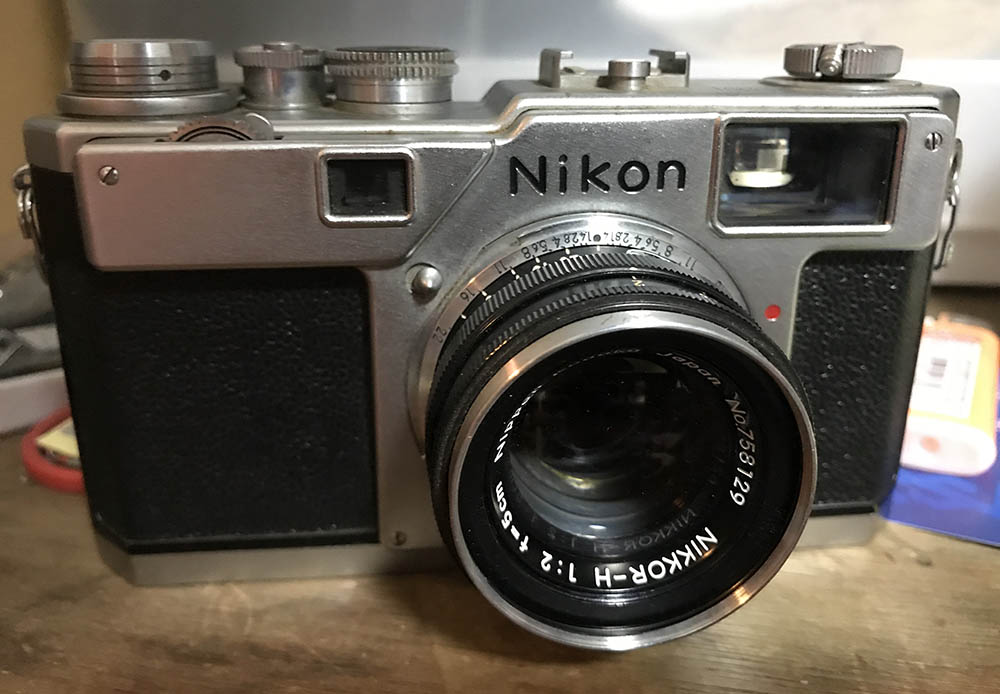
This is the Nikon S4, it was based on the Nikon S3 but there’s no self-timer, a manual film counter dial has replaced the automatic one and its viewfinder now doesn’t have the 35mm frame line. This was made to make the camera a more reliable machine as requested by journalists and professionals. This camera was made with input from the late David Douglas Duncan himself, it is a bare-bones camera with everything a professional needs in the field. It’s a rare camera but it’s not difficult to find one lately.
Hello, everybody! I was listening to the song “Mama Told Me Not to Come” by Three Dog Night. I love Tome Jones‘ version but the original one sounds better to me. It’s grittier and more down-to-earth, it’s not over-produced so it sounds more “authentic”. While younger people usually remember songs that were covered by the last artist, they don’t know the original version of the songs they love. The originals are worth observing, you’ll hear the base states of the songs before they were altered to suit modern audiences. I like to dig-into the roots of things and that’s true for lenses, too. I will introduce to you a lens that’s the root of all medium-telephoto Nikkors for 35mm but it is also a clone of an even earlier lens, much like Three Dog Night’s version is a cover of an earlier version, so send in the clones!
Introduction:
The Nikkor-Q•C 13.5cm f/4 is one of the “original six” lenses that Nikon made for their first 35mm system, the original Nikon. The “original six” consists of the W-Nikkor•C 3.5cm f/3.5, the Nikkor-H•C 5cm f/2, the Nikkor-Q•C 5cm f/3.5, the Nikkor-P•C 8.5cm f/2 the Nikkor-S•C 5cm f/1.5 and the Nikkor-Q•C 13.5cm f/4 which is the topic of this article. These debuted separately from 1946 (or earlier) up until 1949 to form the core of the original system. This lens has a short production life, it was only produced for 3 years. It was soon replaced by the common Nikkor-Q•C 13.5cm f/3.5 which lasted far-longer in terms of production, its optical design transitioned fairly-well into what will become the Nikkor-Q 13.5cm f/3.5 Auto. While this is quite rare it is certainly not the rarest variant of the “original six”, that honor goes to the first version of the Nikkor-H•C 5cm f/2 or the Nikkor-S•C 5cm f/1.5, both are quite rare and very valuable in the Nikon collectors’ circle.
Shooting with this lens takes me back in time. The build is solid and heavy, I think it’s nearly as heavy as my old Nikon D700. This is due to the huge glass chunks used in the 2nd group and the brass construction. This lens will last for many decades more after we’re all gone from this planet.
Help support this site by donating to richardHaw888@gmail.com over at Paypal! If you want to buy me a beer or a roll of film then that would be great,too!




 Richard Haw's Classic Nikon Repair and Review