Hello, everybody! We bought some pearl shakes from a shack this afternoon because the little one likes it a lot. This tapioca and tea drink originated from Taiwan but you can see them everywhere across asia these days. I also heard that they’re quite popular in other regions and it’s young people who consume them the most these days. I can consider the humble tapioca tea to be a classic in this regard since it has remained almost unchanged and people still buy them to this day. The only things that changed so far is the inclusion of tapioca balls and flavoring. You now get to choose from a wide spectrum of flavors like fruits, chocolate, dairy, vegetables and other things. This makes the whole thing complete unlike the original ones which were basically just based on tapioca. Today, I’ll introduce to you a camera that many considered to be near-perfect but Nikon pushed the limits and gave us a masterpiece that has endured the test of time.
Introduction:
The Nikon FM2n is one of Nikon’s longest-selling cameras. It was introduced in 1983 as an update to the very popular Nikon FM2 and the differences are subtle but important. The flash sync is now 1/250s, an improved mirror box assembly was also installed and a new type of focusing screen replaced the older (dimmer) one and a host of other changes that are too minor to point out but improves the handling and reliability of the older design. I love this camera a lot and it’s easy to see why this camera became one of the best designs that ever came out of Japan. You can still find professional photographers today using it as a “hobby camera” and kids these days prefer using these over other models because it has a “modern” feel despite being a true manual camera. Its popularity is also its curse as these are often sold at inflated prices and are usually priced as much as a Nikon F3 for a nice sample with minimal surface blemishes and no defects. I was lucky to find one for a decent price, sold by a friend to me. It wasn’t in perfect shape but it is working properly and there aren’t any serious defects that needs to be repaired, all it needed is a thorough cleaning and changing of all of its foam seals and dampers. I will outline what I did here in this blog and I hope that this will help you see what’s inside of this camera.
The Nikon FM2n’s lines are simple and elegant. It’s a robust little camera that was mostly made using brass and aluminium alloys but some of the details and fittings were made of plastic. This is a departure from the Nikon Nikkormat series where it derived from since the Nikon Nikkormat cameras has nearly no plastic parts that you can find externally. It’s a small sacrifice to make since the new cameras are much smaller and lighter so they’re going to be better as all-day carry cameras since your neck won’t get as stressed.
Hello, everybody! Me and my family just got back from a Spanish fiesta and we had some Spanish food the whole afternoon. The Paella tasted familiar but it’s certainly not authentic because the ingredients and preparation has been altered to suit local tastes. I’m not saying that it’s bad or wrong, it’s just different! The good thing is we got to enjoy it in a different way and we saw how culture, circumstances and the economy can transform something so unique as the paella into something else. I am going to show you something similar today. An example of how Japan turned a German design into their own, added improvements that made it work in a different way.
Introduction:
The W-Nikkor.C 3.5cm f/3.5 was made in 2 different mounts, we’ll look at the one that was made in Leica Thread-Mount (LTM) in this post. For all intents and purposes, it is basically the same lens as the S-mount version except for the barrel. It even shares the same serial number block as the one made for the S-mount so Nikon sees these 2 versions as a single model, only made for two different mounts. This is a bit rarer compared to the S-mount version so they cost a bit more as a consequence. I have always wanted to own one of these for history’s sake and for using them with my Barnack-type cameras. This model is one of Nikon’s earliest lenses, it was made from the late 1940s to somewhere around the mid-1950s. There’s not a lot of data concerning it and its manufacturing details so it’s hard to date these lenses (LTM Nikkors).
It’s very compact but it feels dense when you hold it because the barrel was made using brass and plated with chrome. Imagine if it has a nickel base for the plating then it will end up being a bit heavier. They do not make lenses like this these days. The design is inspired by early Leica lens barrel designs while the optics reminds me of a Tessar. Nikon looked-up to Zeiss in its early years because Zeiss was the world’s best optics manufacturer in those days. Nikon outgrew this stage after a couple of years, their designs began to look unique and even bested whatever the Germans had at the time.
Hello, everybody! I just spent $8 on a cup of coffee. It was exquisite and it’s smooth, rich and refined. It does not leave a harsh after-taste in your mouth or throat just like what many cheap instant coffees tend to. I appreciated it but I won’t drink it regularly because I can just use that amount to buy me a decent lunch. I’ll assume that many will do the same and some people won’t even think of spending that much for coffee. I’m not an expert on coffee but I do appreciate a good cup. Today, I’m going to introduce to you a lens that’s only appreciated by people who know their lenses and the going price for these things today will turn many people off. It’s a very special lens and it has a special part in Nikon’s history. Please read the article to find out what that is.
Introduction:
This is the Nikkor-Q•C 5cm f/3.5, a rare lens that not many knew about. It is Nikon’s version of the then-popular Zeiss Tessar and its simple 4-elements-in-3-groups design is a near-identical copy of the Tessar design. This design is one of “Nikon’s” oldest lens designs, it was first utilized on the 1935 Hansa Kwanon if I’m correct and it was popular until some time in the early 1950s as a cheaper alternative for shooters looking for a 50mm Nikkor. This is the later “rigid” version, the earlier version collapsible and is considered to be rare. I documented that lens in my Nikkor-Q•C 5cm f/3.5 (Collapsible) article. Apart from the barrel design and position of the iris you can consider both lenses to be the same since they share the same optics. This was made in the mid 1950s to refresh the collapsible version’s design so Nikon can stretch its profits from this old but tested design. This particular version was not made for long, it was only made for about a year or so compared to the collapsible version which saw a long production life since 1940 and sold in numerous versions. The unusual thing about it is this lens is easier to find compared to the older collapsible one and it costs much less, too.
The lens barrel design in unique amongst Nikkors, you can easily recognize it because of its pudgy look. That long post you see is used for constraining the focusing ring so it won’t turn beyond the lens’ focusing range since it is in the way of the infinity lock. This lens has a special feature, it can extend below the usual focusing range so you can focus even closer but it’s now de-coupled from the camera’s rangefinder. This will allow it do “macro mode”, that’s something that it shares with other Nikkors like the Nikkor-H.C 5cm f/2 (L39). You cannot use the rangefinder to focus in this mode and you must focus by measuring the distance between your subject and your film plane which is indicated as a red dot or a black circle with a horizontal line across it. I’m not sure if other brands offer this feature as well but it’s certainly one of the things the LTM Nikkors are known for.
Hello, everybody. I’d like to show you this interesting display that I saw on how a piece of optical glass is turned into a lens element, the finished item used on lenses, binoculars or glasses. Nikon (then Nippon Kogaku) was formed to make Japan self-reliant when it came to manufacturing optics for medical and scientific uses. Japan used to import lots of stuff from Germany and that’s draining the national reserve so a solution had to be made. The formation of Nikon not only gave Japan the ability to make her own optics, it also made it possible for Japan to make her own research and development. All of these happened in the years leading to the Great War (WW1) so you can say that Nikon has the heritage and experience in this field so you can even consider Nikon as the “Asian Zeiss”. I need to give you a short intoduction on Nikon’s heritage so you can appreciate that a company with a long history in optics is showing us how their lenses are made.
The vials to the left contain some of the materials used in creating optical glass. Its usual component is silica and rare earth elements or other additives are added to alter its base refractive index or other properties. Every manufacturer uses a different recipe for their glass and they even variations within their formulas for special purposes. The big slab of glass you see at the center was cut from a big ingot of cast glass. It’s then cut into smaller pieces like what we see to the right and it’s then ground-to-shape before it gets processed even further. This will be a constant process of refinement before we get to see the final product. It’s very time-consuming and labor-intensive to say the least.
Hello, everybody! I just watched Rocky (1976) and that movie never gets old. Young ones these days probably have never heard of it, it’s all about an up-start boxer who proved to be more-than-a-match to the champ. He went the extra-mile and won with hardwork and dedication so he eventually succeeded and turned his life around. I’m going to show you this lens that helped made an “underdog” into one of history’s biggest optics company. It also has a very humble start just like the hero in Rocky and ended up being a legendary lens that’s still relevant after it debuted around 69 years ago.
Introduction:
The Nikkor-S.C 5cm f/1.4 is Nikon’s most popular rangefinder-era lens. This used to be the fastest lens for 35mm photography at one point and Nikon’s marketing capitalized on the hype while it lasted. The lens was made for about 12 years which is considered long since the Nikon rangefinder camera era only lasted for about 15 years. It was based on another famous (but rare) lens – the Nikkor-S 5cm f/1.5. It was replaced by another legendary (and rare) lens in 1964 with the same name but it’s a totally different lens – the Nikkor-S 50mm f/1.4 “Olympic version”. That lens is very sharp and is still a great performer even when it is judged by modern standards but it’s a totally-different lens from the ground-up since it was based on a different optical formula of either a “Double-Gauss” or “Planar-type”.
The Nikkor-S.C 5cm f/1.4 is a compact lens but it feels dense in your hands. Lenses are not made like this anymore these days and you will wonder why you’re paying so much for a plastic electronic lens when you can have something like this for much less. It’s a manual lens that cannot be focused by itself so you’ll need to mount in on a camera that supports it like the Nikon I/M/S,Nikon S2, Nikon S3 or the Nikon SP. The Contax rangefinders can be used with these as well but you will have to compensate a bit because the turning rate is a little different from Nikon’s S-mount despite the fact that it was copied from Zeiss Ikon’s Contax mount. More
Hello, everybody! How are you today? The weather is getting colder these days as we are entering into mid-autumn. The migratory bird species have began flying south and this is the season for taking pictures of rare birds! Taking pictures of shy creatures require that you use a long lens that will enable you to take pictures from a distance. Nikon has made many of the world’s best telephoto lenses and I am going to show you how some some of them looked like as prototypes (some weren’t even sold at all!).
This is one fat lens that I would love to own! You don’t get to see this lens much because it was never produced outside of being a prototype. Read this article to see more lenses like this one!
This article is part of the Nikkor Prototypes series, it’s a series that I made comprising of no less than 5 parts because it has so many pictures that putting them all in one article is going to be difficult for me. Please enjoy the rest of the series by clicking on these links:
Please check them all out to see everything in their proper context. I could’ve just made it so these lenses aren’t organized but that will make things very confusing for my readers.
Hello, everybody! I was playing around with the Nikon Z6 with the Nikkor-Z 24-70 f/4S on it and I thought about how much zoom lenses has evolved since the early years. Nikon is a pioneer in zoom lenses in the 1960s and continues to be an important player up to this day. Join me in this part of our Nikkor Prototypes series and see just how far zoom lenses has evolved from simple tubes with cams inside to the all-electronic wonders that we all take for granted today.
This is just one of the lenses that we’ll see in part 4. This table only has a few lenses but it shows some of the more important prototypes in this exhibit in the sense that it shows a bit of “tech” compared to the other tables.
This article is part of the Nikkor Prototypes series, it’s a series that I made comprising of no less than 5 parts because it has so many pictures that putting them all in one article is going to be difficult for me. Please enjoy the rest of the series by clicking on these links:
Please check them all out to see everything in their proper context. I could’ve just made it so these lenses aren’t organized but that will make things very confusing for my readers.
Hello, everybody! I just woke up from a nap and I had a dream about Nikon giving me an important lens for custody, a prototype 55/3.5 Mirco-Nikkor that’s compact because it has no deeply-recessed front element like what they usually have. My wife woke me up so we can have lunch together and I realized that it’s just my subconscious trying to tell me that I need to write part 3 of our Nikkor Prototypes series. Please enjoy part 3.
Here’s a small preview of what you’re going to see in part 3. This part focuses on normal lenses with focal lengths from 40mm to 60mm or so and the odd Micro-Nikkors thrown-in to the mix to add variety despite not being normal lenses at all. This part of the exhibit is the most interesting for me since most of my lenses fall into this category.
This article is part of the Nikkor Prototypes series, it’s a series that I made comprising of no less than 5 parts because it has so many pictures that putting them all in one article is going to be difficult for me. Please enjoy the rest of the series by clicking on these links:
Please check them all out to see everything in their proper context. I could’ve just made it so these lenses aren’t organized but that will make things very confusing for my readers.
Hello, everybody! This is part 2 of our Nikkor Prototypes series. In part 1 of this series we got to see a few lenses in the collection but we’re going to see the rest of it in the coming parts. The main exhibit is separated into several parts by focal lenght to make it easier to manage and for the viewer to have some kind of context as to what these lenses are for. I would be really confused if they jumbled everything in one big table and leave it for me to organize them for this article. Please enjoy part 2 of this series.
(Click to enlarge)
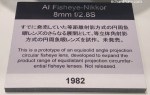
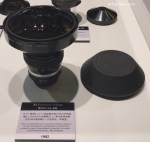
This Fisheye-Nikkor 8mm f/2.8 Ai-S is a special lens. If I remember it right, an equidistant projection is where the projected image is “unwrapped” so that the details don’t “pinch” together at the poles or perimeter of the projection. An equisolid projection will do that, it will “pinch” or push the projection towards the edges of the projection veru much like spreading jam over toast so it’s not even. Now, if I understand it correctly, what this lens does is give a wider-angle projection by means of optical correction. I don’t know much more because the description is short and there are no samples. I don’t know what this lens is for and why it was made, I suspect that this was made for scientific research and for data collecting or observation. This is probably a proof-of-concept to see if something like this is indeed possible so a fisheye lens can be made more compact.
This article is part of the Nikkor Prototypes series, it’s a series that I made comprising of no less than 5 parts because it has so many pictures that putting them all in one article is going to be difficult for me. Please enjoy the rest of the series by clicking on these links:
Please check them all out to see everything in their proper context. I could’ve just made it so these lenses aren’t organized but that will make things very confusing for my readers.
Hello, everybody! I am going to bring to you a long series on the prototype Nikkors that’s currently being-held at the Nikon Museum. It’s a big exhibit quantity-wise but the area it occupies is small due to the size of the specimens shown. I will say that this is one of the more important exhibits that the Nikon Museum made in terms of what’s being shown or its historical significance. Join me in this series and appreciate the long heritage of Nikon in the field of 35mm photography.
(Click to enlarge)
This will greet you as you enter the exhibit. This section of the exhibit showcases pictures (that I cannot show here) that were taken using 10 of the 60 prototype lenses that’s being shown in the exhibit. It’s also a nice touch that they used the new Nikon Z7 for these just to make a point that the new mirrorless Nikon can take lenses that were made during the dawn of the F-mount. It would have been nice to show you these pictures for conext but I can’t because it’s forbidden by the management.
This article is part of the Nikkor Prototypes series, it’s a series that I made comprising of no less than 5 parts because it has so many pictures that putting them all in one article is going to be difficult for me. Please enjoy the rest of the series by clicking on these links:
Please check them all out to see everything in their proper context. I could’ve just made it so these lenses aren’t organized but that will make things very confusing for my readers.
Help support this site by donating to richardHaw888@gmail.com over at Paypal! If you want to buy me a beer or a roll of film then that would be great,too!

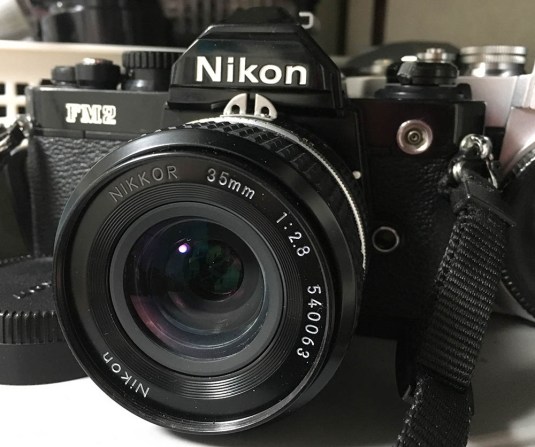 The Nikon FM2n’s lines are simple and elegant. It’s a robust little camera that was mostly made using brass and aluminium alloys but some of the details and fittings were made of plastic. This is a departure from the Nikon Nikkormat series where it derived from since the Nikon Nikkormat cameras has nearly no plastic parts that you can find externally. It’s a small sacrifice to make since the new cameras are much smaller and lighter so they’re going to be better as all-day carry cameras since your neck won’t get as stressed.

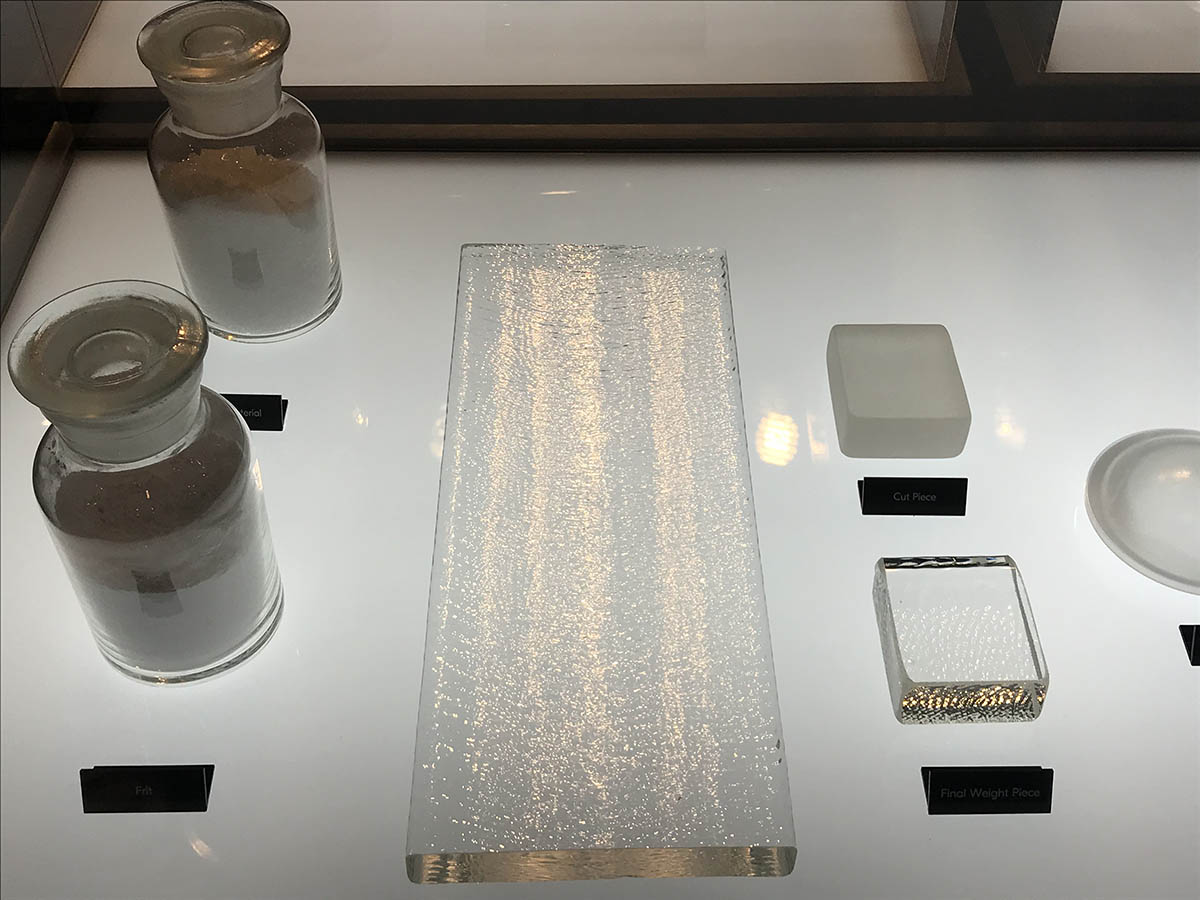 The vials to the left contain some of the materials used in creating optical glass. Its usual component is silica and rare earth elements or other additives are added to alter its base refractive index or other properties. Every manufacturer uses a different recipe for their glass and they even variations within their formulas for special purposes. The big slab of glass you see at the center was cut from a big ingot of cast glass. It’s then cut into smaller pieces like what we see to the right and it’s then ground-to-shape before it gets processed even further. This will be a constant process of refinement before we get to see the final product. It’s very time-consuming and labor-intensive to say the least.
 The Nikkor-S.C 5cm f/1.4 is a compact lens but it feels dense in your hands. Lenses are not made like this anymore these days and you will wonder why you’re paying so much for a plastic electronic lens when you can have something like this for much less. It’s a manual lens that cannot be focused by itself so you’ll need to mount in on a camera that supports it like the
 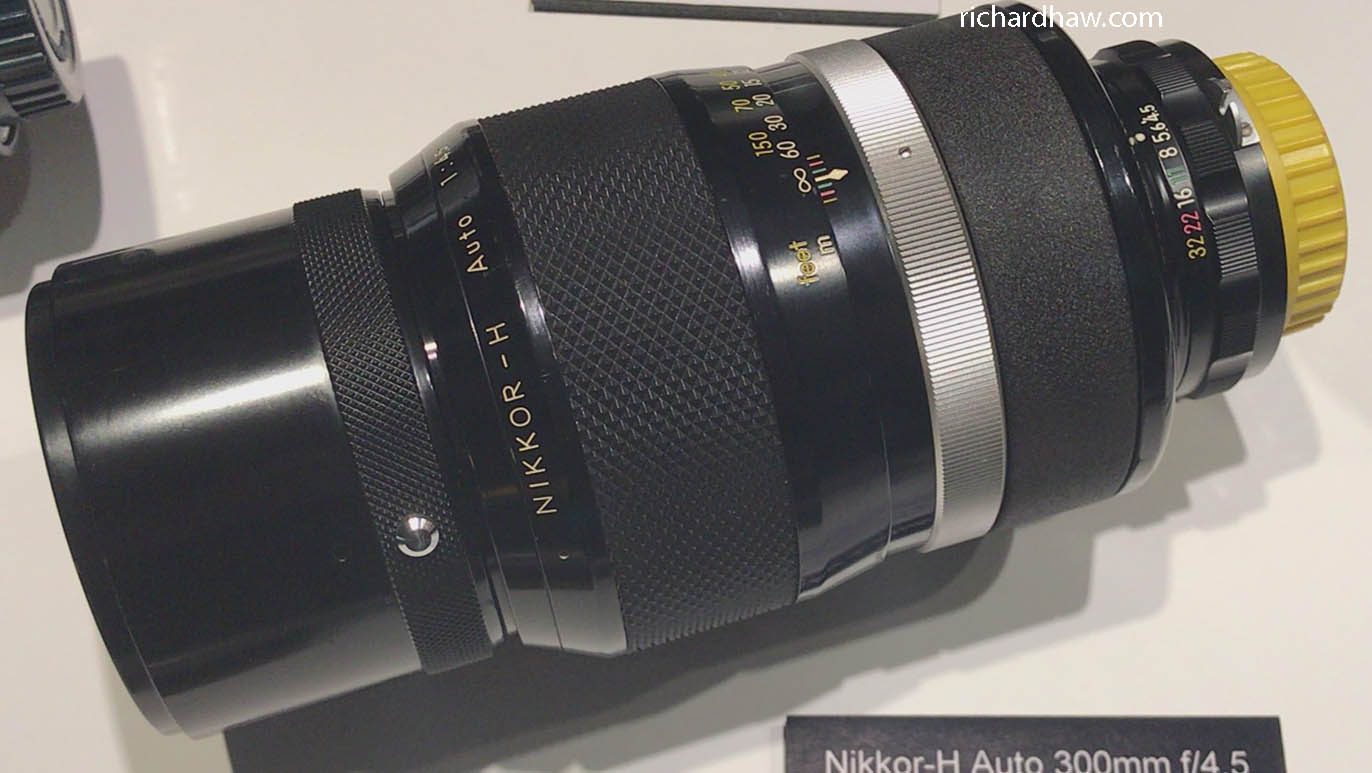 This is one fat lens that I would love to own! You don’t get to see this lens much because it was never produced outside of being a prototype. Read this article to see more lenses like this one!
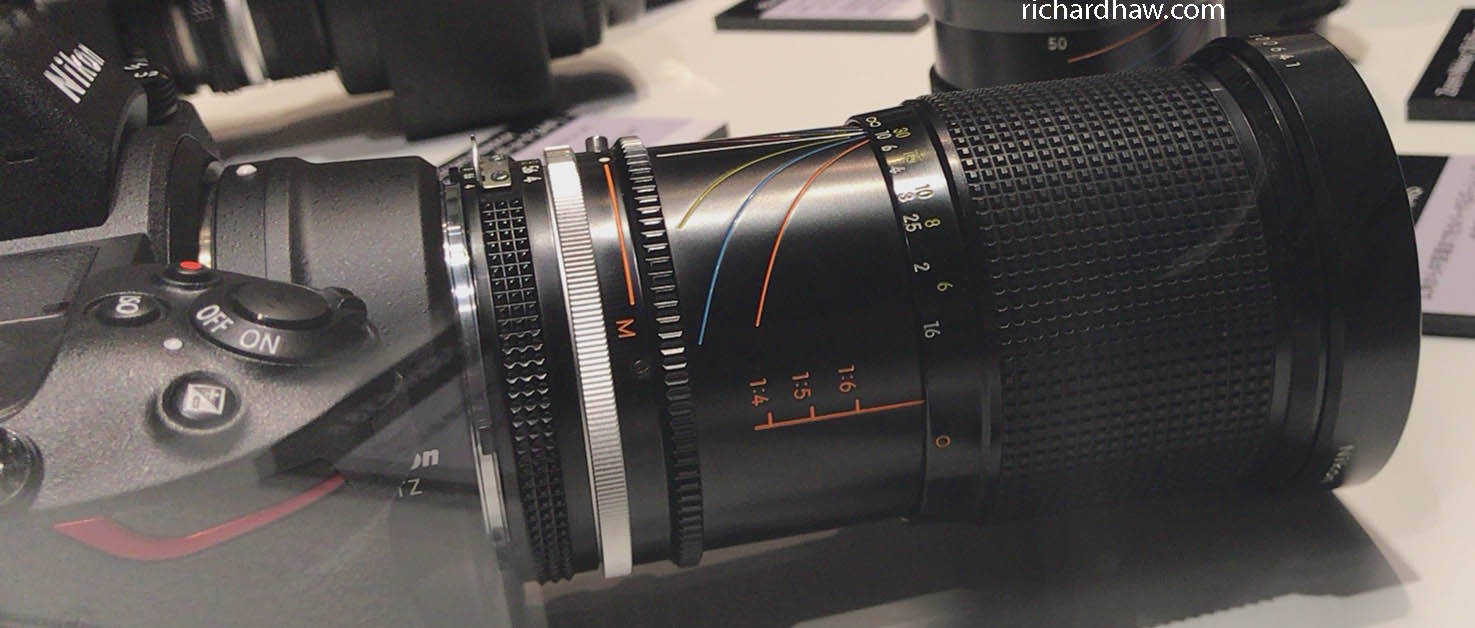 This is just one of the lenses that we’ll see in part 4. This table only has a few lenses but it shows some of the more important prototypes in this exhibit in the sense that it shows a bit of “tech” compared to the other tables.
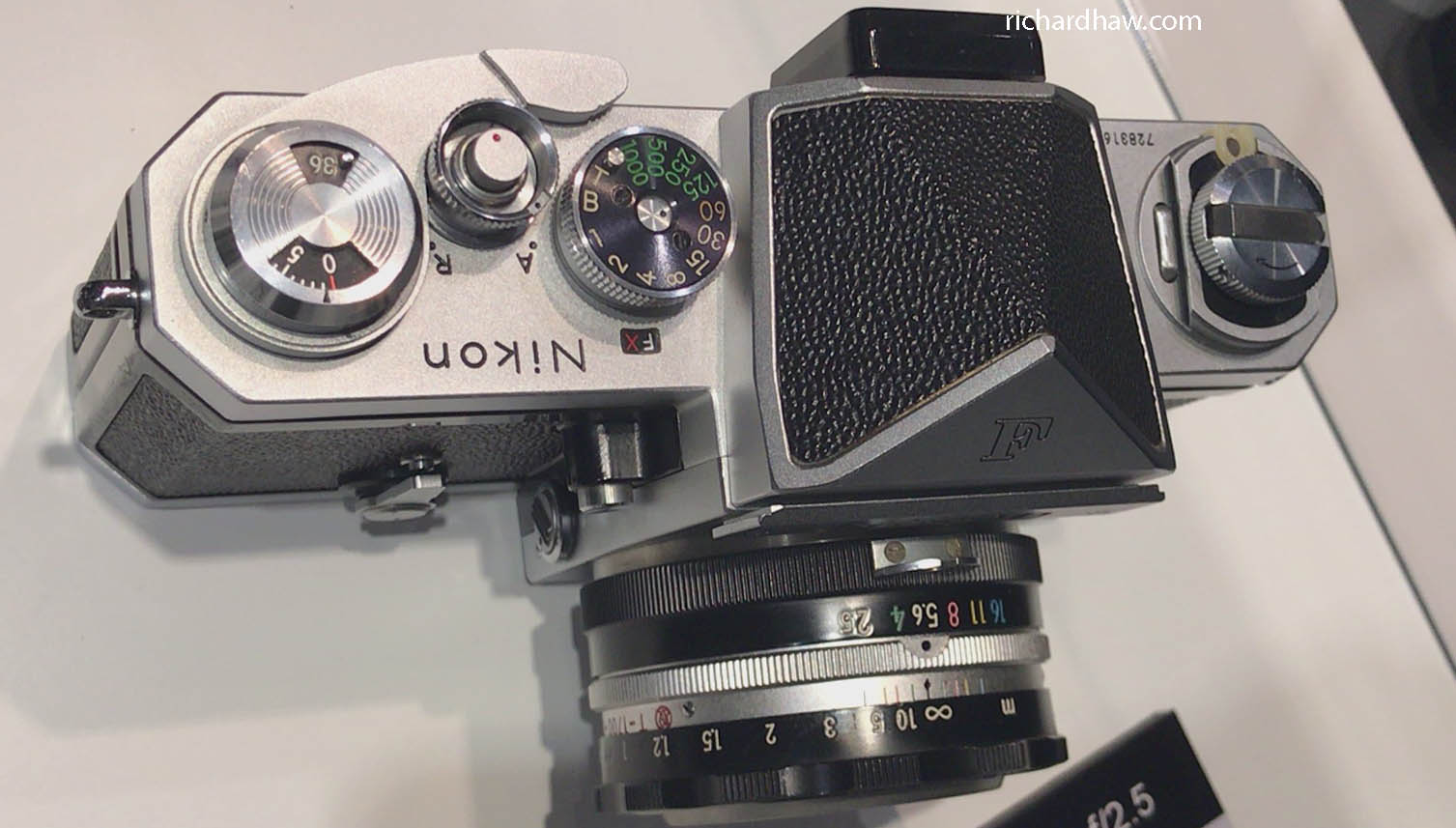 Here’s a small preview of what you’re going to see in part 3. This part focuses on normal lenses with focal lengths from 40mm to 60mm or so and the odd Micro-Nikkors thrown-in to the mix to add variety despite not being normal lenses at all. This part of the exhibit is the most interesting for me since most of my lenses fall into this category.