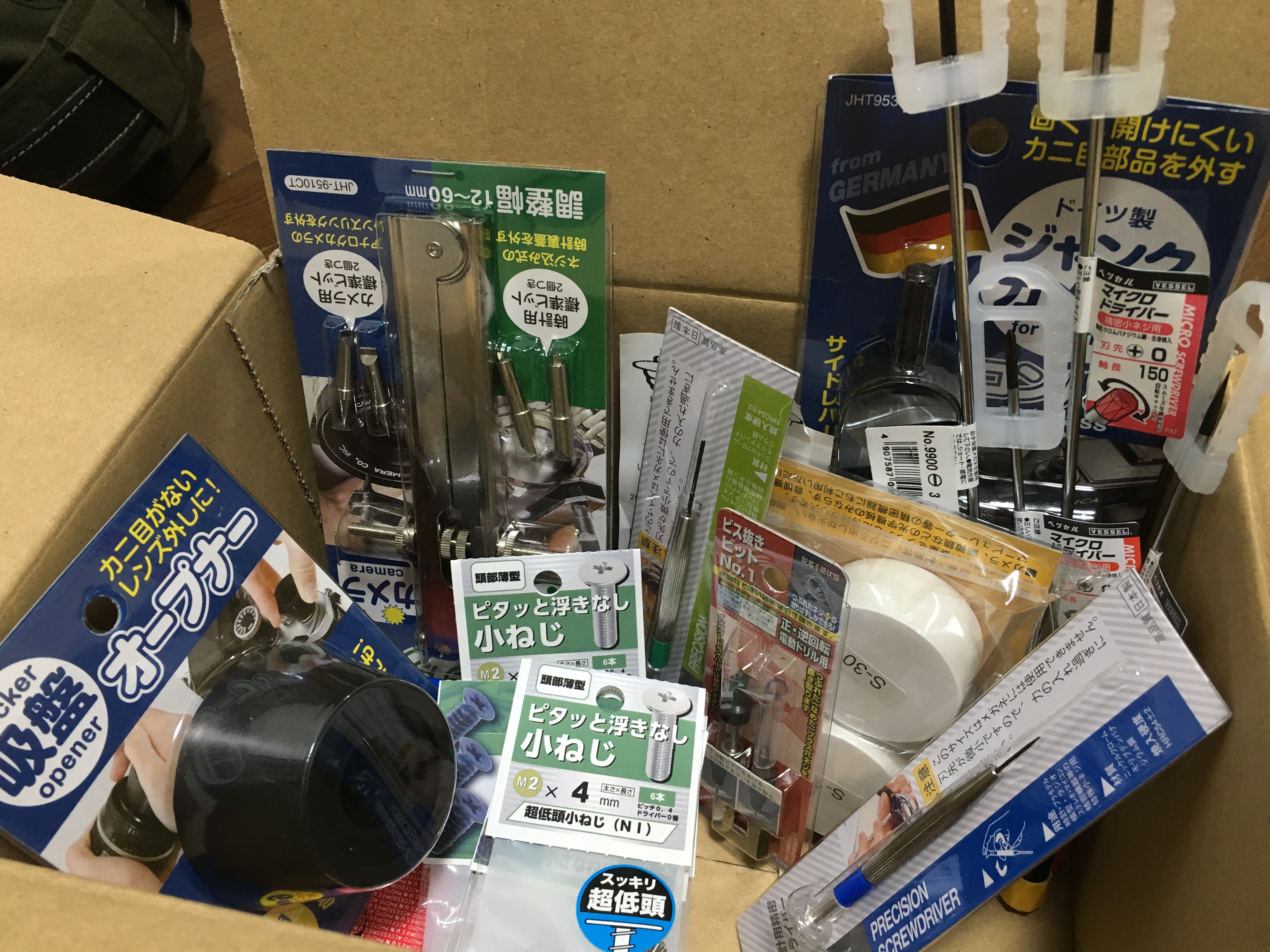
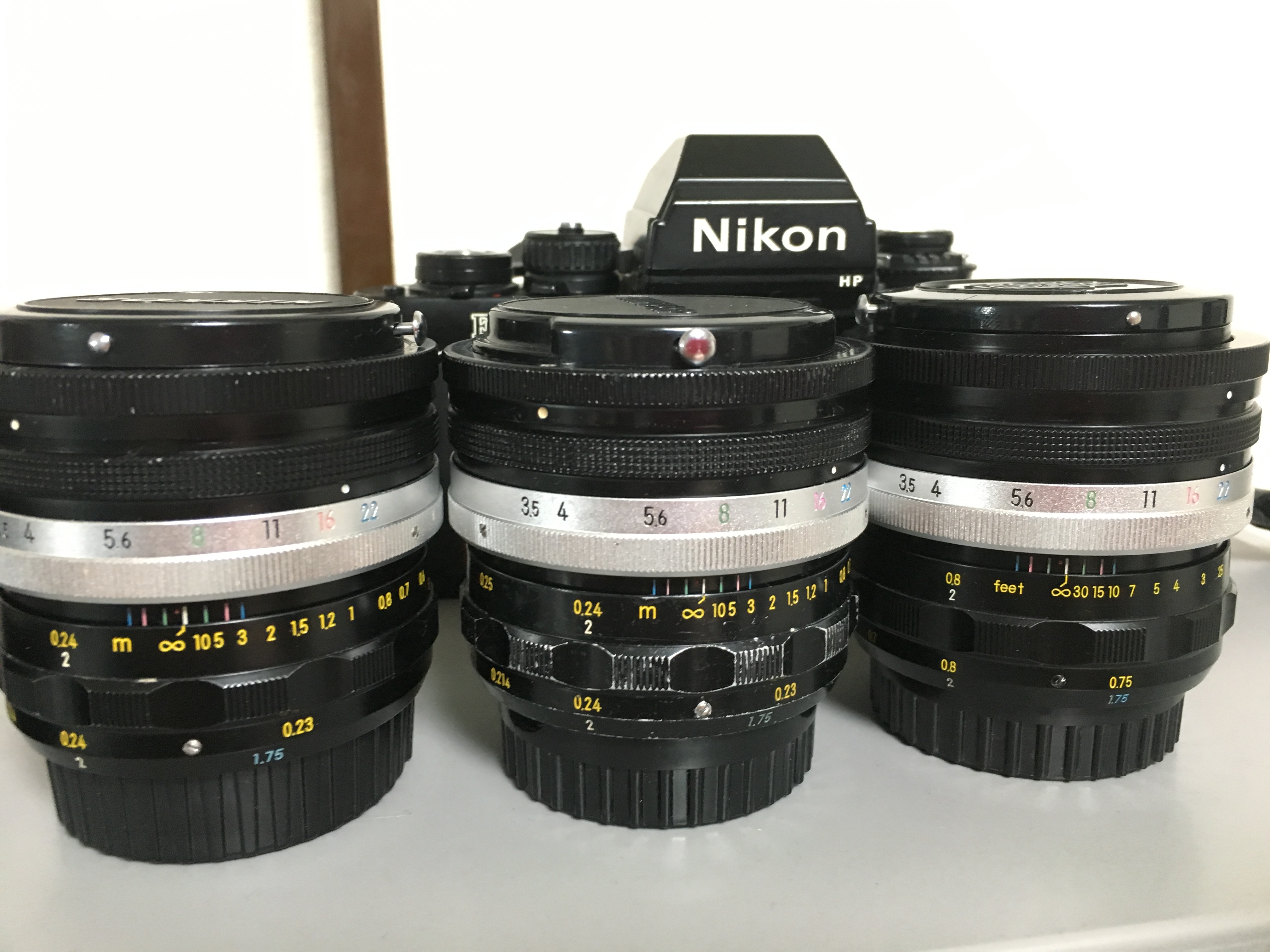
Hello, everybody! We are supposed to have the usual lens teardown today but I am too lazy and tired today to prepare the pictures and commentaries so I will just write a short entry this time around. I am also very busy in our studio because my cute assistant is currently working off-site for a couple of months. She should be back by the end of this month.
Introduction:
When I still had the D7200, I was always straining my eyes at the tiny DX viewfinder every time I used a manual focus lens with it. I focus using the focusing scale so I generally get a nice and focused picture when I am using the lens stopped-down. Shooting the lens at it’s biggest aperture is another story and I had to find a better solution for this.
The first solution that I thought about was using focusing screens! You can buy one for any camera or ask a shop to trim one for you but I am cheap so I simply opted to DIY the screen myself to save some money. I ended up saving enough money that if ever I failed at this, I would have enough money to attempt 3 more times! More
Hello, my dear readers. I just unloaded plenty of digital gear yesterday morning. Shooting film and using analog equipment has been so much fun for me that I have relegated all of my digital equipment for low-light and indoor shooting exclusively or for really important events where there is no room for mistakes (paid stuff). Chances are if you are reading and following my blog then you are already at the same point in your photography adventure as me. Do not believe it when they say that shooting film is cheaper then shooting digital, we will talk about it in a future post because there is just so much cow dung being posted on the internet by film snobs.
Hello, everybody! Lately, there has been a shortage of cheaper lenses at the junk shops in Tokyo so I haven’t added anything new into my lens collection for a couple of weeks now. There are many factors that contribute to this and one of them is the swarm of mainland Chinese tourists swarming here to shop. It was different several years back but what can I do? It’s an open market and it is everybody’s right to shop. Luckily, I can still find a few good deals like the lens that we are going to talk about today.
Introduction:
We are going to discuss a very important lens in Nikon’s lens lineup during the 1970s and that lens is the Nikkor 200mm f/4 K/Ai lens! The K (New-Nikkor) and Ai versions are near-identical so you can use this guide for both lenses. I have overhauled both versions and I cannot find much difference between these versions. This was a popular lens for people who like to take a long lens along with them during hiking trips because of the size and it has a maximum speed of f/4 which is kind of decent for use in sunny days but isn’t useful when you don’t have a tripod during a cloudy day because you’ll need to shoot this using a tripod to prevent blurred photos. Landscape and bird photographers may appreciate it for its size and specs and it’s a versatile lens for portraiture, too. When shooting under a controlled environment such as a studio and using strobes, the rather slow f/4 maximum aperture won’t matter because you will be be shooting this lens stopped-down anyway. It is great for full-body portraiture because the compression a 200mm lens can give is going to make people look taller and faces look thinner.
The lens feels great in your hands, it’s dense and there’s certainly a feeling of quality and precision when you use it. This lens was built during a time when Nikkors were made to last forever. This also makes it slightly-heavy and you’ll wish that it has a tripod foot, this lens can make any setup front-heavy so you don’t want to handle this carelessly. If you’re going to use this with modern Nikon cameras then make sure that you get one that comes with an Ai-ring for the New-Nikkor version or else you will damage your camera when it is mounted by force. Mine has the Ai-ring and I am glad that I got it.
Hello, everybody. For today’s short post, I will be showing you how I adjusted and cleaned my Nikon F’s frame counter. My F’s frame counter is a little bit offset by less than 1mm. It may not seem like a big deal, but the arrow on the counter is always pointing in between 2 numbers. This makes it hard to judge which frame I am currently at and this is driving me crazy! The camera is old and it is likely that the frame counter housing moved a bit when the previous owner was using it.
Fortunately for us, this is a very simple thing to fix and since I am detailing this camera to make it look as good as I can I also taking this opportunity to clean other things within the same assembly as you will see later.
First, loosen up these 3 tiny set screws on the frame counter housing. You do not need to remove them from their holes so you won’t have to place them back later. I really dislike these things because they are small and delicate. These set screws secure the housing to the camera by locking the whole thing into the groove underneath. More
Hello, everybody! It is starting to become really hot and humid here in Tokyo. I really miss the cool autumn breeze. The seasons go by so fast and my baby is now a toddler. I spend a lot of time at work as well as overhauling lenses that I sometimes feel that I should have spent more time with her instead. That is how serious I am with this thing and I hope that you share the passion with me,too.
I have also started a Facebook page so that people can get updates on this blog or whatever I am overhauling or fixing at the moment. The page can also be used as an interface to ask me or whoever is experienced on fixing lenses about your problems and see if it is actually worth fixing it yourself or have a real pro do it instead. Again, this is the Facebook page.
IMPORTANT: I do not offer this package anymore because shipping can be difficult due to restrictions, etc. There are people who seek glory in other people’s suffering and these people made it difficult for honest people like me to ship combustible materials like oils and grease. I do not earn a lot from this to justify all the paperwork and effort.
Hello, everybody! We are finally going to see the second part of the Micro-Nikkor 5.5cm f/3.5teardown! We were side-tracked a couple of weeks ago when I featured a teardown of the venerable Nikkor 35mm f/2.8 Ai but we are finally going to finish this series. I can even make a third part but that will be too long, I am sure people will get bored so I am going to stay with the original plan of having just 2 parts.
These look unique as far as Nikkors go. You can’t find any other Nikkor that looks like this lens. This is novelty lens and it’s best-left to the collectors. The later Micro-Nikkor-P 55mm f/3.5 Auto is a better lens in every way, if you are looking for a practical macro lens for cheap then that lens will fit the bill.
Hello, everybody! I like eating sushi, it’s nutritious, fun and yummy. People used to eat these as street food but they have become quite expensive these days mainly due to sourcing and handling of the ingredients. This is why an inexpensive solution was found in the form of the “sushi-go-arounds”. They are cheap but not necessarily economical because the ingredients are not as good as the ones used by more expensive shops. Once you get a taste for the better stuff you’ll never go back. This is what I call “false economy” and this is the topic of our current article. You thought you’re getting a good deal but at the end of the day you find yourself wanting to buy the real-deal.
Introduction:
The Nikkor 35mm f/2.8 Ai was sold from 1979 to 1981, a very short time for a mass-produced Nikkor because the newer Nikkor 35mm f/2.8 Ai-S was about to be released soon. It replaced the Nikkor 35mm f/2.8 Ai which was already starting to get old by that time. Many people confuse this with that lens and so Nikon named this one Nikkor 35mm f/2.8 Ai (N) officially to denote that it is a later iteration. If there’s an existing lens with the same name, why was there a need to replace it with something similar? The answer to that is this has the newer optical formula which was used for the newer Nikkor 35mm f/2.8 Ai-S that soon replaced it and Nikon wanted to market it quickly since the 35/2.8 line of lenses was quite popular.
This is a great lens for street photography, it’s light, compact and sharp. This handles very well with all Nikons. It’s perfect with the Nikon F3HP, its dense and well-built, it will survive professional use.
Hello, everybody! Despite the busy schedule I managed to pace my time in order to post this to my blog on a timely manner. Apart from being busy at work, I was sick with hay fever. Hay fever is a thing here every spring and it affects a significant part of the populace. Keep your masks on to prevent hay fever from ruining your Spring. As I promised a before, I would like to present to you some unusual Nikkors as we have dealt with conventional ones in the previous posts. This approach is to nurture your growth and you start with simpler lenses then proceed to the more exotic ones. The subject of our post this time is a mysterious and unique Nikkor that many people do not know much about.
Introduction:
This one is a mystery to many people because it is the only Nikkor of its type that got into production. This lens was designed to aid photographers who used flash guns. Back in the days before TTL metering, photographers need to adjust flash output by re-calculating its power as you go nearer or further from the subject (hence GN for guide number). Nikon’s engineers had to find clever ways to solve this like the GN-Nikkor 45mm f/2.8 Auto and its unusual coupling mechanism. Another good example is the earlier production type Micro-Nikkor-P 55mm f/3.5 where the aperture opens up as you go closer to its maximum reproduction ratio of 1:2 (native) or 1:1 with the included M- ring accessory.
This has a switch at the focusing ring to couple it to the aperture ring so that these move together when you turn either one of them. For example as you focus your lens closer the iris would stop-down and when you focus further the iris would open-up to compensate. It allows you to shoot without even thinking about changing the power of the flash. While this is clever it has a catch, the focusing ring on Nikkors go the other-way and this means turning the focusing ring to the right makes the lens focus to infinity and in order to make this clever iris compensation trick work, it had to turn the other way! This is very annoying so I don’t use this lens as often as I would like to. It’s such a pity because I have grown to love this lens.
This is a nice example of precision engineering. Look at the nicely engraved numbers, it is something that you don’t anymore see in current lenses from mainstream brands. If you think this is all the engravings this lens has then just wait until you read the whole article. This is one of Nikon’s most ornate lenses and it’s one-of-a-kind.
Hello, everybody. I’m sorry for posting this late but I was having a problem with the blog so I was not able to post this earlier. For some reason. I can’t access my drafts and my site would not load at all. That was all fixed after I restarted my laptop. I was scared because I have spent a lot of time documenting/writing for this blog and if I lost all of my posts it would mean the end of everything. Now that it is all in the past we can now proceed with our subject for today.
Introduction:
Our subject for today is the amazing Nikkor-Q 200mm f/4 Auto. It’s one of Nikon’s most expensive lenses in its day and it’s the successor to the Nikkor-Q 20cm f/4 Auto which is a revolutionary lens in its own rite. This lens is an improved version and it fixed some of the bigger problems of the older lens so it’s considered to be a different lens in nearly all aspects. Apart from the obvious difference in lens barrel design it also has an improved optical design (slight variation) that makes it a better-handling lens overall. I like how the new focusing ring feels because it’s now broader. It also focuses a bit closer which makes it more useful but is still too-long compared to later lenses from this class. It’s a great lens for its time and many people bought these for taking pictures of sports, news, birds and just about anything that needs a long lens.
The silhouette of this lens reminds me of a softdrink bottle. It looks sexy and people will surely stare at you when you use this lens. As you can see from the photo, this lens is not what I would call small. It’s heavy, long and big so carrying it all-day can be a problem if you wear your setup around your neck. I wish it came with a tripod mount because it is front-heavy but I guess this lens was designed to be used hand-held so it was omitted.
Hello, everybody! Are you a Vim fanatic or an Emacs supremacist? I personally don’t use both much but I Vim is something that I used a lot when I was still working on a Linux environment. It’s small, nimble and easy to use. It doesn’t have the power of Emacs but it gets the job done. I like simplicity, it makes me more productive because I don’t have to deal with any clutter. Today, I am going to show you something simple. It doesn’t have the bells-and-whistles of newer lenses but it gets the job done due to its simplicity.
Introduction:
The Zoom-Nikkor 80-200mm f4 Ai-S was sold from 1981 to 1988. It was made to complement the Nikon F3 and this replaced the Zoom-Nikkor 80-200mm f/4.5 Ai (N). The former is an amazing lens that many people felt an attachment to and for a good reason because it’s a great performer. It was tough for Nikon to exceed it but this lens marginally improved upon it. The production ended because autofocus lenses were the fad, the Nikon F4 was introduced and that soon became the end of the manual Nikkor era.
It has a huge barrel for both zooming and focusing. I call these “pumper-zooms”, it allows me to operate this with a single hand. This is handy for shooting action. The size of the barrel is just-right and it feels great to use it. Handling is quite nice but it’s a bit heavy, it will strain your neck.
Help support this site by donating to richardHaw888@gmail.com over at Paypal! If you want to buy me a beer or a roll of film then that would be great,too!

 The first solution that I thought about was using focusing screens! You can buy one for any camera or ask a shop to trim one for you but I am cheap so I simply opted to DIY the screen myself to save some money. I ended up saving enough money that if ever I failed at this, I would have enough money to attempt 3 more times! More

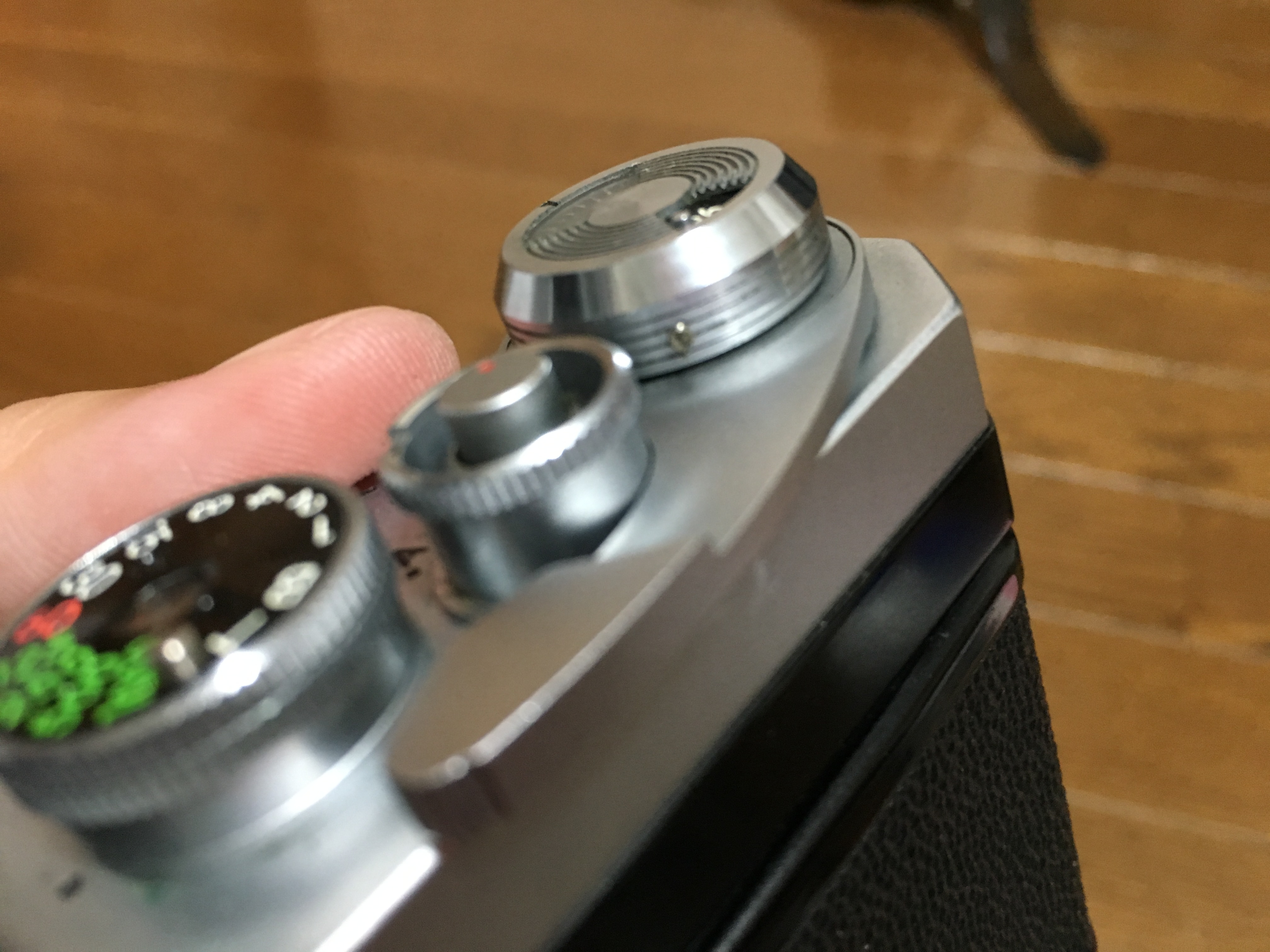 First, loosen up these 3 tiny set screws on the frame counter housing. You do not need to remove them from their holes so you won’t have to place them back later. I really dislike these things because they are small and delicate. These set screws secure the housing to the camera by locking the whole thing into the groove underneath.