Hello, everybody! Do you remember Fast Times at Richmond High? It is one of my favorite movies when I was young not only because of the full-frontal but because my childhood crush Phoebe Cates stars in it. She has the perfect face if you ask me, someone that will only be rivaled by Jennifer Connelly in terms of beauty and perkiness. I love how Jennifer looks in The Labyrinth, it won’t be the same movie without her. As a youth, these 2 beauties had been my obsession and it’s difficult to choose which one is at the top of my heart. Recently, I found myself in a similar situation. I was always obsessed with a legendary Nikkor but it has a sibling that’s equally-seductive. It was a really difficult choice but fate has chosen it for me, I ended up with the Jennifer of the two. Maybe one day, Phoebe can be mine, too.
Introduction:
The Micro-Nikkor 5cm f/3.5 is the “mother” of all Micro-Nikkors, it is the lens that started it all. It debuted in 1956 and was sold to special clients, mainly in the scientific and industrial field where such a high-performing optic is a necessity for documenting things. The need for such a high-resolution optic was apparent when people tried to capture documents using the microfiche format because Japanese/Chinese characters are more complicated, they do not record very well with existing lenses so a better lens had to be designed and that need gave birth to this lens. Now, Nikon wasn’t the first to make an optic of this class, Carl Zeiss made a similar one a few years earlier, it is the Macro-Tessar 5cm f/3.5 that comes with the Contaprox set. You can say that Nikon was “inspired” by that idea and the result is this.
The lens showcased here is the version made for the Leica Thread Mount. It is unsure which one came first, the Nikon S-mount version or this one. Both versions can be used as “normal lenses” but only this is able to focus closer, down to around 1.5ft at which it’s decoupled from the camera’s rangefinder so you’ll have to focus with a special attachment. Both versions were made to be used with bellows for high-magnification photography. It’s impossible to focus with it at near 1:1 magnification using the rangefinder. You’ll only be able to do this reliably by looking-through the film aperture gate. It can only be used that way with a setup so forget about hand-holding this while you take photos of your tiny subjects.
Hello, everybody! I was listening to the Rolling Stones and I heard one of my favorites named “Paint It Black“. There are times when I feel really upset it’s maddening and I wanted to “paint everything black” like what’s in the song. I cope with it by sharing my work with you and by drinking alcohol, I won’t say that the latter is healthy but at least it helps. While we’re on the topic of “black”, there was a time when Nikon wanted to “paint things black”, lenses and accessories were sold in black versions to make them look modern, etc. Read this article to find out what that is.
Introduction:
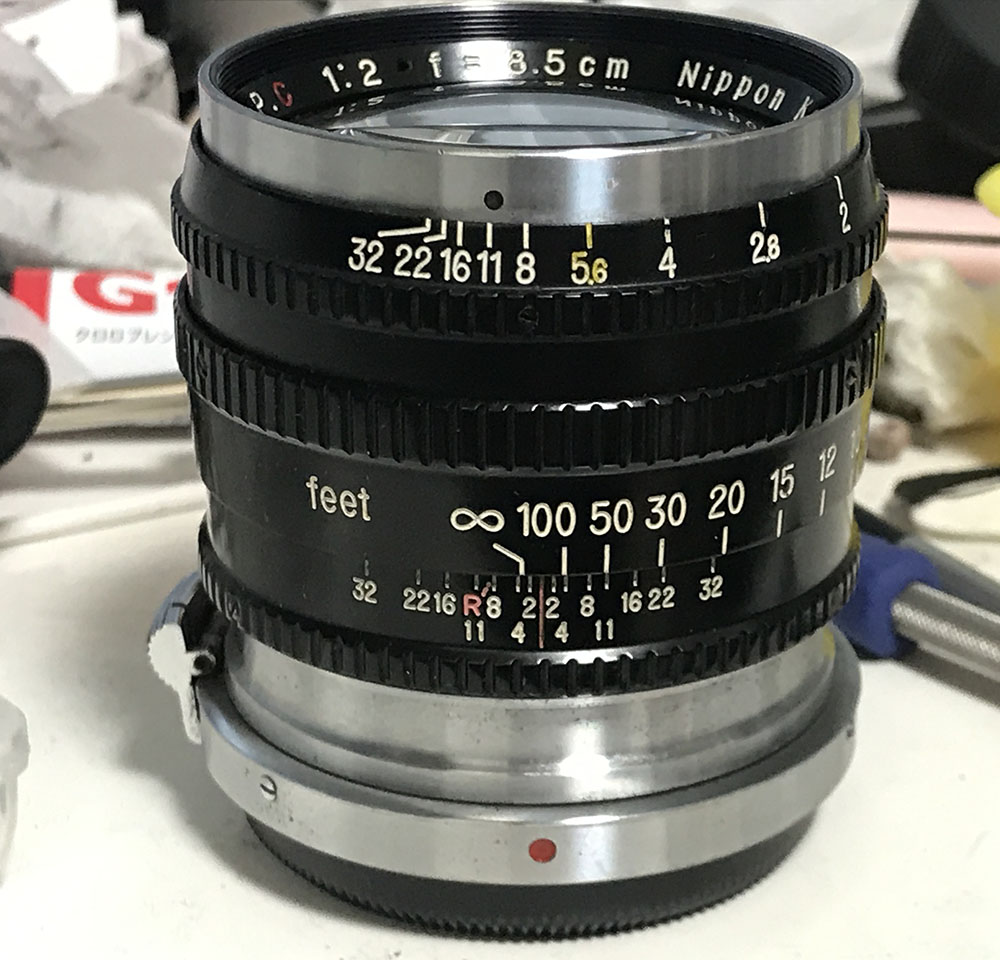
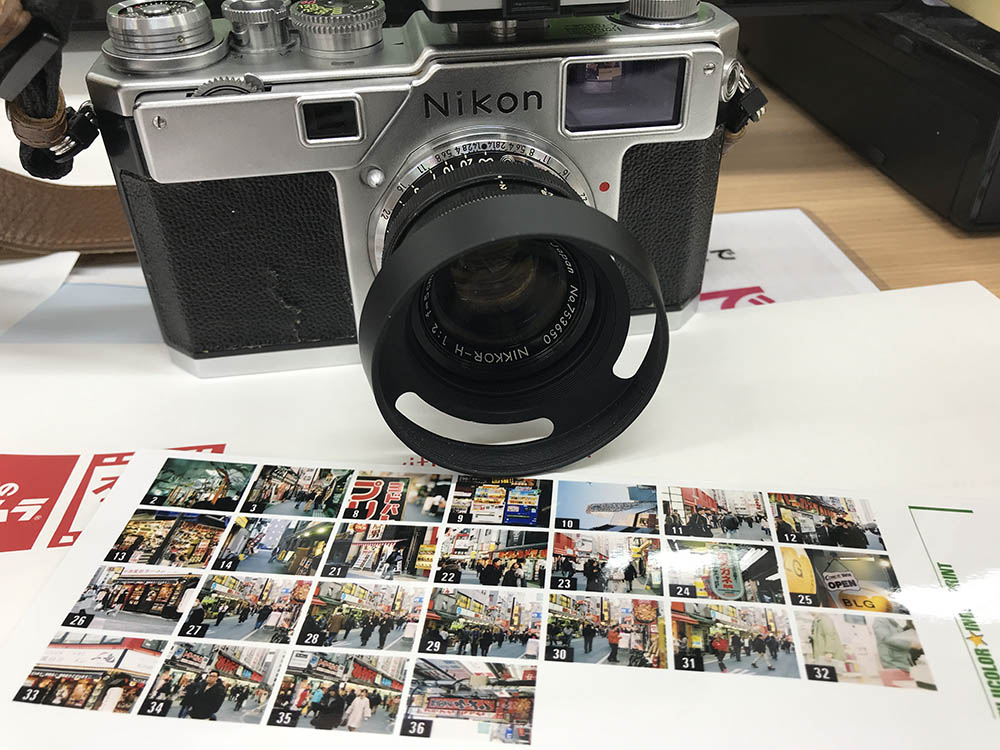
The Nikkor-P•C 8.5cm f/2 is one of Nikon’s legendary lenses, it is called by its nickname of the “Japanese Sonnar” by some and that’s understandable since it was “heavily-based” on the Carl Zeiss 8.5cm f/2 which is a Tele-Sonnar. It’s an amazing lens in its own right, it’s sometimes even better than the Zeiss, I personally prefer the Nikkor because that’s all I have. This was popular and its production life is quite long for a rangefinder Nikkor. It’s understandable that it went-through several changes in its design, we’ll discuss the last one in this article. It was sold for a short time with only less than 1400 made. It’s one of the rarer rangefinder Nikkors you’ll ever find but it’s certainly not an elusive lens to find since there’s almost-always one for sale at any time.
The black treatment made this lens look sexy, it’s one of the most beautiful Nikkors you’ll ever find. If I’m not mistaken, the main reason for this is not only cosmetic but to make the whole lens lighter. Brass is heavy so some of the parts were replaced with aluminum alloy. I may have forgotten it since I haven’t worked on this for a long time but I swear that the black parts were made from a lighter material compared to brass.
Hello, everybody! I love eating-out and enjoying the best ramen in town. It’s one of the simplest luxuries that I can get each weekend. However, this isn’t something that I can enjoy recently due to the coronavirus. I’m forced to eat instant ramen from home. While instant ones will never beat the real thing, there are a few brands that make really good ones that can rival real ramen and all you need to do is garnish it properly with meat and vegetables. This is more-than-enough to satisfy my ramen craving. Today, I will show you an interesting story of how a camera company satisfied the budget-conscious. I always thought of it as the best version of Japan’s cheap camera category, it is very much like the premium instant ramen that I was talking about, it’s a king amongst beggars. Read my article before you get angry at what I said, I will make it sure that you’ll understand where I’m coming from.
Introduction:
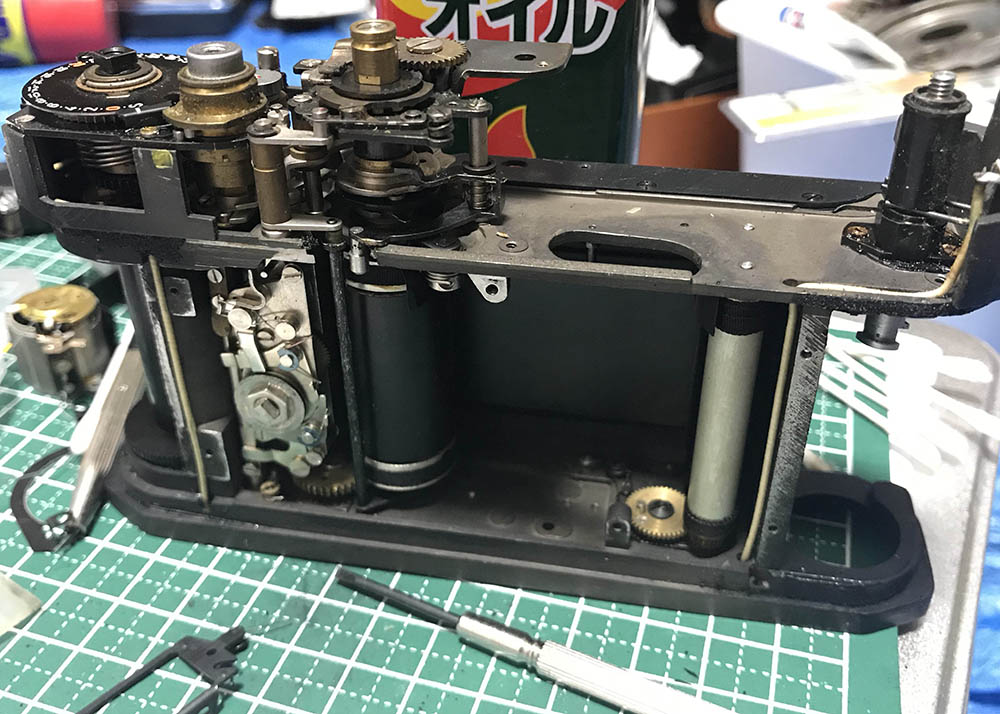
The Canon 7 is a simple camera to service despite all of its features. This is a direct result of it being designed for cheap mass-production. Everything has to be simple and easy-to-service since production time equals money. It was a small wonder of engineering by Japanese standards back in 1961 when it was sold and it could’ve been a real classic if only Canon gave it better build quality. Despite that, it’s still an enjoyable camera to fix and use.
The insides of a Canon 7 is spacious compared to a Nikon SP. This is because its body is bigger and that allowed the engineers to put more things inside it and allowed the people at the production floor to easily assemble, adjust or fix it before leaving the factory.
Hello, everybody! I was watching Mad Max 2 or The Road Warrior to some of you. I love this movie a lot when I was young, some people though that it is rubbish. It’s polarizing since it’s such an extreme movie in the sense that there’s nothing much in-between, it’s a real “non-stop” action movie. This is something that some critics don’t like, citing how shallow the plot is but you don’t watch Mad Max movies for that and that’s the whole point of it. Today, I’ll show you a lens that has a divided opinion on the internet. Some will say that it’s one of the best-performing lens that they’ve used while some won’t even mount it to their cameras. It’s polarizing so let’s see what all that noise is and I hope that I can settle it here in this article.
Introduction:
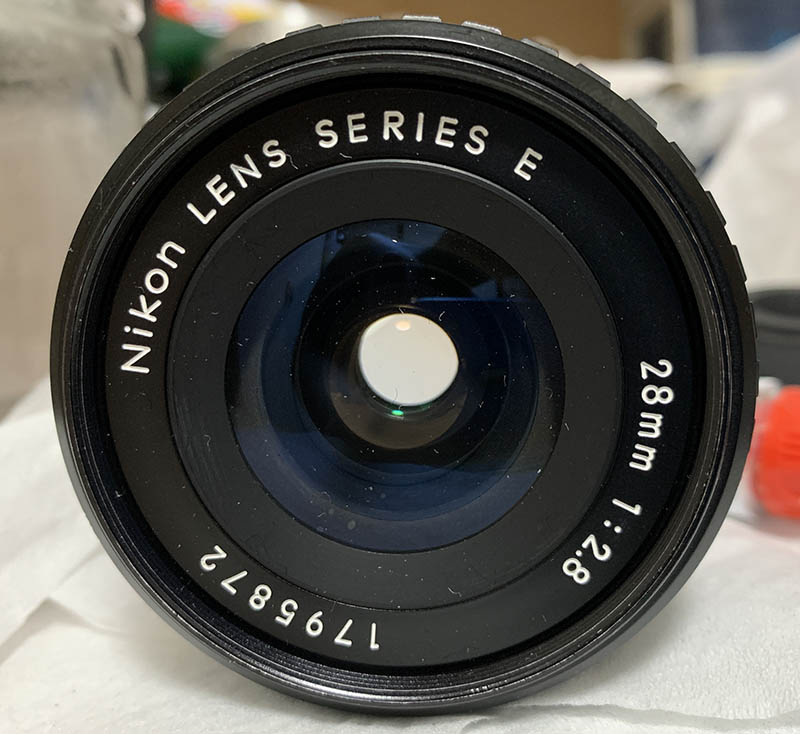
The Nikon 28mm f/2.8 Series-E was sold from 1979 to 1985, it first appeared as an all-black lens like what you’ll see here and was later upgraded with a more Nikkor-like look with a metal grip and better focusing ring rubber. It’s a cheap, mostly-plastic lens that was targeted towards the budget-conscious much like the rest of the Series-E lenses and the Nikon EM. It shares a lot of similarities with the Nikon 35mm f/2.5 Series-E in terms of aesthetics and it’s easy to mistake both lenses at first glance. Since this wasn’t built to the high standards of a Nikkor the brand was not used for it, instead it only uses the company’s name.
Despite being a dinky lens it still has a lot to offer. Some people either love it or hate it with the latter being the majority. The build quality is in-line with the rest of the Series-E lenses which is not good at all but it’s still better than some of the lenses that we see from other manufacturers. The use of plastic is controversial because customers are used to Nikons being tough and back in those days it was considered a mortal sin for Nikons to use plastic. It isn’t something that sat well with many Nikon fans.
Hello, everybody! With the shortage of masks I was forced to use ones that can be reused and line them with kitchen towel. It’s not the best solution, it can be quite dangerous at times because you may be inhaling germs when you thought you’re safe. Beggars can’t be choosers they say so it’s the best I can get at the moment. While masks are vital to me, cameras are considered a luxury so I can settle for less. I have always wanted to own a Leica M2 but their prices have sky-rocketed in recent years. However, since it’s a luxury I could substitute it with something that works very-much like it but it’s not a pretty camera like the Leica. Read the article to know what it is.
Introduction:
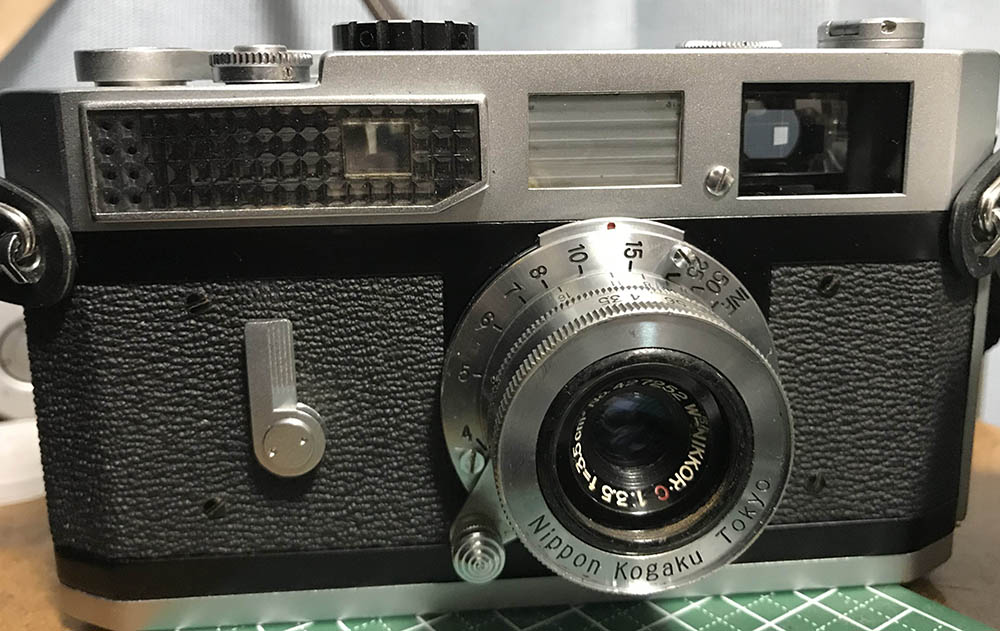
The Canon 7 debuted in 1961 in response to the Nikon SP and the Leicas. It’s an advanced camera, it has a built-in selenium meter and it has frame-lines for 35mm, 50mm, 85/90mm and 135mm, all in one view. It is also corrected for parallax which is great. The viewfinder is the real star of this camera, it was quite advanced as far as Japanese cameras are concerned in 1961. This is a glimpse of what the Japanese camera industry could’ve produced but it fell-short of many people’s expectations and I’ll show you why later.
The big window houses a selenium panel for the light meter. Mine works, it isn’t super-accurate but it works well on a sunny day. You can boost it if you need to, it does it natively using a clever trick which I’ll show you in part 2. I like the design a lot, this could’ve been the perfect camera if not for some of the cost-cutting measures employed. Pictured is a W-Nikkor•C 3.5cm f/3.5, it would have been a perfect setup if the quality of the camera matches that of the lens.
Hello, everybody! It’s a weekend but I’m working from home. I have been doing it for years now, I do this as a habit to prepare myself for the coming week. Preparation is important, not only are you ensuring a good job but it will also save you some time so you can do more things. Every professional is familiar with this, if I have the choice I wouldn’t want to do this but I am overloaded at the moment, I only have my sidekick to help me. This strains me mentally, physically and emotionally but that’s the nature of my job. It’s something that I will have to live with so long as I work in this industry and in this country in particular. Today, I will show you just how important it is to prepare your work so all you do is see how things fall-into-place nicely. It is something that every camera repairer should do, too.
Introduction:
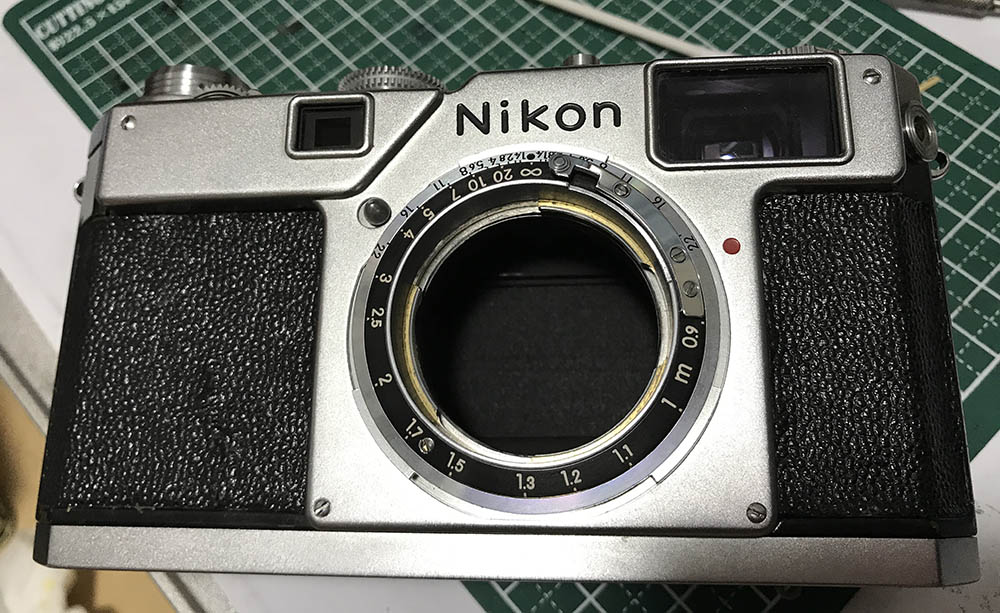
The Nikon S3/S4 is a fine camera, if maintained properly it will keep taking photos as long as film is available. This means that this camera will outlive most of us. An all-mechanical camera is a wonderful thing, much like how a mechanical watch is compared to the quartz ones. There is a certain charm to mechanical gadgets, something that only an aficionado will understand. I would like to show you how much work in involved servicing a mechanical camera in this article so you’ll appreciate the work involved in maintaining it. If you found a reliable repairer, give him a bottle of wine since he’s doing a fine job, a trade that we may not see anymore in the coming years. If you found an honest repairer, send him 2 bottles instead, integrity has no price.
Once your camera has been serviced properly it should take perfect photos for more years to come. If properly cared for the next time you send it to a repairer should be around 5-10 years or more and the repair should be less since all the repairer has to do is clean, lubricate and adjust. You shouldn’t give the camera to another repairer for maintenance, stick to one person. I said that because only he can service it properly since he knows it the best. If you want to change repairers because the last one made a terrible job it’s okay but do everybody a favor and share your experience.
We’re done dismantling the camera, it’s now time to adjust and put all of its parts back. We have spent all of that time dismantling the camera, it is now the moment truth. This will be the true test of how well you have cleaned it. If you did a poor job cleaning the camera your resulting job won’t be good. I always spend extra time cleaning everything, this will be the basis of a good and successful job. Like I always say, never treat this as a repair manual, it’s only for your education and entertainment. Experienced repairers will find this useful if they’re not familiar with this type of camera, novices shouldn’t even touch this at all. Sit back and enjoy the last writeup for the Nikon S3/S4 repair series.
Hello, everybody! I was watching the news once and I saw somebody trying to use and old-style telephone, the type with a dial that many of us grew-up using. You would dial-in a number and it will crank-back each time, it takes a lot of time just trying to dial few digits. Despite it being cumbersome I had plenty of good memories using those old phones, I would call my classmates and talk with them, most of them being girls and we would flirt “online”. It’s funny how time flies and many people don’t even remember these anymore to the point that it felt silly just watching somebody using it. I made friends with strangers and even met lovers using that ancient device, that was how people hooked-up anonymously back then. Before we get too nostalgic, I am going to show you something that made things convenient for everybody at a time when people were used to doing things the inconvenient way. This is important before I told you everything about my naughty teenage years.
Introduction:
The Nikon S3/S4’s speed-selector dial is convenient to use as it doesn’t spin. I love the fact that I don’t have to keep my fingers away from it while making an exposure. This was introduced with the Nikon SP to rival the Leica M3. It was epoch-making as far as Japanese cameras are concerned. In older ones like the Nikon S and Nikon S2, the speed-selector dial spins as you make an exposure. Disrupting it will cause faulty speeds so your exposure will be off by a lot. This won’t happen again in Nikon-land after the Nikon SP debuted.
The Nikon S4 has a clean-looking face because it doesn’t have a self-timer. It is a very handsome camera, it looks good on you if you’re wearing a tuxedo.
Hello, everybody! It was my daughter’s birthday yesterday, we could not go out due to the coronavirus problem so we had to stay indoors to celebrate. I would rather sacrifice a little bit of fun than expose my child to germs. This morning, I had leftovers from yesterday’s modest celebration. It’s not that I am complaining but there are some things that tastes much better the next day such as curry and stew. I used to cook a lot, I would at times cook some stew the previous day in preparation for serving it the next day. This allows the juice to seep-into the ingredients and tenderize the meat even further. I like the resulting texture of the meat as it melts in my mount. While we are in the topic of serving yesterday’s meal, Nikon was also doing the same but it’s in the form of a repurposed lens design. Did it end up better than what’s been implemented before or was it only a case of re-housing the optics? Let us find that out in this article.
Introduction:
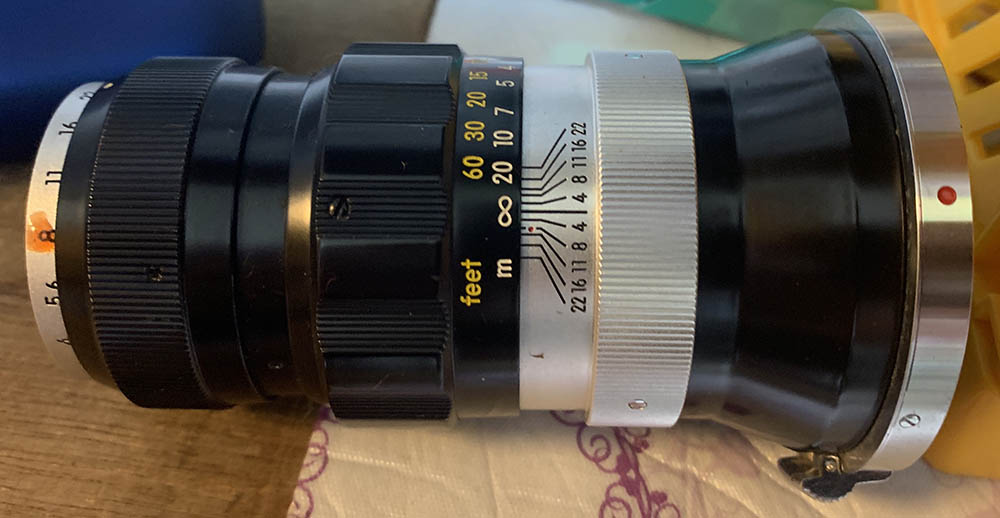
The Nikkor-T 10.5cm f/4 for the Nikon S-mount is an odd lens not because it’s a phallic-looking lens but because it has a lot of non-Nikkor traits that made people back then guessing if this was actually made by Nikon. The answer is yes, it’s a true-blue Nikkor but made to a different philosophy wherein price is the biggest concern which means that it was made to be budget-friendly. I made an article showcasing the Nikkor-T 10.5cm f/4 for the F-mount and you can read more about this lens there.
Despite being similar in essence to the Nikkor-T 10.5cm f/4 for the F-mount it has many differences in terms of external styling which made it special in a way since it’s unique to its cousin. Even details that doesn’t have anything to do with the bayonet mount were made to look different. Of the 2 versions, I like this one better in terms of styling and handling. The Nikkor-T 10.5cm f/4 for the F-mount felt awkward because it’s a rangefinder lens made to fit the more-modern Nikon F but this one is just fine.
Hello, everybody! I remembered a time several weeks ago when the world was still unsure about the impact of the coronavirus, it was a time when we could still talk outside with friends and enjoy a cup of coffee or two and eat a few sandwiches by the side of the street. I don’t think we’ll be able to see it happen again anytime soon, once-busy sections of our cities now resemble ghost-towns or a post-apocalyptic scenario. It’s depressing but even at these times there are stories to be told and good-deeds to be made. Read on.
The Story:
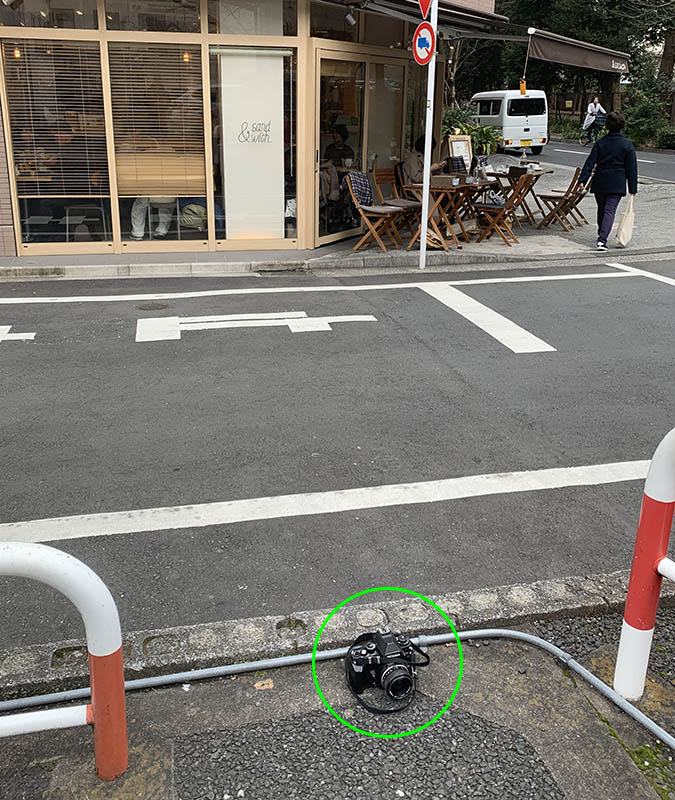
This happened around February, I was meeting with a good friend of mine named Hayashi-san. We were talking about random stuff, office politics and generally just keeping up with each other since we haven’t seen each other for a few years. On our way out I decided to have a quick smoke nearby and I found something laying at the grounds of a parking lot, scroll down to see what I found.
It’s a Nikon Df! Somebody left his camera. He was probably sitting there for a quick smoke just like me and probably forgot his precious camera. It looks like it has been sitting there for a few hours. I would have missed it myself, it blended well with the urban environment, you could’ve mistaken it for an abandoned pile of rubbish.
Hello, everybody! In the coronavirus era we’re all scared about germs and what it can do to us if we are not careful. We should wash our hand well, if you went to the toilet, wash your hands first before touching your peter. It’s equally important to wash your hands after doing the deed, too. This helps in preventing the spread of germs. What really helps a lot is using masks as it prevents the spread of germs and you’ll inhale less of it, too. Hygiene is an important part of living, this goes for your cameras and lenses as well. They constantly get close to your face, whatever germs are there will reach your face and enter your body. Today, I’ll show you how I cleaned a camera so it won’t infect me with anything nasty. Old cameras can be health risks if they were used by somebody sick before it got to you. If it was stored in a cabinet for a long time then fungus or other things may have bred in it, too. This is a big risk that’s why people who love old gear like me should be very careful.
Introduction:
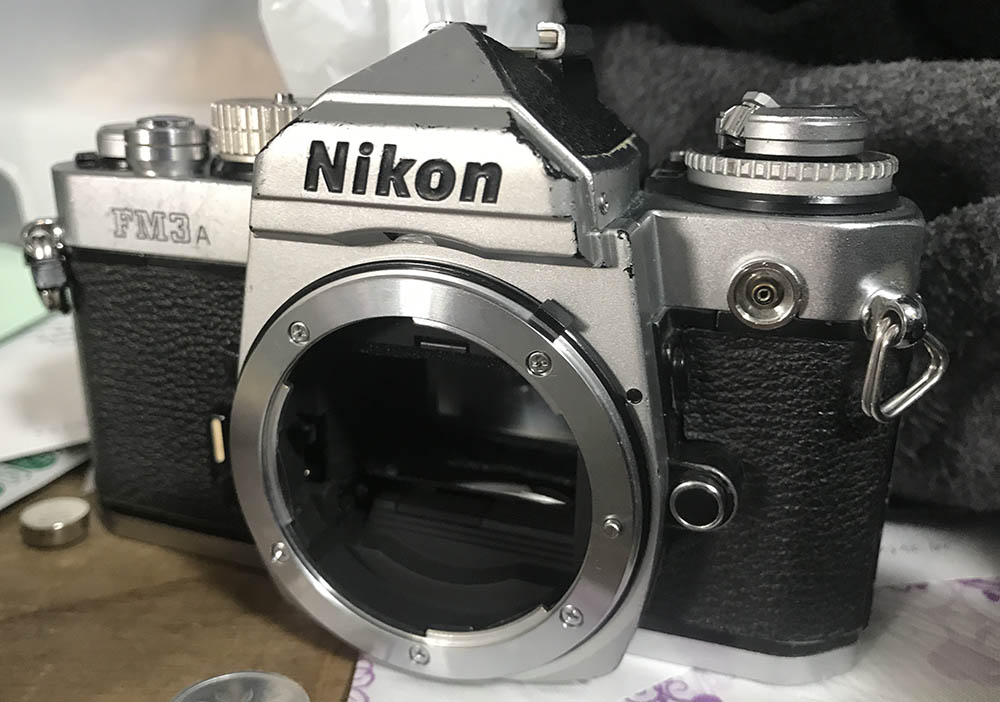
The Nikon FM3A was sold from 2001 to 2006. It’s a wonderful camera, it’s so advanced when it came out that nothing in Japan could match it. If you look at it, you’ll think that it’s nothing special because it looks like any other old, manual camera from the 1970s but the insides of the Nikon FM3A is modern and state-of-the-art. Nikon managed to combine an all-manual shutter with an electronic-override for aperture priority, this means that you can use the shutter with all the speeds available to you in manual mode if the batteries failed. Sure, the meter won’t work but you’ll still be able to shoot with it and you’ll have all of the speeds available to you unlike most electronic Nikons where you’re only able to use a single backup manual speed.
It has more things in common with a Nikon FE than a Nikon FM, even how it looks reminds you of the former. I don’t know why they named it the Nikon FM3A, maybe they’re referencing its all-manual shutter. The shutter is very advanced, it’s an electro-mechanical hybrid. Not only that but Nikon made it small enough to fit inside a tiny chassis.
Help support this site by donating to richardHaw888@gmail.com over at Paypal! If you want to buy me a beer or a roll of film then that would be great,too!